 Jamaica
À propos
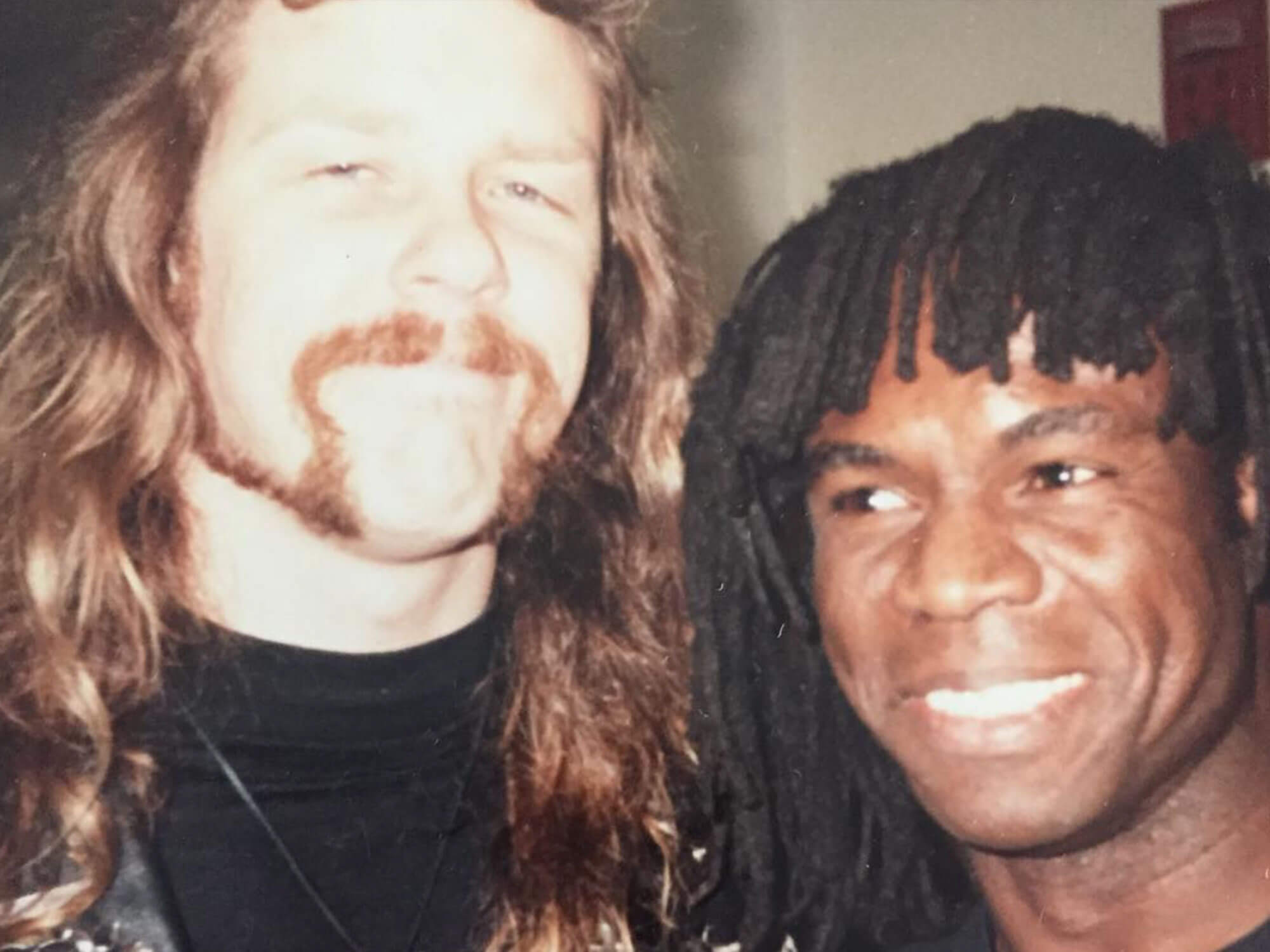
Lloyd Grant est un guitariste et compositeur d'origine jamaïcaine, surtout connu pour avoir joué le solo de guitare principal sur l'enregistrement démo original de 1982 de "Hit the Lights", la chanson qui a présenté Metallica au monde sur la compilation Metal Massacre I. Malgré son rôle crucial dans le tout premier enregistrement du groupe, Grant n'a jamais été membre officiel de Metallica. Il reste une figure respectée parmi les fans de thrash metal pour sa contribution brève mais historique aux origines du genre.
L'implication de Grant avec Metallica n'a duré que quelques mois au début de 1982, mais son solo sur "Hit the Lights" est devenu une pierre angulaire du son précoce du groupe. Après s'être séparé, il s'est éloigné des projecteurs de l'industrie musicale, occupant des emplois réguliers tout en restant en contact avec le batteur Lars Ulrich pendant des années. Il a occasionnellement retrouvé le groupe pour des événements spéciaux, y compris une apparition sur scène en 2011 aux côtés des anciens membres Dave Mustaine et Ron McGovney.
Jeunesse et origines
Lloyd Grant est né en Jamaïque et a déménagé aux États-Unis à un jeune âge. Au début des années 1980, il vivait dans le comté d'Orange, en Californie, cherchant des musiciens avec qui jammer. Il a trouvé une annonce placée par le batteur Lars Ulrich dans The Recycler, un journal de petites annonces hebdomadaire, et y a répondu. Grant et Ulrich ont commencé à jouer ensemble, reprenant des groupes de heavy metal britannique comme Diamond Head et Iron Maiden, et Grant a commencé à écrire du matériel original.
À l'époque, le groupe qui deviendrait Metallica n'avait pas de nom et un line-up changeant. Les premières sessions de jam de Grant avec Ulrich et James Hetfield ont jeté les bases de ce qui allait suivre, bien que Grant n'était pas présent lorsque le groupe s'est officiellement formé plus tard dans l'année.
Évolution de carrière
Au début de 1982, Lars Ulrich a appelé Grant pour enregistrer un solo de guitare pour une nouvelle chanson intitulée "Hit the Lights", qui avait besoin d'une partie de lead pour être incluse sur la compilation Metal Massacre I. Grant a raconté plus tard : "Ils ont littéralement allumé un enregistreur et m'ont fait faire un solo ; si j'avais su tout l'intérêt que cela allait susciter, j'y aurais passé beaucoup plus de temps !" La compilation est sortie le 14 juin 1982, les premiers tirages écorchant le nom du groupe en "Mettallica".
Grant a joué un concert live avec le line-up en avril 1982 à Costa Mesa, en Californie, aux côtés du guitariste lead Brad Parker. Après cela, il n'a pas continué avec le groupe, en partie parce qu'il avait besoin d'un emploi stable pour subvenir à ses besoins. Il est resté en contact avec Ulrich pendant des années et a assisté à des événements de Metallica. En 2011, il a rejoint Metallica sur scène avec Dave Mustaine et Ron McGovney pour une performance de retrouvailles. En 2025, Grant est apparu à des événements comme l'Ultimate Jam Night de NAMM, partageant son histoire et travaillant sur des projets musicaux en Californie.
Chronologie de carrière
Image publique et style
Lloyd Grant est principalement connu au sein de la communauté des fans de Metallica comme une note de bas de page dans l'histoire des origines du groupe. Il est respecté pour son rôle dans le tout premier enregistrement du groupe, mais ce n'est pas une figure publique avec une image publique distincte, un style signature ou un fandom. Les représentations médiatiques le décrivent généralement comme "le guitariste qui a joué sur 'Hit the Lights'" plutôt que comme une célébrité à part entière. Il n'y a pas de nom de fandom officiel connu ou de culture de fans associée à lui.
Notoriété et fandom (iFAMOUS Rankings)
Lloyd Grant's presence in heavy metal culture is defined not by a dedicated following of his own, but by his role as a recurring point of debate within the vast Metallica fan community. There is no formal name for his fanbase, and no organized campaigns or projects exist in his name. Instead, he occupies a unique space in the genre's lore: a figure whose brief contribution to a single 1982 recording continues to spark annual viral discussions about what it means to be an "original member." His story is one of historical correction, told by fans to newcomers as a cautionary tale about the fluid nature of early band lineups and the technicalities of album credits.
This narrative has made Grant a subject of fascination precisely because he remains outside the official Metallica canon. While he maintains a social media presence and occasionally shares his recollections, he has not cultivated a distinct public persona or a sub-fandom of his own. The "legend" of Lloyd Grant is purely archival: it revolves around the April 24, 1982 session at Music Center Studios in Hollywood, where he recorded the lead solo for "Hit the Lights" in a single take, a performance that would become a cornerstone of thrash metal. Decades later, fans still retell the story of how Lars Ulrich recruited him from a local music store, and how the band's official narrative has consistently downplayed his role, even as Grant himself has publicly insisted on the significance of his contribution.
In terms of global fame, iFANN has not yet gathered data on Lloyd Grant. As of August 2026, his status is marked NOT_EVALUATED, meaning no ranking or placement has been determined. He is not currently listed among the most famous musicians or historical figures in any category, and no fandom name is documented in iFANN's records.
Faits intéressants et légendes
The lead guitar solo on "Hit the Lights" was captured in a single take with minimal preparation, a raw performance that became a cornerstone of thrash metal despite Grant later regretting he could not have spent more time refining it. He stands as the first person ever to play lead guitar on a Metallica recording after James Hetfield personally invited him into the early sessions when the band was still operating under the title Power Metal.
A persistent story fans retell involves the debate over whether Grant should be considered an "original member," a narrative that serves as a cautionary tale about how quickly early rock history can be obscured or rewritten. Historical records confirm he recorded the solo in early 1982, yet the band's refusal to label him as such has become a defining mythos of their pre-fame era. Recent revelations suggest deeper complexities to the timeline, with Grant claiming his desperation to help the band secure a record deal was instrumental in their early survival.
A notable legend centers on a reunion show in 2011 where former members appeared on stage, yet Grant was notably absent, reinforcing his status as the excluded figure in Metallica lore. Fans frequently cite that performance as proof of the band's selective memory regarding their history. The most widely retold story details his recruitment by Lars Ulrich, leading to a session at Music Center Studios in Hollywood, where the iconic solo was born. Another recurring tale, which resurfaces annually on metal forums and news sites, asks the question "Was Lloyd Grant an original member?", a viral cycle of documentation and re-documentation that has become a ritual in itself.
Citations notables
“I was looking for people to play with and we had a magazine, or a weekly that comes out on every Thursday, and Lars put an ad in and I answered the ad. And we started jamming and so forth.”
“I don't think Metallica wants to say I am an original member because the band weren't really formed then.”
“They literally turned a recorder on and just got me doing a solo; if I'd known just how much interest it was going to create I'd have spent way more time on it!”
“It feels super important, my name appearing in the same breath as the story of Metallica. It's pretty interesting, but obviously at the time we couldn't predict the future so nobody knew what was going to happen!”
Famille et vie privée
Relations notables
Lloyd Grant est principalement associé au premier line-up de Metallica, en particulier au batteur Lars Ulrich, qui a placé l'annonce qui a mené à leur collaboration. Il a également jammé avec James Hetfield et a plus tard partagé la scène avec Dave Mustaine et Ron McGovney lors d'une performance de retrouvailles en 2011.
Relations et vie amoureuse
Aucune information rapportée publiquement n'existe sur les relations amoureuses, l'historique des fréquentations, les mariages ou les enfants de Lloyd Grant. Aucune source crédible ne documente des partenaires, passés ou présents. En 2026, son statut relationnel est inconnu et non divulgué publiquement.
Salaire et fortune en 2026
Unknown
Estimation de l’équipe éditoriale d’iFANN
There is no publicly available estimate of Lloyd Grant's net worth as of 2026. Unlike many former band members, Grant did not achieve significant commercial success from his brief involvement with Metallica. He did not receive royalties or ongoing income from the "Hit the Lights" recording, as he was not a credited member of the band. iFANN's editorial research traces his financial history to regular employment and side music projects rather than major endorsement deals or real estate holdings in public records. The absence of a specific figure reflects his long-term choice to step away from the industry spotlight after his historic solo became a cornerstone of thrash metal.
Prix et distinctions
View 1 records, honours and achievementsConnu pour
Hit the Lights (demo solo)
1982 · Guitariste principal
Mots-clés
Sources
Faits clés
- Profession
- guitarist, composer
- Né(e) le
- +1961-09-17
- Lieu de naissance
- Jamaica
- Genre
- Homme
- Signe astrologique
- Virgo
Questions fréquentes
Lloyd Grant est-il un membre original de Metallica ?
Qu'est-il arrivé à Lloyd Grant après Metallica ?
Comment Lloyd Grant a-t-il rencontré Metallica ?
Lloyd Grant a-t-il joué sur d'autres chansons de Metallica ?
Que fait Lloyd Grant maintenant ?
Personnalités similaires

Rejoindre la communauté
fans en discussion