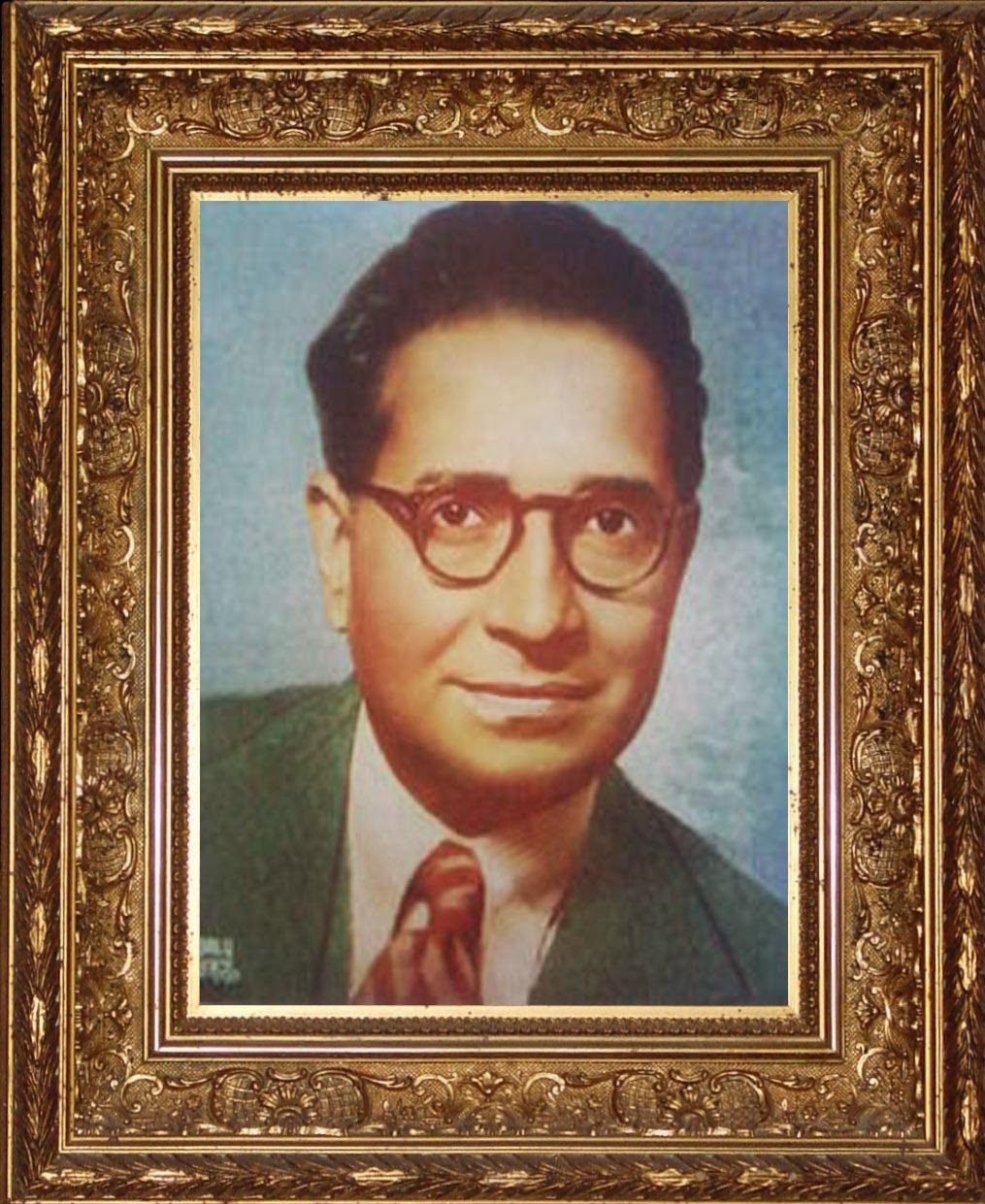
Kariamanickam Srinivasa Krishnan
 India
IndiaAlso known as: K. S. Krishnan, Sir K. S. Krishnan
Date de naissance
December 4, 1898
Signe astrologique
Sagittarius
Lieu de naissance
Watrap, Tamil Nadu, India
Âge
Décédé(e) à 62 ans
À propos
Kariamanickam Srinivasa Krishnan était un physicien et astrophysicien indien dont l'excellence expérimentale a contribué à dévoiler un phénomène fondamental de la lumière. Il est surtout connu comme le co-découvreur de l'effet Raman, l'effet pour lequel son mentor C. V. Raman a remporté le prix Nobel en 1930. Le travail méticuleux de Krishnan a jeté les bases expérimentales et théoriques de cette découverte.
Au-delà de l'effet Raman, Krishnan a apporté des contributions pionnières aux propriétés magnétiques des cristaux, développant des techniques pour mesurer l'anisotropie magnétique. Il était aussi à l'aise avec la théorie qu'avec l'expérience, une combinaison rare qui en a fait l'un des physiciens les plus polyvalents de l'Inde. En tant que premier directeur du National Physical Laboratory, il a contribué à façonner l'infrastructure scientifique de l'Inde après l'indépendance. Il a été élu membre de la Royal Society en 1940 et a reçu le Padma Bhushan en 1954.
Jeunesse et origines
Krishnan est né dans une famille brahmane à Viluppanoor, un village près de Watrap dans le Tamil Nadu. Son père était un agriculteur et un érudit imprégné de littérature et de philosophie tamoules, et sa mère gérait les terres agricoles familiales. De son père, Krishnan a hérité de l'amour pour les classiques tamouls et les épopées.
Il a commencé son éducation à la Hindu Higher Secondary School de Watrap, puis a fréquenté l'American College à Madurai. Il a ensuite rejoint le Madras Christian College, où il a obtenu un diplôme en physique. Après avoir obtenu son diplôme, il a accepté un poste de démonstrateur en chimie dans le même collège. Ses discussions informelles pendant la pause déjeuner sur la physique et la chimie sont devenues si populaires que les étudiants se pressaient pour écouter. C'est pendant cette période que sa curiosité scientifique a attiré l'attention de C. V. Raman, qui l'a invité à Calcutta en 1920.
Évolution de carrière
En 1920, Krishnan a rejoint C. V. Raman à l'Indian Association for the Cultivation of Science à Calcutta. La collaboration a été intense. Au cours des huit années suivantes, ils ont exploré la diffusion de la lumière dans les liquides et les solides. En 1928, ils ont observé que la lumière diffusée contenait des longueurs d'onde absentes du faisceau d'origine, l'effet Raman. Krishnan a plus tard qualifié cette période de la plus épanouissante de sa vie scientifique.
Après la découverte, Krishnan a déménagé à l'Université de Dacca en tant que lecteur, où il a réorienté ses recherches vers le magnétisme. Il a développé des méthodes pour mesurer l'anisotropie magnétique des cristaux, un travail qui reste influent. En 1942, il est devenu chef du département de physique à l'Université d'Allahabad. Puis, en 1948, le Premier ministre Jawaharlal Nehru l'a nommé premier directeur du National Physical Laboratory à New Delhi. Là, Krishnan a développé des programmes de recherche, recruté de jeunes scientifiques et mis en place des laboratoires de standards qui sont devenus l'épine dorsale de la métrologie indienne.
Chronologie de carrière
Image publique et style
Krishnan est rappelé comme un scientifique dévoué et un architecte clé de la physique indienne. Il est souvent appelé l'homme derrière le premier prix Nobel asiatique en sciences, une étiquette qui résume à la fois sa contribution et l'ombre projetée par la renommée de Raman. Dans les cercles scientifiques indiens, il est respecté pour son intégrité, son approche pratique en laboratoire et son rôle dans la construction d'institutions. Il n'y a pas de fandom organisé, mais son héritage est célébré chaque année lors de ses anniversaires de naissance et de décès par des académies scientifiques.
Notoriété et fandom
Kariamanickam Srinivasa Krishnan stands as a monumental figure in the history of Indian science, revered not for celebrity status but for his pivotal role in one of physics' greatest discoveries. Despite being the essential experimentalist behind the Raman Effect, he does not currently hold a placement in the published Global Top 1,000 or any Top-100 scope list within the iFANN rankings. This absence reflects the unique nature of his legacy; while he commands immense respect among physicists and historians, he lacks the mass-market commercial metrics that drive modern fame charts. The scientific community has long debated whether his contributions were overshadowed by his mentor C.V. Raman, a narrative that has sparked renewed academic interest in recent years rather than a surge in pop culture visibility. His recognition remains anchored in institutional naming, academic citations, and the annual observance of National Science Day, where his work is acknowledged alongside Raman's Nobel Prize. There is no formal fandom name associated with Krishnan, nor are there organized fan clubs, social media campaigns, or ritualistic gatherings dedicated to him. Instead, his audience consists of students, researchers, and science communicators who advocate for a more complete historical record of his life. This intellectual rediscovery serves as his form of tribute, ensuring that the story of the man who helped unlock the secrets of light scattering is told with the gravity it deserves. While he never experienced the frenzy of a rock star or the adoration of a movie idol, his standing in the annals of science is absolute, securing his place as a foundational architect of independent India's research infrastructure.
Faits intéressants et légendes
Kariamanickam Srinivasa Krishnan possessed a rare ability to captivate audiences with stories from the Ramayana and Mahabharata, often weaving deep philosophical insights into his narratives. His dedication was so profound that he began laboratory work at 6 a.m. every single day. Beyond the lab, he was a passionate football fan who spent many evenings watching matches. He was fluent in Sanskrit and Tamil, possessing a deep knowledge of their classical literature that complemented his scientific rigor. Colleagues frequently noted that he was equally skilled in theory and experiment, a combination that set him apart from his peers. The most enduring legend surrounding Krishnan involves his critical role in the co-discovery of the Raman Effect. While C.V. Raman received the Nobel Prize in 1930, a persistent story in scientific circles credits Krishnan with conducting the crucial experiments that proved the effect was real. This narrative of the "unsung hero" who laid the groundwork while receiving less public acclaim has become a central part of his lore, sparking ongoing discussions about credit attribution in science. Another iconic chapter in his life is his appointment as the first Director of the National Physical Laboratory in New Delhi following India's independence. This achievement is widely cited as a reflection of his leadership, marking the beginning of organized scientific research infrastructure in the newly independent nation.
Famille et vie privée
Krishnan est né d'un père agriculteur-érudit et d'une mère qui gérait les terres familiales. Les détails concernant son propre mariage et ses enfants ne sont pas largement consignés dans les sources disponibles. Il est resté profondément lié à ses racines tamoules et parlait souvent de l'influence de son père sur son amour pour la littérature et la philosophie.
Relations notables
La collaboration la plus importante de Krishnan fut avec C. V. Raman, son mentor et co-découvreur de l'effet Raman. Il fut également étroitement associé au Premier ministre Jawaharlal Nehru, qui le nomma à la tête du National Physical Laboratory. Son travail a influencé une génération de physiciens indiens, notamment S. N. Bose et Meghnad Saha.
Relations et vie amoureuse
Décès et conséquences
Décès
June 14, 1961 (à 62 ans)
Lieu de décès
New Delhi
Cause du décès
reported heart attack
Sir Kariamanickam Srinivasa Krishnan passed away early in the morning of June 14, 1961, in New Delhi, as reported by contemporary accounts including The New York Times. The eminent physicist and co-discoverer of Raman scattering succumbed to a heart attack at the age of 62, marking the end of a life dedicated to unlocking the fundamental properties of light and magnetism., the medical cause was established through immediate reports from his location without dispute regarding the date or circumstances of his passing. The scientific community and the nation responded with profound reverence rather than mass public gatherings.
Prime Minister Jawaharlal Nehru offered a defining tribute, describing Krishnan as a perfect citizen, a sentiment that echoed through official retrospectives and cemented his status within India's intellectual history. His legacy had already been secured by his pivotal role alongside C.V. Raman in the discovery that earned the Nobel Prize, and he remained a respected figure even after receiving the Bharat Ratna posthumously in 1958. Although specific details about funeral arrangements or burial locations remain unrecorded in standard sources, his contributions were immortalized through the National Physical Laboratory in New Delhi, an institution he helped establish as its first director.
In the decades following his death, Krishnan became the subject of numerous academic publications and biographies aimed at highlighting his foundational role in Indian science. He was inducted into various halls of fame and recognized as a key architect of the country's scientific infrastructure, with his life story frequently featured in documentaries and news segments discussing his proof of the Raman Effect. No films or books focus solely on his demise, yet his influence persists through the standards laboratories and research programs he built.
Récompenses remportées (4)
Krishnan a été élu membre de la Royal Society en 1940, l'une des plus hautes distinctions pour un scientifique. Il a reçu le Padma Bhushan, la troisième plus haute distinction civile de l'Inde, en 1954. Il a également été anobli et a reçu le prix Bhatnagar.
1940 · Science
1954 · Civil
Connu pour
Co-discovery of Raman scattering
1928 · Codécouvreur
Magnetic anisotropy of crystals
1930 · Chercheur
First Director of National Physical Laboratory
1948 · Réalisateur
Mots-clés
Sources
Faits clés
- Profession
- physicist, astrophysicist
- Né(e) le
- December 4, 1898
- Lieu de naissance
- Watrap, Tamil Nadu, India
- Décès
- June 14, 1961
- Genre
- Homme
- Signe astrologique
- Sagittarius
Informations personnelles
- Nom complet
- Kariamanickam Srinivasa Krishnan
- Formation
- Madras Christian College (Physics degree)
Questions fréquentes
Qui était Kariamanickam Srinivasa Krishnan ?
Qu'est-ce que l'effet Raman et quel a été le rôle de Krishnan ?
Quelles ont été les autres contributions scientifiques de Krishnan ?
Quel était le rôle de Krishnan dans l'administration scientifique indienne ?
Quand et où K. S. Krishnan est-il né et quand est-il décédé ?
Personnalités similaires
Rejoindre la communauté
fans en discussion