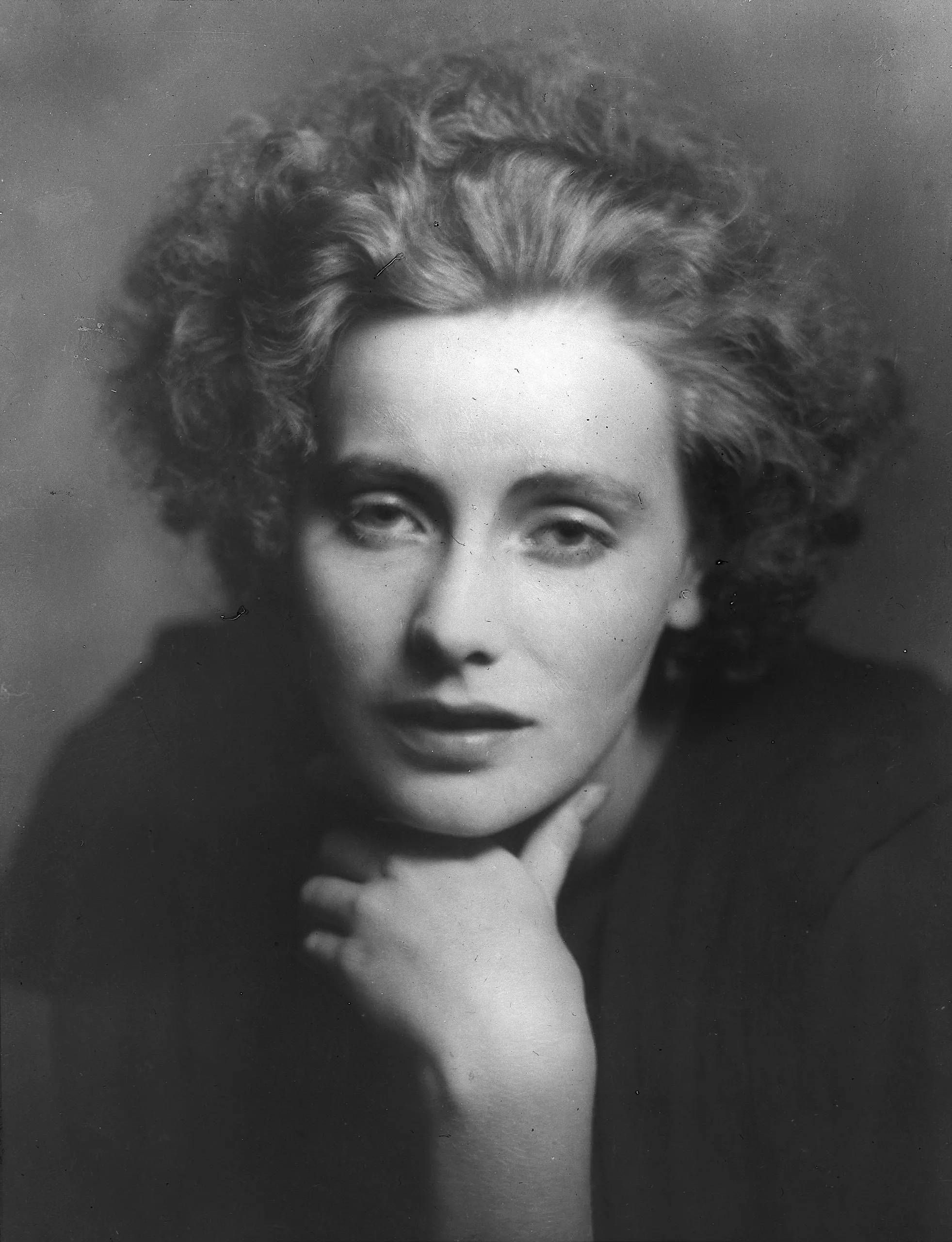
Greta Garbo
 Sweden
Also known as: Greta Lovisa Gustafsson
Date de naissance
September 18, 1905
Signe astrologique
Virgo
Lieu de naissance
Stockholm, Sweden
Âge
Décédé(e) à 84 ans
Taille
5 ft 7 in (170 cm)
À propos
Greta Garbo was a Swedish-born actress who became one of the most enigmatic and celebrated figures in Hollywood history, first as a silent film star and later in the early sound era. Her melancholic screen presence and understated performances made her a global icon. In 1999, the American Film Institute ranked her fifth among the greatest female stars of classic Hollywood. Today, her legend endures through her films and the enduring mystique of her reclusive retirement.
After a supporting role in the 1924 Swedish film The Saga of Gösta Berling, Garbo caught the eye of MGM chief Louis B. Mayer. She moved to Hollywood in 1925 and made her American debut in Torrent (1926). Her third US film, Flesh and the Devil (1926), opposite John Gilbert, turned her into an international sensation. By 1928, with A Woman of Affairs, she became MGM's top box-office draw. Other silent hits included The Mysterious Lady (1928) and The Kiss (1929).
Garbo's transition to sound was a major event. MGM promoted her first talkie, Anna Christie (1930), with the tagline "Garbo talks!" She earned Academy Award nominations for that film and Romance (1930). By 1932, her clout allowed her to control her roles. She starred in Mata Hari (1931), Grand Hotel (1932), Queen Christina (1933), and Anna Karenina (1935). Many consider her performance in Camille (1936) her finest, earning a third Oscar nomination. But by 1938, she was labeled "box office poison." A comedic turn in Ninotchka (1939) revived her career and brought a fourth nomination. Her final film, Two-Faced Woman (1941), was a critical disappointment. Over a 17-year career, she made 28 feature films.
After retiring, Garbo shunned publicity entirely. She became a reclusive art collector, acquiring works by Renoir, Bonnard, and van Dongen. She turned down all offers to return to the screen. In 1954, she received an Academy Honorary Award for her luminous performances. Four years before her death at age 84 on April 15, 1990, she told a biographer: "I was tired of Hollywood. I did not like my work." Her mystique only grew in her absence.
Jeunesse et origines
Greta Lovisa Gustafsson est née le 18 septembre 1905 à Stockholm, en Suède, la plus jeune de trois enfants. Son père, Karl Alfred Gustafsson, était ouvrier et balayeur de rues ; sa mère, Anna Lovisa, tenait la maison. La famille vivait dans un appartement sans eau chaude dans le quartier ouvrier de Södermalm. Quand Garbo avait 14 ans, son père est mort de la tuberculose, la forçant à quitter l'école à la Högre Normalskola för Flickor pour subvenir aux besoins de la famille.
Son premier emploi a été celui de savonneuse dans un salon de coiffure, appliquant de la mousse sur le visage des clients pour le rasage. Elle a ensuite travaillé comme employée au grand magasin PUB à Stockholm, où elle a posé pour des chapeaux dans les catalogues du magasin. Cela a conduit à sa première apparition au cinéma : un bref rôle dans le court métrage comique de 1920 Comment ne pas s'habiller (aussi connu sous le titre M. et Mme Stockholm font les courses). Elle est apparue dans deux autres courts métrages comiques en 1921 et 1922, mais ceux-ci étaient mineurs.
Sa chance décisive survient en 1922 lorsqu'elle remporte une bourse pour l'école d'art dramatique du Théâtre dramatique royal de Stockholm. Là, elle est découverte par le réalisateur Mauritz Stiller, qui devient son mentor et lui donne le nom de scène « Garbo » (une variante d'un nom d'esprit folklorique suédois). Stiller la fait jouer dans l'épopée suédoise de 1924 La Légende de Gösta Berling, qui attire l'attention internationale. Stiller négocie ensuite un contrat avec Louis B. Mayer de la MGM, et Garbo s'installe à Hollywood en 1925, juste avant son 20e anniversaire.
Évolution de carrière
Les débuts américains de Garbo ont lieu dans Torrent (1926), mais c'est son troisième film américain, La Chair et le Diable (1926), aux côtés de John Gilbert, qui fait d'elle une star internationale. En 1928, avec Une femme d'affaires, elle devient la tête d'affiche de la MGM. Elle réussit sa transition vers le parlant en 1930 avec Anna Christie, promu avec le slogan « Garbo parle ! ». Le film lui vaut sa première nomination aux Oscars. Elle reçoit une deuxième nomination la même année pour Romance.
Les années 1930 sont son apogée. Elle joue dans Mata Hari (1931), le film à grand spectacle Grand Hôtel (1932) qui remporte l'Oscar du meilleur film, La Reine Christine (1933), Anna Karénine (1935) et Camille (1936), considérée comme sa meilleure performance et lui valant une troisième nomination aux Oscars. Après avoir été étiquetée « poison au box-office » en 1938, elle relance sa carrière avec la comédie Ninotchka (1939), obtenant une quatrième nomination. Son dernier film, La Femme aux deux visages (1941), est un échec critique. En 17 ans, elle tourne 28 longs métrages. Elle ne revient jamais à l'écran.
Chronologie de carrière
Image publique et style
L'image publique de Garbo est celle de l'énigme ultime : une beauté recluse et mélancolique qui a rejeté la célébrité. La presse a inventé des termes comme « le mystère Garbo » et « le Sphinx suédois ». Son style signature était androgyne et minimaliste : chapeaux à larges bords, trench-coats, costumes sur mesure et maquillage minimal. Le « look Garbo » (cheveux lissés en arrière, yeux sombres) est devenu iconique et a influencé des créateurs comme Coco Chanel et Yves Saint Laurent. Les fans, parfois appelés « garbo-philes », la célèbrent à travers des projections annuelles et des forums en ligne. Sa présence sur les réseaux sociaux est maintenue par des comptes de fans, qui adoptent un ton respectueux et nostalgique mettant l'accent sur son talent artistique et son mystère.
Notoriété et fandom
Greta Garbo's fanbase is as enigmatic as the star herself. Unlike modern fandoms with official names and organized campaigns, her admirers have never adopted a collective identifier. They are simply devoted cinephiles and classic film enthusiasts who gather in digital spaces to celebrate her legacy. The Instagram account @alwaysgarbo, established in 2020, serves as a hub for contemporary fans, sharing archival photos and film stills. On Reddit's r/classicfilms, discussions about her enduring relevance are common. This fanbase is archival and preservation-focused, mirroring Garbo's own retreat from the public eye. She gave her audience her art, performances in Camille, Ninotchka, and Grand Hotel, and in return asked only for privacy. Her famous quote, 'I am only an image, and that is all I can be to you,' encapsulates this transactional relationship. Posthumously, fans honor her through screenings and retrospectives, like the 2025 return of Camille to Palm Springs.
In the realm of global fame, iFANN's Global Fame Engine has evaluated Greta Garbo, but she does not currently hold a placement in the published rankings, whether the Global Top 1,000 or any Top-100 scope list. Her fame, however, remains monumental, sustained by her iconic films and her legendary reclusiveness, ensuring her status as one of cinema's most enduring figures.
Faits intéressants et légendes
Garbo was a cat lover and owned several cats throughout her life. She was an avid reader with a library of thousands of books. She spoke four languages: Swedish, English, German, and French. In her later years, she painted but never exhibited her work. She never watched her own films after retiring. Her famous quote 'I want to be alone' is a misquote; she actually said 'I want to be left alone.' She turned down the role of Mrs. Miniver, which went to Greer Garson and won an Oscar. Unsubstantiated rumors claimed she worked for British intelligence during WWII. She never won a competitive Oscar despite four nominations.
One of the most enduring legends is the 'Garbo Talks!' moment in Anna Christie (1930). After years of silence, her first spoken line, 'Gimme a whiskey, ginger ale on the side, and don't be stingy, baby', was met with gasps and applause, marking a pivotal transition in film history. Another legend is her sudden retirement in 1941, when she vanished from public life without explanation, spending the next five decades in near-seclusion. Sightings of her walking New York streets became minor cultural events. A story fans still retell involves her rare moment of regret, when she said, 'I was so stupid not to partake more,' humanizing the myth of the aloof recluse.
Citations notables
“I want to be left alone.”
“I was tired of Hollywood. I did not like my work.”
“There are some who want to live, and others who want to act. I am one of the former.”
“The most important thing in life is to be yourself. Unless you can be a movie star.”
“I never said, 'I want to be alone.' I only said, 'I want to be left alone.' There is a world of difference.”
“If you are afraid of being lonely, don't try to be a movie star.”
“My whole life has been a search for peace.”
Famille et vie privée
Garbo était la plus jeune de trois enfants. Son père, Karl Alfred Gustafsson, est mort de la tuberculose quand elle avait 14 ans. Sa mère, Anna Lovisa, était femme au foyer. Elle avait un frère aîné, Sven, et une sœur aînée, Alva. Aucun de ses frères et sœurs n'est entré dans l'industrie cinématographique. Garbo ne s'est jamais mariée et n'a pas eu d'enfants. Elle a vécu seule la majeure partie de sa vie, avec ses chats comme compagnons. Dans ses dernières années, elle vivait dans un appartement en copropriété au 450 East 52nd Street à New York.
Relations notables
Garbo a été découverte par le réalisateur Mauritz Stiller, qui l'a encadrée et lui a donné son nom de scène. Elle a eu une célèbre liaison avec son partenaire de jeu John Gilbert, qui l'a demandée en mariage à plusieurs reprises. Le patron de la MGM, Louis B. Mayer, l'a amenée à Hollywood. Elle a travaillé avec les réalisateurs George Cukor (Camille), Ernst Lubitsch (Ninotchka) et Clarence Brown (cinq films). Ses partenaires de jeu fréquents incluaient Robert Taylor, Charles Boyer et Melvyn Douglas. Le photographe Cecil Beaton était un ami proche.
Relations et vie amoureuse
La relation la plus significative de Garbo a été avec l'acteur John Gilbert, qu'elle a rencontré sur le tournage de La Chair et le Diable en 1926. Ils se sont fiancés, mais elle ne s'est jamais présentée au mariage. Ils sont restés amis jusqu'à sa mort en 1936. Elle a dit plus tard : « J'aimais John Gilbert, mais je ne pouvais pas l'épouser. » Elle avait un lien étroit avec son mentor Mauritz Stiller, bien que cela fût probablement platonique. Dans les années 1930, elle a eu de brèves relations avec le chef d'orchestre Leopold Stokowski et le photographe Cecil Beaton. On a supposé qu'elle avait eu une liaison à long terme avec la dramaturge Mercedes de Acosta. Sa compagnie la plus durable a été avec George Schlee, un homme d'affaires d'origine russe, des années 1940 jusqu'à sa mort en 1964. Elle ne s'est jamais mariée et n'a pas eu d'enfants.
- A fréquentéMauritz Stiller1924 - 1927Mentor et réalisateur ; relation probablement platonique car Stiller était homosexuel.
- Fiancé(e)John Gilbert1926 - 1929Partenaire de jeu et grand amour ; il a demandé sa main à plusieurs reprises ; elle a accepté une fois mais ne l'a jamais épousé.
- A fréquentéCecil Beaton1930 - 1930Photographe et designer ; amitié amoureuse, probablement non sexuelle.
- A fréquentéLeopold Stokowski1937 - 1938Brève relation discrète avec le chef d'orchestre.
- A fréquentéMercedes de Acosta1931 - 1940Relation amoureuse présumée à long terme ; de Acosta a affirmé qu'ils étaient amants.
- A fréquentéGeorge Schlee1940 - 1964Compagnon et conseiller constant ; vivait dans le même immeuble ; Garbo dévastée après sa mort.
Décès et conséquences
Décès
April 15, 1990 (à 84 ans)
Lieu de décès
New York City, New York, USA
Cause du décès
Acute pneumonia and heart failure
The Academy of Motion Picture Arts and Sciences honored Greta Garbo with a posthumous Honorary Award in 1990 for her unforgettable screen performances, cementing a legacy that had long transcended the need for public applause. Tributes poured in from peers like Joan Crawford and Sidney Lumet, who remembered her as a great lady and a mystery, while the American Film Institute issued formal statements honoring her status among the greatest female stars of classic Hollywood. Sales of her films surged temporarily. Garbo passed away on April 15, 1990, at her apartment located at 11 West 52nd Street in New York City, having lived in seclusion for decades following her retirement in 1941.
Her physician provided a medical statement confirming acute pneumonia and heart failure as the official cause, a ruling accepted by the New York City Medical Examiner's office. She made no public appearances after the early 1950s. A private funeral service took place at Riverside Church in New York City two days after her death, attended only by close family members including her niece Brita Arvidson and her longtime companion Marguerite Chapuy. Following the service, she was cremated and her ashes were transported to Stockholm, where they were interred at Norra Begravningsplatsen near Solna in a private ceremony.
Fortune (valeur de la succession)
$60 Million
Estimation de l’équipe éditoriale d’iFANN
iFANN currently estimates Greta Garbo's estate at $60 million. At her death in 1990, probate records valued it at about $32 million, and the estate has grown through art appreciation and ongoing licensing. Garbo earned up to $250,000 per film in the 1930s, equivalent to about $5 million today. She owned an art collection with works by Renoir, Bonnard, and van Dongen, now worth significantly more. Her New York apartment at 450 East 52nd Street was valued at $5-10 million. She invested conservatively in stocks and bonds. Posthumous earnings from film royalties, documentary licensing, and merchandise generate approximately $1-2 million annually, managed by the Garbo Estate Trust.
Récompenses remportées (21)
Garbo a reçu un Oscar d'honneur en 1954 pour ses performances lumineuses et inoubliables à l'écran. Elle a remporté le New York Film Critics Circle Award et la Coupe Volpi au Festival de Venise pour Camille (1936). Elle a reçu plusieurs Photoplay Medals of Honor en tant qu'actrice la plus populaire. En 1977, elle a été décorée de l'Ordre royal suédois de l'Étoile polaire. Elle n'a jamais gagné un Oscar compétitif malgré quatre nominations.
1954 · Academy Honorary Award
—N/a
1954 · Oscar d'honneur
Career
Connu pour
Camille
1936 · Marguerite Gautier
Grand Hotel
1932 · Grusinskaya
Ninotchka
1939 · Ninotchka
Anna Karenina
1935 · Anna Karenina
Queen Christina
1933 · Queen Christina
Mata Hari
1931 · Mata Hari
Flesh and the Devil
1926 · Felicitas
Mots-clés
Faits clés
- Profession
- actor, film actor, stage actor
- Né(e) le
- +1905-09-18
- Lieu de naissance
- Stockholm, Sweden
- Décès
- +1990-04-15
- Lieu de décès
- New York
- Genre
- Femme
- Signe astrologique
- Virgo
Informations personnelles
- Nom complet
- Greta Lovisa Gustafsson
- Taille
- 5 ft 7 in (170 cm)
- Formation
- Royal Dramatic Theatre's acting school (attended, no degree)
Filmographie
28
Total
28
Cinéma
0
TV
Questions fréquentes
Greta Garbo est-elle encore en vie ?
Greta Garbo s'est-elle jamais mariée ?
Quelle était la fortune de Greta Garbo ?
Pourquoi Greta Garbo a-t-elle pris sa retraite ?
Greta Garbo a-t-elle eu des enfants ?
Réseaux sociaux
Personnalités similaires
Rejoindre la communauté
fans en discussion