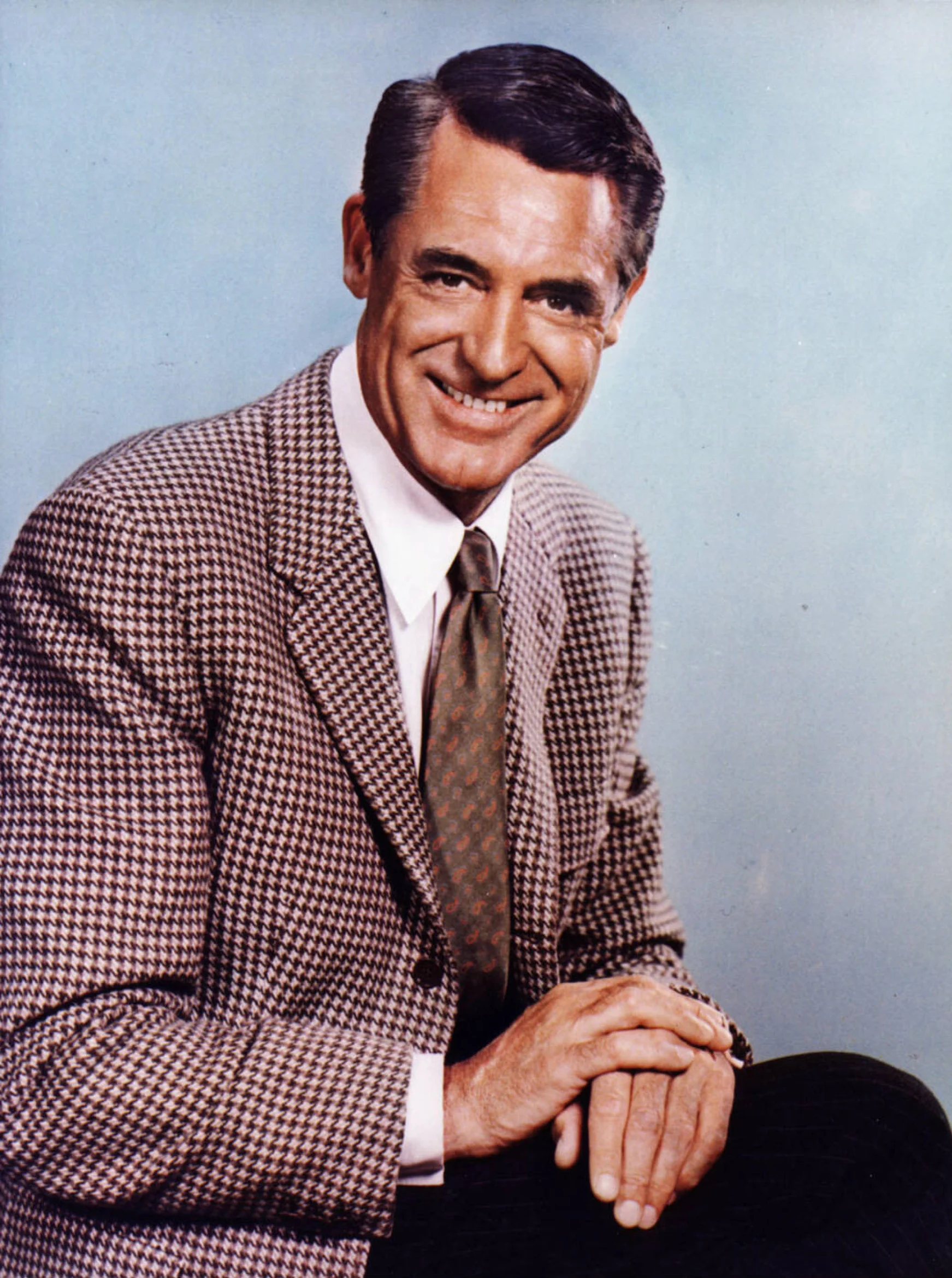
Cary Grant
 United Kingdom
film actor•writer•autobiographer
Also known as: Archibald Alec Leach
Date de naissance
January 18, 1904
Signe astrologique
Capricorn
Lieu de naissance
Bristol, England
Âge
Décédé(e) à 82 ans
Taille
6 ft 1 in (185 cm)
À propos
Cary Grant était un acteur anglo-américain qui a incarné la sophistication et le charme à l'écran pendant plus de trois décennies. Né Archibald Alec Leach à Bristol, en Angleterre, il est devenu l'une des stars les plus durables d'Hollywood. Le mélange caractéristique de raffinement britannique et d'aisance américaine de Grant, associé à un timing comique impeccable, a fait de lui le principal leading man des comédies loufoques et des thrillers romantiques. Il a été la tête d'affiche de classiques comme The Awful Truth, Bringing Up Baby, His Girl Friday et North by Northwest. L'American Film Institute l'a classé deuxième plus grande star masculine de l'âge d'or d'Hollywood en 1999. Grant n'a jamais remporté d'Oscar compétitif mais a reçu un Oscar d'honneur en 1970 et un Kennedy Center Honor en 1981. Aujourd'hui, ses films continuent de captiver le public par leur esprit et leur élégance.
Jeunesse et origines
Archibald Alec Leach a grandi dans le quartier ouvrier de Horfield, à Bristol. Sa mère, Elsie Maria Leach, a été internée dans un établissement psychiatrique lorsqu'il avait neuf ans, et son père, Elias Leach, un repasseur de tailleur alcoolique, lui a dit qu'elle était morte. Cette perte a marqué son enfance. Une visite au Bristol Hippodrome a éveillé sa fascination pour le théâtre. À 14 ans, il a quitté l'école et a rejoint la troupe Bob Pender, un spectacle de vaudeville, en tant qu'échassier et acrobate. La troupe a tourné en Angleterre puis aux États-Unis, où Grant a décidé de rester après la fin de la tournée en 1920. Il s'est produit dans le vaudeville et le burlesque à New York, perfectionnant son timing comique et sa présence scénique. Tout au long des années 1920, il a gravi les échelons, apparaissant dans des comédies musicales à Broadway. En 1931, Paramount Pictures lui a proposé un essai à l'écran, et il a déménagé à Hollywood, changeant son nom pour Cary Grant sur la suggestion du studio. Son premier rôle au cinéma a été une petite partie dans This Is the Night (1932).
Évolution de carrière
La percée de Grant est venue avec une série de comédies loufoques à la fin des années 1930. The Awful Truth (1937) a mis en valeur son esprit naturel aux côtés d'Irene Dunne, et Bringing Up Baby (1938) l'a associé à Katharine Hepburn dans une farce déjantée. His Girl Friday (1940) et The Philadelphia Story (1940) ont cimenté sa réputation. Il a également montré une gamme dramatique dans Only Angels Have Wings (1939) et Penny Serenade (1941), qui lui a valu sa première nomination aux Oscars. Sa deuxième nomination est venue pour None but the Lonely Heart (1944). Les collaborations avec Alfred Hitchcock ont produit certaines de ses œuvres les plus emblématiques : Suspicion (1941), Notorious (1946), To Catch a Thief (1955) et North by Northwest (1959). Les succès ultérieurs incluent An Affair to Remember (1957), Operation Petticoat (1959) et Charade (1963). Il a pris sa retraite d'acteur en 1966, se concentrant sur des rôles commerciaux, notamment un siège au conseil d'administration de MGM et un poste chez Fabergé.
Chronologie de carrière
Image publique et style
La personnalité publique de Grant était une élégance et un charme sans effort. Il s'habillait impeccablement, parlait avec un accent transatlantique et se comportait avec une confiance détendue qui le rendait à la fois accessible et inaccessible. Les médias le décrivaient souvent comme l'homme le plus beau d'Hollywood. Les fans adoraient son timing comique et ses rôles romantiques, et ses films restent populaires à travers les générations. Grant était réservé sur sa vie personnelle, accordant rarement des interviews, mais son charisme à l'écran a créé une base de fans dévouée. Son style a influencé la mode masculine pendant des décennies, popularisant le look Cary Grant de costumes sur mesure et de sophistication décontractée.
Notoriété et fandom
Cary Grant's fame is a curious thing: it outlived the man, the era, and even the medium that made him a star. He was the second-greatest male star of Hollywood's Golden Age, according to the American Film Institute, a ranking that still carries weight in every discussion of classic cinema. Yet iFANN's Global Fame Engine, as of August 2026, has evaluated him but does not currently place him in its published rankings, no Global Top 1,000, no Top-100 scope list. The engine has assessed his global footprint, but he remains unranked, a status that says more about the algorithm's present focus than about his legacy.
His fanbase, vast and enduring, never adopted a formal name. In an era before internet fandoms, his admirers were simply 'Cary Grant fans', an audience that spanned genders and generations, from women swooning over his romantic leads to men admiring his comedic timing. That broad appeal was itself a kind of fame, one that allowed him unprecedented creative control in Hollywood. When he retired in 1966, it was front-page news; when he returned for Alfred Hitchcock's Family Plot in 1976, the release was an event. Today, his films remain staples of revival circuits, his Palm Springs retreat hits the market and makes headlines, and new generations discover him through retrospectives and listicles. The fame may not register in a 2026 ranking, but the cultural presence is unmistakable.
Faits intéressants et légendes
Cary Grant's life was full of contradictions that fans still relish. He co-invented a reclining airplane seat with his wife Betsy Drake, patenting it in 1959. He was an avid collector of rare books, owning a first-edition Shakespeare folio. His grooming was meticulous, he shaved twice a day and wore suits custom-made by Savile Row. Despite his suave image, he was famously insecure about his acting, often seeking reassurance from directors, and he never watched his own films after they were completed. He was close friends with director Howard Hawks and loved practical jokes on set. He turned down the role of James Bond in Dr. No, believing he was too old.
Among the legends, one stands out: the quote 'Everyone wants to be Cary Grant. Even I want to be Cary Grant.' Whether he actually said it is debated, it may be a paraphrase, but it perfectly captures the gulf between his on-screen persona and his private self. Another astonishing chapter: his advocacy for LSD therapy in the 1950s and 1960s. He credited it with transforming his emotional life, even describing a session where he imagined himself as 'a giant penis launching off from Earth.' The contrast between his immaculate public image and his embrace of a then-illegal psychedelic remains one of Hollywood's most fascinating stories.
Citations notables
“I pretended to be somebody I'm not, and eventually became somebody I was pretending to be.”
“My formula for living is to try and make the best of human beings, not to try and make them perfect. That is impossible.”
“I would rather be a charlatan than a nobody.”
“I've spent a lifetime trying to find happiness, and I've found it in the most unexpected places.”
Famille et vie privée
La mère de Grant, Elsie, a été libérée de l'institution en 1935, et il l'a soutenue financièrement pour le reste de sa vie. Son père, Elias, est mort en 1947. Grant n'avait pas de frères et sœurs. Il s'est marié cinq fois : Virginia Cherrill (1934-1935), Barbara Hutton (1942-1945), Betsy Drake (1949-1962), Dyan Cannon (1965-1968) et Barbara Harris (1981-1986). Son unique enfant, Jennifer Grant, est née en 1966 avec Dyan Cannon. Grant adorait Jennifer et parlait souvent de la joie de la paternité plus tard dans la vie. Il vivait dans une maison à Beverly Hills et possédait plus tard un penthouse à New York. Il n'avait pas d'animaux de compagnie.
Relations notables
Cary Grant a fréquemment collaboré avec le réalisateur Alfred Hitchcock, jouant dans quatre de ses films. Il a partagé l'écran avec Katharine Hepburn dans Bringing Up Baby et The Philadelphia Story, et avec Rosalind Russell dans His Girl Friday. Il a également travaillé avec Ingrid Bergman dans Notorious et Indiscreet, et avec Audrey Hepburn dans Charade.
Relations et vie amoureuse
Le premier mariage de Grant fut avec l'actrice Virginia Cherrill en 1934. Ils divorcèrent après moins d'un an, apparemment en raison de sa concentration intense sur sa carrière. En 1942, il épousa l'héritière Woolworth Barbara Hutton. Le mariage fut très médiatisé et tendu par le désir de discrétion de Grant ; ils divorcèrent en 1945. Il épousa l'actrice Betsy Drake en 1949. Ils partageaient des intérêts pour les voyages et la psychologie, et restèrent mariés 13 ans avant de divorcer en 1962. Grant épousa ensuite l'actrice Dyan Cannon en 1965. Ils eurent une fille, Jennifer, en 1966, mais le mariage se termina par un divorce en 1968, Cannon citant le désir de Grant qu'elle abandonne le métier d'actrice. En 1981, Grant épousa Barbara Harris, une responsable des relations publiques et ancienne actrice. Ils restèrent ensemble jusqu'à la mort de Grant en 1986. En 1986, Grant était marié à Barbara Harris.
- Marié(e)Virginia Cherrill1934 - 1935Marié en 1934, divorcé en 1935. Le mariage fut bref en raison de la carrière exigeante de Grant.
- Marié(e)Barbara Hutton1942 - 1945A épousé l'héritière Woolworth ; la relation a été tendue par la couverture médiatique et les problèmes de vie privée.
- Marié(e)Betsy Drake1949 - 1962A épousé une actrice ; ils ont co-inventé un siège d'avion inclinable et ont divorcé à l'amiable.
- Marié(e)Dyan Cannon1965 - 1968A épousé une actrice ; a eu une fille, Jennifer Grant, en 1966. Divorcé en raison de conflits de carrière.
- Marié(e)Barbara Harris1981 - 1986ActuelA épousé une responsable des relations publiques ; est resté avec elle jusqu'à la mort de Grant.
Décès et conséquences
Décès
November 29, 1986 (à 82 ans)
Lieu de décès
Beverly Hills, California
Cause du décès
myocardial infarction
Barbara Harris Grant, Cary Grant's wife, confirmed to family and close associates that the actor had passed away peacefully in his sleep at their Beverly Hills residence. The official finding ruled a myocardial infarction as the cause of death. Grant died on November 29, 1986, marking the end of a life that had defined Hollywood sophistication for over three decades. His final days were spent in relative privacy following a long career that included cameo appearances like The Muppet Movie. Public reaction arrived through extensive obituaries from major outlets like the Associated Press rather than public vigils or memorial performances. Peers and colleagues expressed deep sorrow in statements released to the press, recalling his professionalism while tributes disseminated largely through written channels.
Streaming services and physical media sales of classics such as North by Northwest and Notorious saw increased visibility in the months following his passing, cementing his status as a timeless star. In accordance with his wishes and those of his family, no public funeral service was held and his remains were cremated. No specific date or location for the interment of his ashes has been made public by the estate. Posthumously, he received numerous honors including induction into the American Film Institute's list of greatest male stars, while his estate managed by his widow until her death in 2015 ensured strict confidentiality over his likeness and archives.
Fortune (valeur de la succession)
$10 Million
Estimation de l’équipe éditoriale d’iFANN
iFANN currently estimates Cary Grant's estate at $10 million. During his career, Grant earned substantial sums from his films, including a percentage of profits on later hits like Operation Petticoat and That Touch of Mink. He also made savvy business investments, notably as a board member of Metro-Goldwyn-Mayer and as a representative for Fabergé, where he helped market Brut cologne. After his death, his estate has generated income through licensing of his image and film residuals. His daughter Jennifer Grant manages his legacy, including book deals and documentary projects. The estate's value has grown modestly through careful management and ongoing royalties from his filmography.
Récompenses remportées (2)
Cary Grant a reçu un Oscar d'honneur en 1970 pour l'ensemble de sa contribution au cinéma. Il a également été honoré par le Kennedy Center Honor en 1981. Malgré deux nominations aux Oscars compétitifs, il n'a jamais gagné d'Oscar compétitif.
1970 · Oscar d'honneur
1981 · Lifetime Achievement
Connu pour
The Awful Truth
1937 · Jerry Warriner
Bringing Up Baby
1938 · David Huxley
His Girl Friday
1940 · Walter Burns
The Philadelphia Story
1940 · C. K. Dexter Haven
Notorious
1946 · T. R. Devlin
To Catch a Thief
1955 · John Robie
North by Northwest
1959 · Roger Thornhill
Mots-clés
Faits clés
Informations personnelles
- Nom complet
- Archibald Alec Leach
- Taille
- 6 ft 1 in (185 cm)
- Conjoint
- Virginia Cherrill, Barbara Hutton, Betsy Drake, Dyan Cannon, Barbara Harris
- Enfants
- Jennifer Grant
Filmographie
72
Total
72
Cinéma
0
TV
Questions fréquentes
Qui était Cary Grant ?
Quand Cary Grant est-il né et quand est-il mort ?
Quels étaient les films les plus célèbres de Cary Grant ?
Cary Grant a-t-il gagné des Oscars ?
Qui étaient les épouses de Cary Grant ?
Personnalités similaires
Rejoindre la communauté
fans en discussion