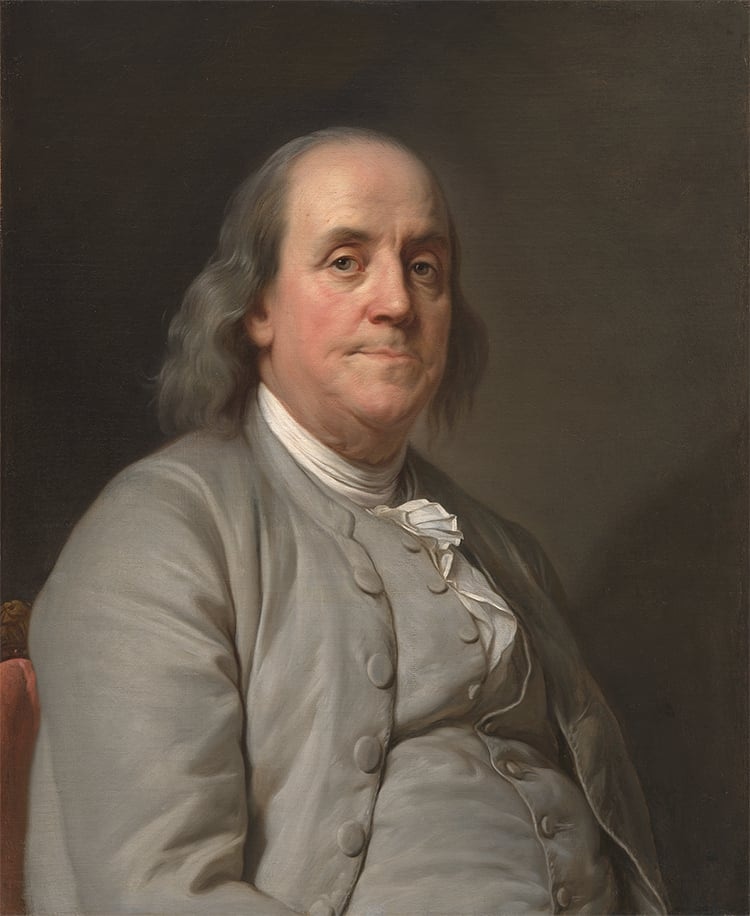
Benjamin Franklin
 United States
polymath•statesman•inventor•publisher
Also known as: Silence Dogood, Richard Saunders
Date de naissance
January 17, 1706
Signe astrologique
Capricorn
Lieu de naissance
Boston, Massachusetts Bay Colony
Âge
Décédé(e) à 84 ans
Taille
5 ft 9 in (175 cm)
À propos
Benjamin Franklin était un polymathe américain et l'un des pères fondateurs des États-Unis. Imprimeur, éditeur, scientifique, inventeur et diplomate de premier plan, son image est immédiatement reconnaissable sur le billet de 100 dollars en 2026, et son héritage couvre l'innovation civique, la découverte électrique et la diplomatie internationale. Franklin fut la seule personne à signer les quatre documents fondateurs clés des États-Unis : la Déclaration d'indépendance, le Traité d'alliance avec la France, le Traité de Paris et la Constitution. Il fut également le premier maître de poste du pays et président de la Pennsylvanie.
Les travaux scientifiques de Franklin firent de lui un géant des Lumières américaines. Son expérience du cerf-volant prouva que la foudre est de l'électricité, conduisant au paratonnerre. Il inventa aussi les lunettes à double foyer, le poêle Franklin et l'harmonica de verre, et cartographia le Gulf Stream. En tant qu'éditeur, il fit du Pennsylvania Gazette le journal le plus influent des colonies et s'enrichit avec Poor Richard's Almanack. Il fonda la Library Company, l'Université de Pennsylvanie et le premier service d'incendie de Philadelphie.
Dans la culture populaire, Franklin a été interprété par des acteurs allant de James Woods à Orson Welles, apparaissant dans plus de 200 films et émissions de télévision. Sa vie continue d'inspirer documentaires, mini-séries et biographies, consolidant sa place d'homme de la Renaissance américain par excellence.
Jeunesse et origines
Franklin est né le 17 janvier 1706 à Boston, dixième fils de Josiah Franklin, fabricant de savon et de bougies, et d'Abiah Folger. Il était l'un des 17 enfants. Sa scolarité formelle s'arrêta à 10 ans, après quoi il travailla dans l'atelier de son père. À 12 ans, il fut apprenti chez son frère aîné James, imprimeur. Cet apprentissage l'exposa au monde des idées et de l'écriture. Il contribua secrètement au journal de James, le New-England Courant, sous le pseudonyme Silence Dogood. Les essais furent populaires, mais lorsque James découvrit la supercherie, des tensions s'installèrent entre eux.
En 1723, après une brouille avec James, Franklin s'enfuit à Philadelphie, arrivant à 17 ans avec peu d'argent. Il trouva du travail dans des imprimeries et attira l'attention du gouverneur de Pennsylvanie, Sir William Keith, qui promit de l'aider à s'établir. Franklin voyagea à Londres pour acheter du matériel, mais les promesses de Keith se révélèrent vaines. Bloqué, Franklin travailla deux ans dans des imprimeries londoniennes, perfectionnant ses compétences et économisant de l'argent. Il retourna à Philadelphie en 1726 et travailla comme commis, comptable et imprimeur. En 1728, il ouvrit sa propre imprimerie avec un associé, Hugh Meredith.
Évolution de carrière
En 1729, à 23 ans, Franklin reprit le Pennsylvania Gazette, le transformant en journal le plus influent des colonies. Il publia également Poor Richard's Almanack de 1732 à 1758, un almanach annuel plein d'esprit qui le rendit riche. Ses initiatives civiques suivirent : il fonda la Library Company en 1731, l'Union Fire Company en 1736, et aida à établir l'Academy and College of Philadelphia (plus tard l'Université de Pennsylvanie) en 1749.
La percée scientifique de Franklin eut lieu en 1752 lorsqu'il fit voler un cerf-volant dans un orage, prouvant que la foudre est de l'électricité. Cela conduisit au paratonnerre et lui valut une renommée internationale. Il fut élu membre de la Royal Society en 1756 et reçut des diplômes honorifiques de Harvard, Yale et du College of William & Mary. En tant que diplomate, il servit comme agent colonial à Londres de 1757 à 1775, où il aida à obtenir l'abrogation du Stamp Act en 1766. Pendant la Révolution américaine, il fut nommé premier ambassadeur des États-Unis en France en 1776. Son charme et son intelligence permirent d'obtenir une aide financière et militaire cruciale de la France, changeant le cours de la guerre. Il négocia le Traité d'alliance avec la France en 1778 et signa le Traité de Paris en 1783, mettant fin au conflit. Plus tard, en tant que délégué à la Convention constitutionnelle en 1787, il aida à élaborer le Grand Compromis. Il fut président de la Pennsylvanie de 1785 à 1788. Dans ses dernières années, il devint un abolitionniste déclaré, pétitionnant le Congrès pour mettre fin à l'esclavage en 1790.
Chronologie de carrière
Image publique et style
La personnalité publique de Franklin est celle de la figure quintessentielle des Lumières américaines : spirituelle, pratique et infiniment curieuse. Son image sur le billet de 100 dollars, corpulente, portant des lunettes et un bonnet de fourrure, est immédiatement reconnaissable. Il est souvent dépeint dans les médias comme le Père fondateur charmant et avisé, le cool parmi les fondateurs. Ses aphorismes de Poor Richard's Almanack, comme « se coucher tôt et se lever tôt rend un homme en bonne santé, riche et sage », imprègnent la culture américaine. Les fans et historiens se disent souvent franklinistes. Sa présence sur les réseaux sociaux est inexistante, mais ses écrits continuent de circuler largement via des comptes institutionnels et des sociétés historiques. Son effigie est apparue plusieurs fois en couverture du TIME, notamment dans un numéro de 1932 avec le titre : « Benjamin Franklin : Il arracha la foudre au ciel et le sceptre aux tyrans. »
Notoriété et fandom
Benjamin Franklin remains a towering figure whose influence permeates centuries of global history, tracked continuously by the iFANN Global Fame Rankings. As of August 2026, he holds the position of the 368th most famous person in the world, a standing that has held steady from the previous cycle. Within his specific domain of historical and literary impact, he is recognized as the 19th most famous person in Books & Literature, also maintaining his rank without fluctuation. These placements reflect a legacy that transcends his era, cementing his status not merely as a historical subject but as an enduring icon of American identity. Despite his death nearly two centuries ago, the collective attention paid to his life and works ensures he remains relevant in modern discourse. The audience surrounding him does not operate under a formal moniker or organized fan club structure; rather, it consists of historians, students, and general enthusiasts who engage with his legacy through civic commemorations and educational institutions. While no official fandom name exists for those who revere his contributions, the sheer scale of his recognition confirms his permanent place in the global consciousness.
Faits intéressants et légendes
Benjamin Franklin was a vegetarian for a time and an avid chess player, later inducted into the U.S. Chess Hall of Fame. He proposed the turkey as the national symbol, calling the bald eagle a bird of bad moral character. Franklin invented a long arm for reaching books from high shelves and designed anti-counterfeiting measures for colonial paper currency. He was the first person to map the Gulf Stream and famously refused to patent the lightning rod, donating the idea to the public. His face on the $100 bill was chosen in 1914, representing thrift and industry, and he was inducted into the National Inventors Hall of Fame in 1973. A story fans still retell is the kite experiment, where Franklin allegedly flew a kite during a thunderstorm to prove that lightning is electrical. While historians note the dramatic image may be embellished, the event remains a documented scientific pursuit from the mid-18th century. Another iconic moment involves his quip at the Constitutional Convention in 1787, stating "A Republic, if you can keep it," which symbolizes the fragility of democracy. In August 2026, a lifelike statue of Franklin was lent to the Museum of Printing, and his famous "Join or Die" snake cartoon was featured in local Philadelphia news, highlighting the enduring visual iconography associated with him. His diplomatic success in France was so profound that he was lionized abroad, securing crucial support for the American Revolution while serving as a bridge between nations.
Citations notables
“Well done is better than well said.”
“There never was a good war or a bad peace.”
“They that can give up essential liberty to obtain a little temporary safety deserve neither liberty nor safety.”
“In this world nothing can be said to be certain, except death and taxes.”
“An investment in knowledge pays the best interest.”
Famille et vie privée
Franklin était le fils de Josiah Franklin, fabricant de savon et de bougies, et d'Abiah Folger. Il avait 16 frères et sœurs. Il contracta une union de fait avec Deborah Read en 1730. Ils élevèrent deux enfants ensemble : Francis Folger Franklin, mort de la variole à 4 ans, et Sarah Franklin Bache. Ils élevèrent également le fils illégitime de Franklin, William, dont l'identité de la mère reste inconnue. William devint plus tard le dernier gouverneur colonial du New Jersey et un loyaliste, provoquant une rupture permanente avec son père. Deborah géra l'imprimerie familiale pendant les longues absences de Franklin à l'étranger. Elle mourut en 1774.
Relations notables
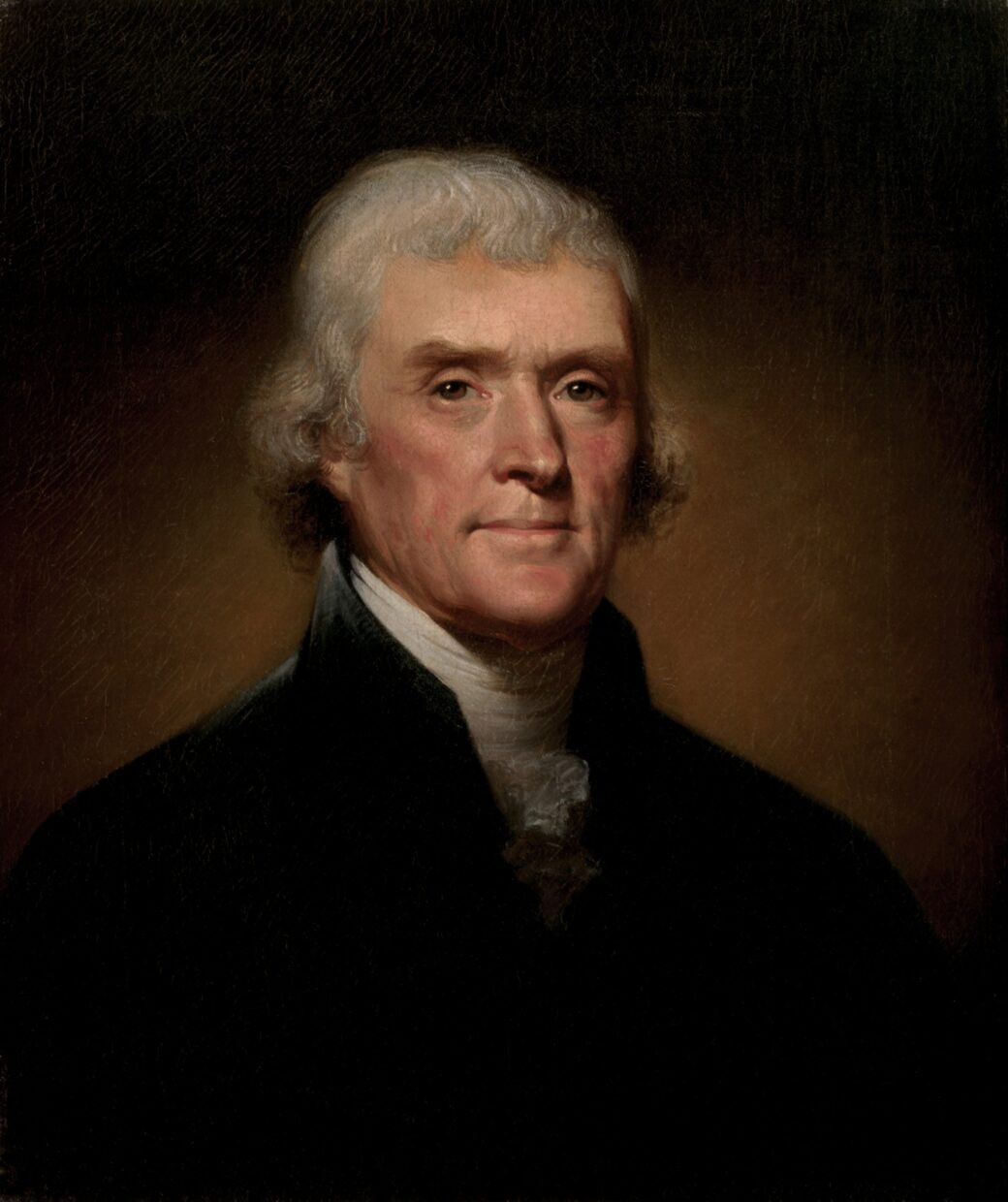
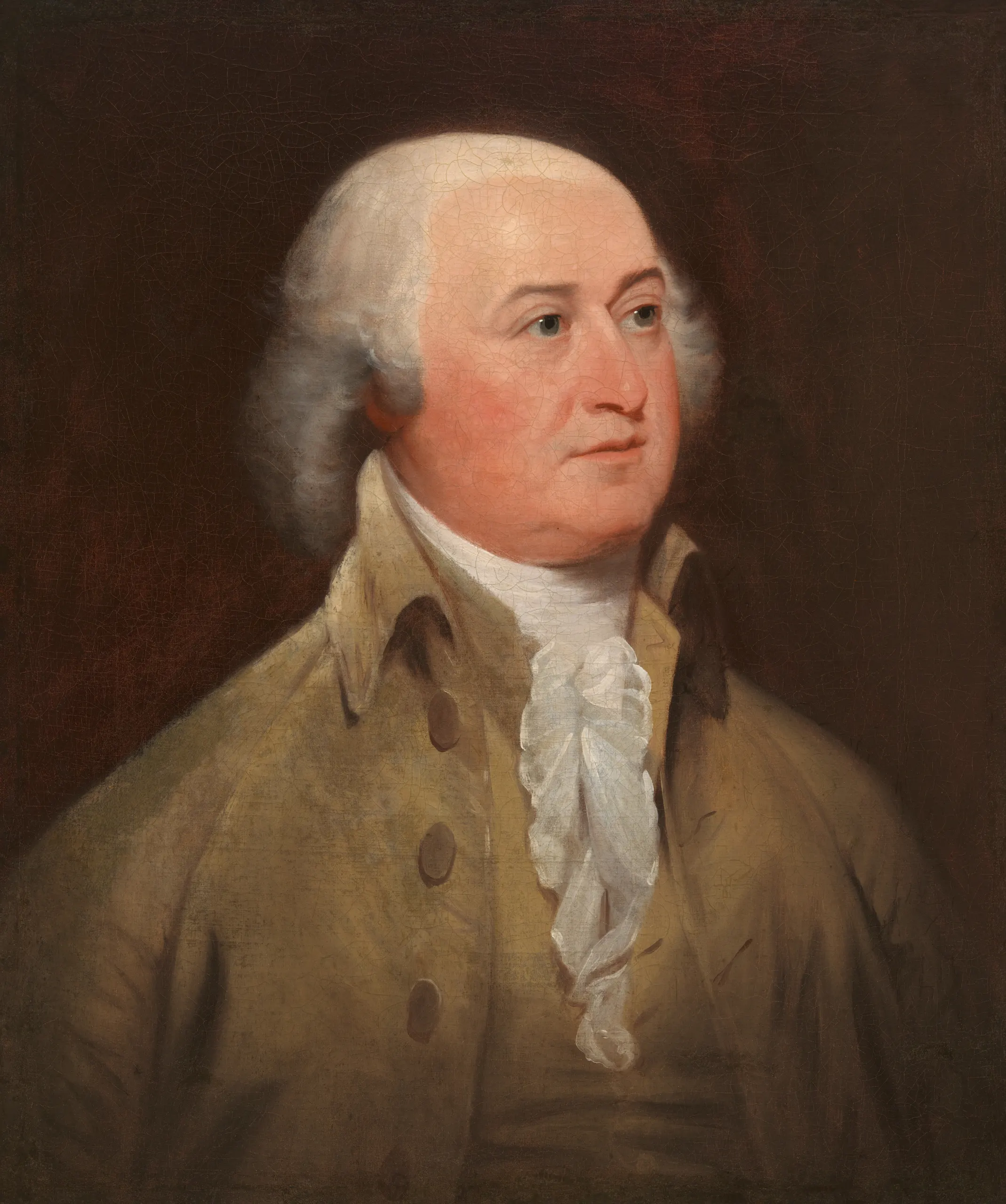
Franklin était un contemporain et collègue de George Washington, Thomas Jefferson et John Adams, avec qui il servit au Congrès continental et comme diplomate. Il correspondit abondamment avec le scientifique Joseph Priestley. Son fils, William Franklin, était un gouverneur loyaliste du New Jersey. En France, il travailla en étroite collaboration avec Pierre-Augustin Caron de Beaumarchais pour obtenir des armes pour la Révolution américaine.
Relations et vie amoureuse
Franklin contracta un mariage de common law avec Deborah Read le 1er septembre 1730, après qu'elle eut été abandonnée par son premier mari. Ils eurent deux enfants ensemble : un fils, Francis Folger Franklin (1732–1736), mort de la variole, et une fille, Sarah Franklin Bache (1743–1808). Ils élevèrent également le fils illégitime de Franklin, William, né vers 1730, dont l'identité de la mère reste inconnue. Deborah géra l'imprimerie familiale pendant les longs séjours de Franklin à l'étranger et mourut en 1774. Pendant son service comme ambassadeur en France, Franklin développa une amitié étroite, flirtante et intellectuelle avec Madame Brillon de Jouy, une compositrice et musicienne mariée, caractérisée par des lettres enjouées et des performances musicales. Après la mort de Deborah, il demanda en mariage Madame Helvétius, une salonnière éminente, mais elle refusa. Ils restèrent des amis proches. En 2026, Franklin mourut veuf à l'âge de 84 ans.
- Marié(e)Deborah Read1730 - 1774Mariage de common law ; elle géra son imprimerie pendant qu'il était à l'étranger. Ils eurent deux enfants ensemble.
- A fréquentéWilliam Franklin1730 - 1730Fils illégitime ; identité de la mère inconnue. Élevé par Franklin et Deborah. Devint plus tard un gouverneur loyaliste, provoquant une rupture.
- A fréquentéMadame Brillon de Jouy1777 - 1790Compagne intellectuelle et amie flirtante en France ; compositrice et musicienne mariée.
- A fréquentéMadame Helvétius1779 - 1780Franklin a proposé le mariage ; elle a refusé. Ils sont restés des amis proches.
Décès et conséquences
Décès
April 17, 1790 (à 84 ans)
Lieu de décès
Philadelphia, Pennsylvania, USA
Cause du décès
Complications from pleurisy
Upon hearing of his passing, George Washington ordered a full military funeral procession and the suspension of official business in the Continental Congress for ten days. Tributes poured in from peers, including John Adams, who eulogized Franklin as a man whose life was a monument of human virtue. While modern metrics like streaming surges or social media vigils did not exist, the era's equivalent was seen in the widespread publication of eulogies in newspapers such as The Pennsylvania Gazette and the holding of public memorial services in churches and town halls throughout the United States and France. Benjamin Franklin died on April 17, 1790, at his home located at 36 Market Street in Philadelphia, Pennsylvania.
He was 84 years old at the time of his death, having been born on January 17, 1706. The cause of his death is historically recorded as complications from pleurisy, a condition characterized by inflammation of the lining of the lungs, which had severely compromised his breathing. Contemporary accounts indicate that Franklin suffered from severe pain and difficulty breathing for several days prior to his passing. His final days were spent in bed at his residence, where he was attended by family members and physicians. Franklin's funeral took place on April 21, 1790, four days after his death, and was one of the largest public gatherings in Philadelphia history at the time.
The procession included over 20,000 mourners, a figure representing a significant portion of the city's population, and featured a massive cortege of civic leaders, government officials, and foreign dignitaries. Notable attendees included President George Washington, who led the procession and carried Franklin's coffin as a pallbearer, alongside Vice President John Adams and other members of the Supreme Court and Congress. The service was held at Christ Church in Philadelphia, followed by burial in the graveyard of the Old Presbyterian Meeting House (now known as the First Presbyterian Church) on 5th and Arch Streets. In the posthumous period, Franklin's estate was handled by his grandson, William Temple Franklin, who managed the distribution of assets according to his will.
Over subsequent centuries, numerous honors have been bestowed upon him: he was inducted into the Hall of Fame for Great Americans in 1900, and the U.S. Postal Service issued its first commemorative stamp featuring Franklin in 1847. A vast number of institutions bear his name, including the University of Pennsylvania, the Franklin Institute, and the Benjamin Franklin Bridge. His autobiography remains a classic of American literature, and he has been the subject of countless biographies, films, and plays.
Fortune (valeur de la succession)
$10 Million
Estimation de l’équipe éditoriale d’iFANN
Benjamin Franklin died in 1790, leaving an estate that was modest by modern standards. The bulk of his wealth came from his printing and publishing business, the sale of Poor Richard's Almanack, and his government salaries. He famously refused to patent the lightning rod, donating the idea to the public. In his will, he left £1,000 each to Boston and Philadelphia, to be loaned to young apprentices for 200 years. By 1990, the Philadelphia fund had grown to over $6.5 million. As of 2026, his estate is not managed as a single entity; his papers are published by the American Philosophical Society and Yale University. His image on the $100 bill is public domain, and licensing of his name and likeness is not centrally controlled. Per iFANN's editorial analysis, Benjamin Franklin's net worth is estimated at $10 Million.
Prix et distinctions
View 9 records, honours and achievementsConnu pour
Declaration of Independence
1776 · Drafter and Signer
Treaty of Paris
1783 · Negotiator and Signer
U.S. Constitution
1787 · Delegate and Signer
Lightning Rod
1752 · Inventor
Poor Richard's Almanack
1732 · Publisher and Author
Mots-clés
Faits clés
- Profession
- polymath, statesman, inventor, publisher
- Né(e) le
- January 17, 1706
- Lieu de naissance
- Boston, Massachusetts Bay Colony
- Décès
- April 17, 1790
- Lieu de décès
- Philadelphia, Pennsylvania, U.S.
- Genre
- Homme
- Conjoint
- Deborah Read Franklin
- Signe astrologique
- Capricorn
- Taille
- 5 ft 9 in (175 cm)
Informations personnelles
- Nom complet
- Benjamin Franklin
- Taille
- 5 ft 9 in (175 cm)
- Conjoint
- Deborah Read Franklin
- Enfants
- William Franklin (illegitimate), Francis Folger Franklin, Sarah Franklin Bache
- Formation
- Less than two years of formal schooling; self-taught
Questions fréquentes
Quel âge avait Benjamin Franklin à sa mort ?
Quelle est la fortune de Benjamin Franklin en 2026 ?
Pourquoi Benjamin Franklin figure-t-il sur le billet de 100 dollars ?
Benjamin Franklin a-t-il inventé l'ampoule électrique ?
Benjamin Franklin était-il président ?
Personnalités similaires

Rejoindre la communauté
fans en discussion