

George Washington
 United States
politician•farmer•cartographer
Also known as: Father of His Country
Date de naissance
February 22, 1732
Signe astrologique
Pisces
Lieu de naissance
Westmoreland County, Virginia
Âge
Décédé(e) à 67 ans
Taille
6 ft 2 in (188 cm)
À propos
George Washington was the first president of the United States and a Founding Father who led the Continental Army to victory in the American Revolution. Born in 1732 in Virginia, he gained military experience during the French and Indian War and later served in the Virginia House of Burgesses. Appointed commander-in-chief in 1775, Washington faced enormous challenges: poorly trained troops, scarce supplies, and a powerful British enemy. His leadership at Trenton, Princeton, and ultimately Yorktown secured American independence. After the war, he presided over the Constitutional Convention and was unanimously elected president in 1789. Washington set key precedents, including a two-term limit and a neutral foreign policy. He died in 1799 at age 67, leaving a legacy as the Father of His Country.
Jeunesse et origines
Washington a grandi à Ferry Farm, près de Fredericksburg, en Virginie, après la mort de son père Augustine alors qu'il avait 11 ans. Il n'a pas reçu une éducation classique formelle comme ses demi-frères aînés ; au lieu de cela, il a appris à lire, écrire et compter grâce à des tuteurs locaux et à l'auto-apprentissage. À 17 ans, il a utilisé des relations familiales pour devenir l'arpenteur officiel du comté de Culpeper, parcourant l'arrière-pays de Virginie et cartographiant les terres frontalières. Cette expérience a renforcé sa connaissance de la région et l'a conduit à la spéculation foncière. Au début de la vingtaine, il a rejoint la milice de Virginie et en 1753 a été envoyé en mission diplomatique dangereuse auprès des Français dans la vallée de l'Ohio. La mission a fait de lui une figure régionale, mais c'est la bataille qu'il a menée en 1754 qui a accidentellement contribué à déclencher la guerre de Sept Ans. Il a été vaincu et forcé de se rendre à Fort Necessity, tirant des leçons difficiles sur le leadership. En 1755, il a servi d'aide au général Braddock lors de la désastreuse bataille de Monongahela, où son calme sous le feu a renforcé sa réputation. À la fin de la guerre, il commandait le régiment de Virginie. En 1758, il a été élu à la Chambre des Burgesses de Virginie, entrant en politique. Il a démissionné de sa commission en 1759, a épousé Martha Custis et s'est concentré sur la gestion de Mount Vernon et a servi plusieurs mandats dans la législature. Son expérience militaire en a fait l'un des officiers les plus expérimentés des colonies, le positionnant pour le commandement lorsque la révolution a éclaté.
Évolution de carrière
Le 15 juin 1775, le Second Congrès continental a nommé Washington commandant en chef de l'Armée continentale. Sa première victoire majeure est survenue en mars 1776, lorsqu'il a forcé les Britanniques à évacuer Boston en fortifiant Dorchester Heights. Après de sévères défaites à New York, il a organisé la célèbre traversée du Delaware la nuit de Noël 1776, surprenant les troupes hessoises à Trenton et enchaînant avec une victoire à Princeton. L'armée a enduré des hivers brutaux à Morristown et Valley Forge, où le leadership de Washington et l'entraînement du baron von Steuben ont transformé des recrues brutes en une force professionnelle. En 1781, en collaboration avec des alliés français, il a piégé Cornwallis à Yorktown, forçant la reddition qui a effectivement mis fin à la guerre. Après le Traité de Paris en 1783, Washington a démissionné de sa commission, un acte surprenant qui a cimenté ses valeurs républicaines. En 1787, il a présidé la Convention constitutionnelle, lui apportant une légitimité cruciale. Élu à l'unanimité premier président en 1789, il a établi le système de cabinet, soutenu le programme financier de Hamilton et réprimé la rébellion du Whiskey. Il a maintenu la neutralité américaine pendant la Révolution française et a signé le traité Jay pour éviter la guerre avec la Grande-Bretagne. Son Discours d'adieu en 1796 a mis en garde contre le sectarisme et les alliances étrangères. Il s'est retiré à Mount Vernon en 1797 et y est mort en 1799.
Chronologie de carrière
Image publique et style
Washington cultivait une image de dignité, de retenue et de vertu civique. Il s'habillait bien mais évitait l'ostentation, portant souvent un simple costume sombre pour ses fonctions présidentielles. Sa persona publique était celle d'un leader réticent qui répondait à l'appel du devoir. Il était connu pour son comportement réservé et son langage prudent, montrant rarement ses émotions en public. Les médias de son époque, journaux et brochures, le dépeignaient comme un héros, bien que certains aient critiqué ses décisions militaires. Son image sur le billet d'un dollar et le quart, ainsi que le Washington Monument, cimentent son statut d'icône nationale. Les fans et les historiens le désignent souvent comme le Père de sa Patrie, un titre qui reflète son rôle central dans la fondation de la nation.
Notoriété et fandom
George Washington stands as the 199th most famous person in the world, a position he has held steady from the previous cycle. His prominence extends deeply across his home nation, where he ranks as the 14th most famous person in United States. Among those born in America, he holds the 81st most famous person from United States globally for origin fame. In the broader North American context, he is the 20th most famous person in North America, while within the specific sphere of Politics, he claims the 34th most famous person in Politics. These placements reflect his enduring status as the central figure of American history, tracked by the iFANN Global Fame Rankings through its analysis of global attention across media coverage, search, and consumption signals worldwide.
Despite this massive modern visibility, George Washington does not possess a formal fandom name or organized fanbase structure. The search results confirm that as a historical figure who lived in the 18th century, concepts like chart pushes, birthday billboards, or organized fan campaigns do not apply to him. There are no documented instances of fans fainting at his appearances or crowds shutting down streets due to his presence, as he lived in an era without mass media coverage or stadium concerts. While a 2026 film titled *Young Washington* celebrates his 250th birthday and news reports mention the USS *George Washington* heading to the Middle East, these events relate to his legacy rather than a living fan community. Consequently, his audience consists of historians, students, and general admirers of the Founding Fathers who engage with his life through museums, textbooks, and cultural artifacts rather than a unified fan organization.
Faits intéressants et légendes
While the story of George Washington chopping down a cherry tree remains one of the most persistent tales in American folklore, it was actually invented by biographer Parson Weems after Washington's death. In reality, Washington was an expert horseman who reportedly rode horses from an early age and maintained a pack of hounds for avid fox hunting at Mount Vernon. Contrary to popular belief, his false teeth were never made of wood; they were crafted from ivory, gold, and human teeth. He was also known for his simple culinary tastes, with hoecakes, a type of cornmeal pancake often served with butter and honey, reportedly being his favorite food. Uniquely among all U.S. presidents, Washington personally led troops in battle while serving in office, commanding the militia during the Whiskey Rebellion.
The legends surrounding Washington often focus on his pivotal role in founding the nation. A widely retold story highlights his calm demeanor during the disastrous Battle of Monongahela in 1755, where four horses were shot out from under him and two bullets pierced his coat, yet he remained composed to lead the retreat. Another foundational legend centers on his decision to resign his commission after the Revolutionary War, voluntarily stepping away from power to return to private life at Mount Vernon, a moment that cemented his reputation for civic virtue. These narratives, along with his service presiding over the Constitutional Convention and taking the oath of office as the first president in 1789, form the bedrock of his cultural mythology.
Citations notables
“I cannot tell a lie. I did it with my little hatchet.”
“It is far better to be alone, than to be in bad company.”
“Happiness and moral duty are inseparably connected.”
“To be prepared for war is one of the most effectual means of preserving peace.”
Famille et vie privée
Le père de Washington, Augustine Washington, était un planteur et juge de paix qui est mort quand George avait 11 ans. Sa mère, Mary Ball Washington, l'a élevé à Ferry Farm. Son demi-frère aîné Lawrence est devenu son mentor et l'a présenté à la famille Fairfax. Washington a épousé Martha Dandridge Custis le 6 janvier 1759. C'était une riche veuve avec deux jeunes enfants, John Parke Custis et Martha "Patsy" Custis. Washington les a aidés à les élever et plus tard leurs petits-enfants, mais lui et Martha n'ont jamais eu d'enfants biologiques ensemble. La famille a vécu à Mount Vernon, une plantation que Washington a considérablement agrandie et rénovée. Il possédait environ 123 personnes asservies personnellement à sa mort, avec beaucoup d'autres sous la succession Custis. Dans son testament, il a prévu la liberté des personnes asservies qu'il possédait après la mort de Martha.
Relations notables
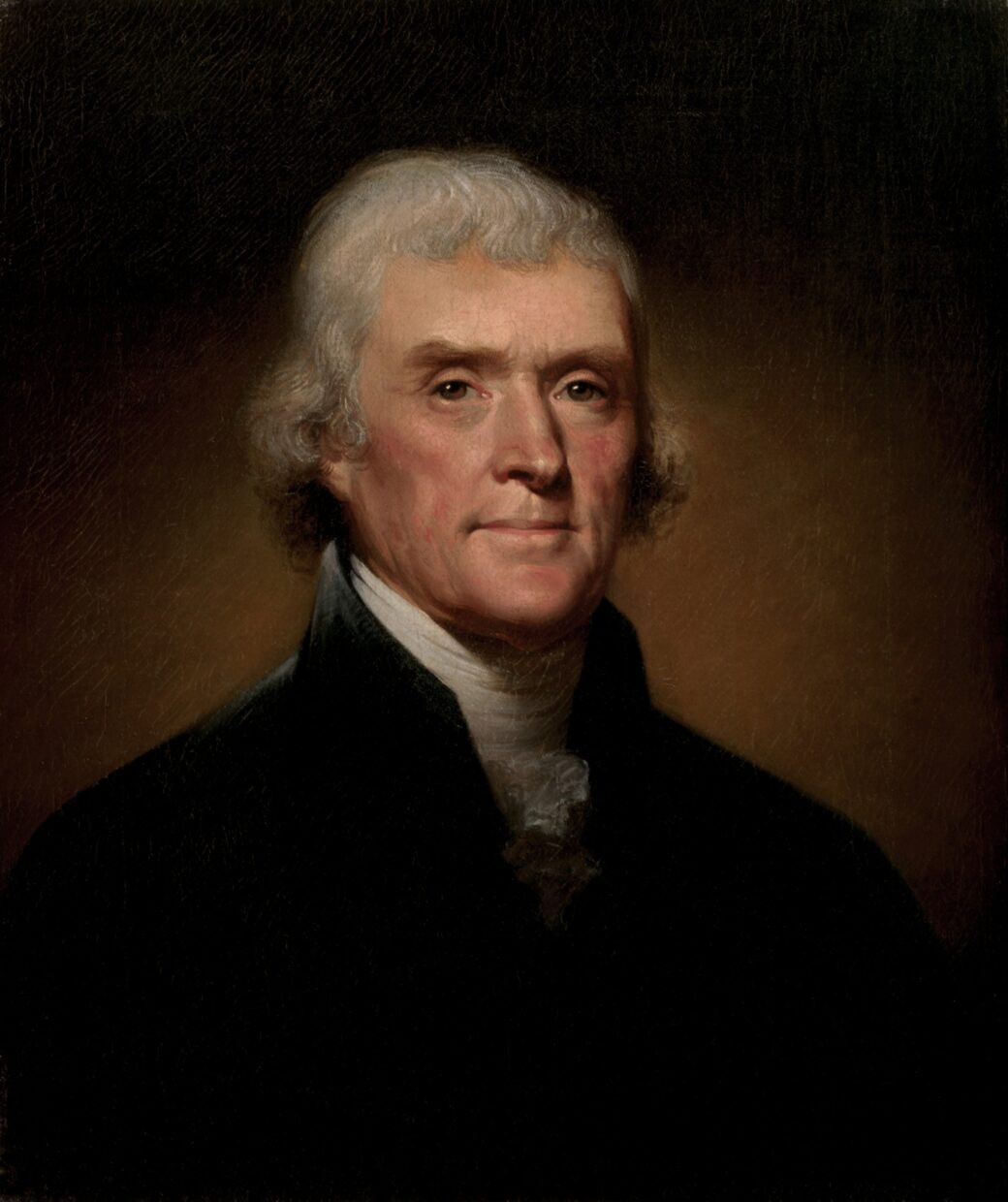
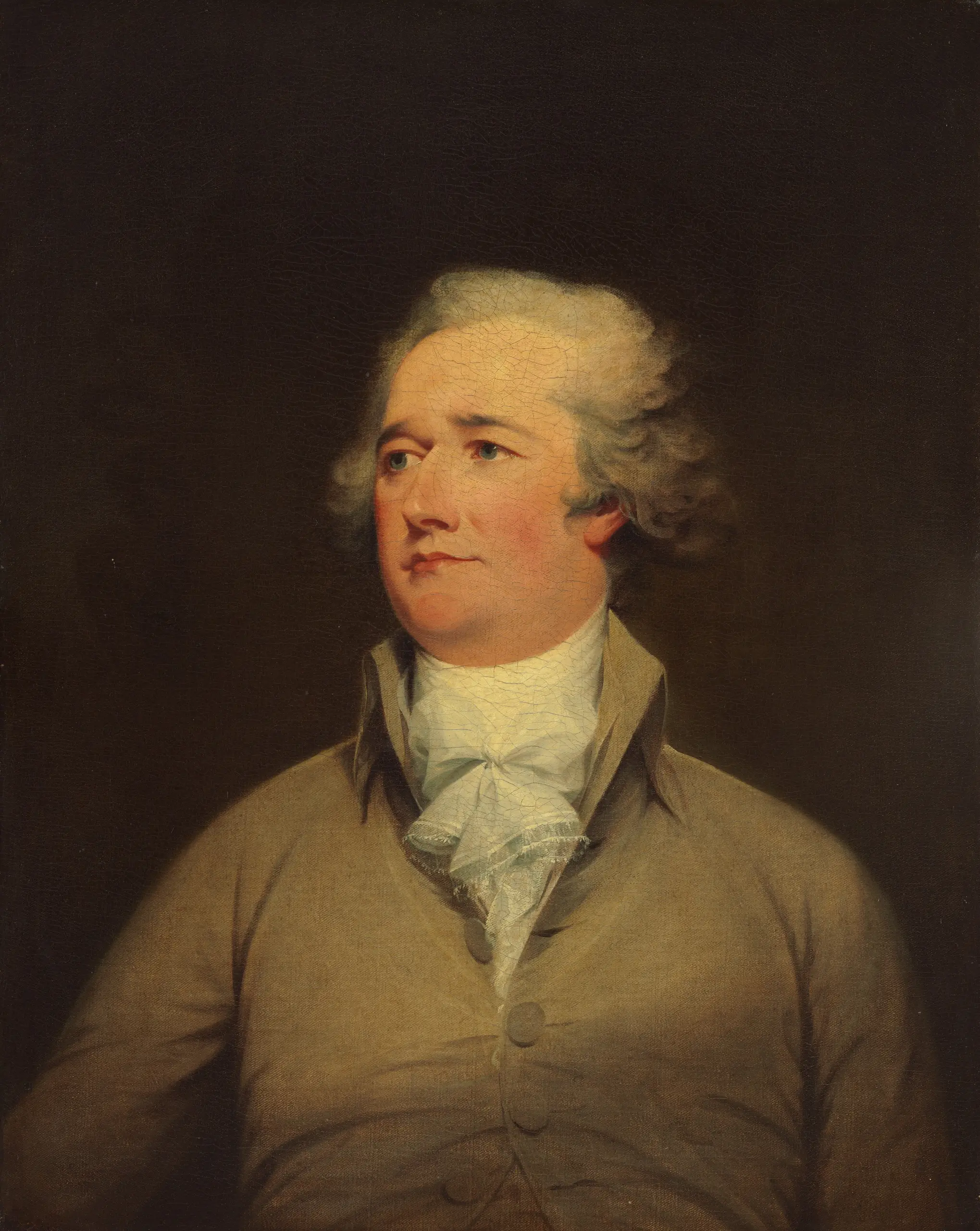
Washington travailla en étroite collaboration avec Alexander Hamilton, son secrétaire au Trésor, qui façonna la politique financière. Il s'appuya sur Thomas Jefferson comme secrétaire d'État, malgré leurs désaccords croissants. Le marquis de Lafayette devint un ami proche et un allié pendant la Révolution. Washington correspondit également avec James Madison, qui aida à rédiger la Constitution, et reçut ses conseils.
Relations et vie amoureuse
La vie amoureuse de Washington est marquée par une profonde affection précoce et un mariage long et stable. Au milieu des années 1750, il forma un lien émotionnel étroit avec Sally Cary Fairfax, l'épouse de son ami George William Fairfax. Leur correspondance suggère une affection mutuelle, mais la relation est restée platonique et s'est terminée lorsque Washington épousa Martha Custis en 1759. Martha Dandridge Custis était une riche veuve avec deux enfants. Leur mariage le 6 janvier 1758 fut une union pratique qui apporta à Washington des terres et une richesse considérables, mais devint aussi un partenariat dévoué. Ils élevèrent ensemble les enfants de Martha et plus tard leurs petits-enfants à Mount Vernon. Washington fut un mari fidèle, et il n'existe aucune preuve crédible d'aventures extraconjugales. À partir de 1799, il fut marié jusqu'à sa mort.
- RumeurSally Cary Fairfax1755 - 1758Profonde affection émotionnelle, mais resta platonique car elle était mariée à George William Fairfax.
- Marié(e)Martha Washington1759 - 1799Mariée le 6 janvier 1759 ; elle était une riche veuve ; ils élevèrent ses enfants ensemble.
Décès et conséquences
Décès
December 14, 1799 (à 67 ans)
Lieu de décès
Fairfax County, Virginia, USA
Cause du décès
Reported as inflammation of the throat and angina pectoris
On the evening of December 14, 1799, George Washington passed away at his home, Mount Vernon, in Fairfax County, Virginia, following a rapid decline that began after he rode out to inspect his estate during a harsh winter storm. The former commander-in-chief and president had spent his final days suffering from a severe sore throat and difficulty breathing, conditions that worsened despite aggressive interventions by his physicians, Dr. James Craik, Dr. Elisha Dick, and Dr. Gustavus Brown. These doctors administered massive bloodlettings and blistering agents, actions now viewed as medically inappropriate, yet the official ruling attributed his death to inflammation of the throat complicated by quinsy and angina pectoris, with the extensive blood loss further weakening his heart and circulation.
The nation reacted with immediate and profound grief, as tributes poured in from across the newly formed United States while Congress ordered a marble monument and members wore black mourning bands for six months. A massive funeral procession took place on December 18, 1799, in Philadelphia where bells tolled continuously for nine days before Washington's body was transported back to Mount Vernon for a private burial attended by family, friends, and military officers like General Henry Lee, who delivered the famous eulogy describing him as first in war, peace, and the hearts of his countrymen. His remains were later moved to a new crypt within the same vault in 1831 due to structural concerns, though the original site remains at the estate.
In the posthumous era, Washington has been honored extensively as the only U.S. president depicted on the one-dollar bill and the quarter, with dedications including the District of Columbia, the state of Washington, and the George Washington University. His will freed all his enslaved people upon the death of his wife Martha and left the majority of his land and assets to his nephew, Bushrod Washington, ensuring his legacy is managed today by the George Washington Foundation and commemorated through institutions like the George Washington Bridge.
Fortune (valeur de la succession)
$500 Million
Estimation de l’équipe éditoriale d’iFANN
Per iFANN's editorial analysis, George Washington's estate value is estimated at $500 Million as of 2026, reflecting the immense historical and cultural significance of his legacy. The primary sources of this value are Mount Vernon, which operates as a major historic site attracting over a million visitors annually, and the licensing of his image on currency, coins, and commemorative items. The Mount Vernon Ladies' Association manages the estate, generating revenue through ticket sales, museum operations, and gift shop sales. Additionally, Washington's writings and personal artifacts have been sold at auction for substantial sums. The estate has grown steadily over the years, driven by tourism and the enduring fascination with the Founding Father.
Prix et distinctions
View 8 records, honours and achievementsConnu pour
Commander-in-Chief of the Continental Army
1775 · General
First President of the United States
1789 · President
Presiding over the Constitutional Convention
1787 · President of the Convention
Mots-clés
Sources
Faits clés
- Profession
- politician, farmer, cartographer
- Né(e) le
- +1732-02-22
- Lieu de naissance
- Westmoreland County
- Décès
- +1799-12-14
- Lieu de décès
- Mount Vernon
- Genre
- Homme
- Conjoint
- Martha Washington
- Signe astrologique
- Sagittarius
- Signe astrologique
- Pisces
Informations personnelles
- Nom complet
- George Washington
- Taille
- 6 ft 2 in (188 cm)
- Conjoint
- Martha Washington
- Enfants
- John Parke Custis (stepson), Martha "Patsy" Custis (stepdaughter)
- Formation
- Local schooling and tutors; no college
Questions fréquentes
Quel âge avait George Washington quand il est mort ?
Quelle est la fortune de George Washington en 2026 ?
George Washington est-il toujours considéré comme le plus grand président ?
Pourquoi George Washington est-il appelé le Père de sa Patrie ?
George Washington a-t-il vraiment abattu un cerisier ?
Personnalités similaires
Rejoindre la communauté
fans en discussion