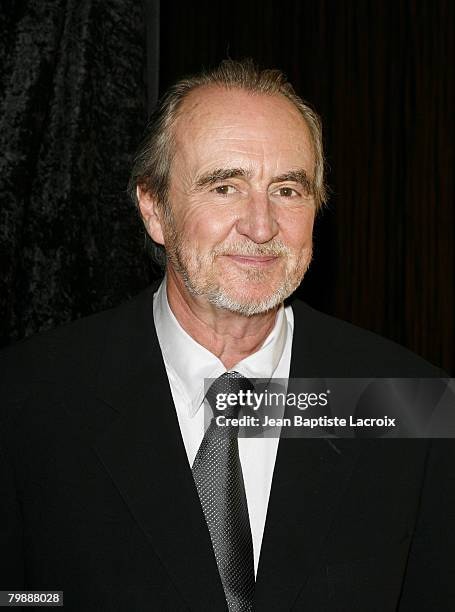
Wes Craven
 United States
film director•screenwriter•producer
Date de naissance
August 2, 1939
Signe astrologique
Leo
Lieu de naissance
Cleveland, Ohio, USA
Âge
Décédé(e) à 76 ans
Taille
6 ft 1 in (185 cm)
À propos
Wes Craven était un cinéaste américain qui a redéfini l'horreur sur quatre décennies. Il a créé des franchises emblématiques, introduit Freddy Krueger au monde et revitalisé le genre slasher avec la série autoréférentielle Scream. Ses films ont rapporté plus de 600 millions de dollars dans le monde, et son influence se fait sentir dans l'horreur moderne. En 2026, sa succession continue de gérer son héritage par le biais de licences et de projets d'archives.
Jeunesse et origines
Wes Craven a grandi dans un foyer baptiste strict à Cleveland, Ohio. Son père, Paul Eugene Craven, était un mécanicien itinérant, et sa mère, Caroline, imposait une éducation religieuse qui interdisait les films et la danse. Le jeune Craven lisait secrètement des bandes dessinées d'horreur et jetait des coups d'œil furtifs à des films d'horreur quand il le pouvait. Un moment charnière est arrivé lorsqu'il a vu The Leopard Man (1943) dans un cinéma drive-in ; cela a déclenché une fascination pour le macabre qui a duré toute sa vie.
Craven a obtenu un Bachelor's en anglais et psychologie de l'université Johns Hopkins en 1963, suivi d'un Master's en philosophie en 1964. Il a brièvement enseigné les sciences humaines au Westminster College en Pennsylvanie avant de déménager à New York pour travailler comme monteur son. Là, il a rencontré le cinéaste Sean S. Cunningham, qui l'a embauché pour écrire et réaliser son premier long métrage, The Last House on the Left (1972), un thriller de vengeance brutal librement inspiré de The Virgin Spring d'Ingmar Bergman. Le film a été controversé mais a lancé sa carrière.
Évolution de carrière
La percée de Craven est arrivée avec The Last House on the Left (1972), mais il a cimenté sa réputation avec The Hills Have Eyes (1977), un film d'horreur de survie âpre. En 1984, il a créé A Nightmare on Elm Street, introduisant Freddy Krueger. Le film a rapporté plus de 57 millions de dollars dans le monde avec un budget de 1,8 million de dollars et a engendré une franchise. Craven a co-écrit et produit Dream Warriors (1987) et est revenu pour la suite méta Wes Craven's New Nightmare (1994).
En 1996, il a réalisé Scream, un slasher autoréférentiel qui a revitalisé le genre. Il a rapporté plus de 173 millions de dollars dans le monde. Il a enchaîné avec Scream 2 (1997) et Scream 3 (2000). Ses œuvres ultérieures incluent Red Eye (2005) et Scream 4 (2011). Il a également réalisé le drame Music of the Heart (1999), qui a valu une nomination aux Oscars à Meryl Streep. Au-delà de la réalisation, il a écrit ou co-écrit des scénarios pour The Serpent and the Rainbow (1988), Shocker (1989) et The People Under the Stairs (1991).
Chronologie de carrière
Image publique et style
Craven est largement considéré comme l'un des maîtres de l'horreur, aux côtés de John Carpenter et George A. Romero. Il était connu pour mélanger l'horreur psychologique avec l'humour noir et pour créer des protagonistes féminins forts et intelligents. Ses films exploraient souvent le traumatisme, le dysfonctionnement familial et la décomposition sociétale. Les fans célèbrent son travail lors de conventions et de projections annuelles. Freddy Krueger reste un costume emblématique pour Halloween. Les réseaux sociaux de la succession, gérés par sa veuve, partagent du contenu d'archives et des photos des coulisses.
Notoriété et fandom
Wes Craven cultivated a fanbase that treats his filmography as an interactive mythology rather than a simple collection of movies. While no formal organization bears his name, horror enthusiasts deeply engage with the meta-narratives of *A Nightmare on Elm Street* and the *Scream* franchise, often debating dream rules and the Springwood lore with the intensity of religious study. Rituals center on the iconic imagery of Freddy Krueger, including the razor glove and striped sweater, while the 1994 release of *Wes Craven's New Nightmare* blurred lines between fiction and reality so thoroughly that audiences once addressed the director as part of the narrative. This unique approach fostered a culture where fans treat his work as living lore, sustaining his legacy through annual screenings and charity drives for cancer research long after his passing. In August 2026, iFANN evaluated his standing within the global cultural landscape. Wes Craven does not currently hold a placement in the published rankings (Global Top 1,000 or a Top-100 scope list). The absence of a numeric rank reflects his status as a historical figure whose influence permeates modern horror without generating the continuous viral metrics required for current top-tier placement. Despite this, the community remains active, with recent partnerships like Street Food Cinema and Bloody Disgusting ensuring his films remain visible in 2026. The Scream trilogy returning to streaming platforms further demonstrates the enduring demand for his catalog, proving that while he lacks a formal fandom moniker, his audience is defined by a profound, specialized devotion to his reinvention of genre tropes.
Faits intéressants et légendes
Before entering cinema, Craven studied humanities and taught as a professor before shifting to filmmaking. He later identified as an atheist despite being raised in a strict Baptist household. The character of Freddy Krueger was partly inspired by a homeless man Craven observed outside his window during childhood. He declined directing *The Exorcist III* to avoid being typecast and authored the sci-fi thriller novel *The Fountain Society* in 1999. A close friend of Bruce Willis, Craven was considered to direct *Die Hard 2* but ultimately passed on the project. Legends surrounding his career include the verified events of *Wes Craven's New Nightmare*, where the boundary between the director and the monster became so thin that critics debated whether the film depicted a genuine supernatural occurrence or brilliant performance art. Another widely retold story involves the release of *The Last House on the Left* and *The Hills Have Eyes*, which sparked moral panics and censorship battles due to their extreme violence, though folklore often exaggerates these reactions into tales of mob threats that never materialized.
Citations notables
“The only thing that horror movies are going to do is maybe make you a little more nervous. They're not going to turn you into a monster.”
“I think the horror genre is the most potent genre for social commentary. It's the most direct way to talk about the things that are really bothering us.”
“The most important thing in a horror film is the character. If you don't care about the people, you don't care about the scares.”
“I was raised in a very strict, very religious home. I was not allowed to go to movies. So when I finally did, it was like a revelation.”
Famille et vie privée
Craven est né de Paul Eugene Craven, un mécanicien itinérant, et de Caroline Miller Craven, une femme au foyer. Il a eu deux enfants de son premier mariage avec Bonnie Broecker : un fils Jonathan (né en 1965) et une fille Jessica (née en 1968). Jonathan a plus tard travaillé comme scénariste et producteur sur plusieurs des films de son père. La troisième épouse de Craven, Iya Labunka, une productrice de cinéma, a été à ses côtés de 2004 jusqu'à sa mort. Il vivait à Los Angeles et a vendu sa maison après sa mort pour environ 2,5 millions de dollars.
Relations notables
Craven a fréquemment collaboré avec le producteur Sean S. Cunningham, la productrice Marianne Maddalena et l'acteur Robert Englund (Freddy Krueger). Il a travaillé avec Neve Campbell, Courteney Cox et David Arquette sur la franchise Scream. L'écrivain Kevin Williamson a écrit Scream. Il était ami avec le réalisateur d'horreur John Carpenter.
Relations et vie amoureuse
Craven s'est marié trois fois. Son premier mariage fut avec Bonnie Broecker de 1964 à 1969 ; ils eurent deux enfants, Jonathan et Jessica. Il épousa Mimi Craven en 1968, et ils divorcèrent en 1987 ; Mimi apparut dans certains de ses films. En 2004, il épousa la productrice de films Iya Labunka, qui travailla sur Scream 3 et Scream 4. Ils restèrent ensemble jusqu'à sa mort en 2015.
- Marié(e)Bonnie Broecker1964 - 1969Première épouse ; mère de ses deux enfants.
- Marié(e)Mimi Craven1968 - 1987Deuxième épouse ; apparut dans certains de ses films.
- Marié(e)Iya Labunka2004 - 2015ActuelTroisième épouse et veuve ; productrice de films qui travailla sur Scream 3 et Scream 4.
Décès et conséquences
Décès
August 30, 2015 (à 76 ans)
Lieu de décès
Los Angeles, California, USA
Cause du décès
Glioblastoma (brain cancer)
Wesley Earl Craven died on August 30, 2015, at his home in Los Angeles, California, following a prolonged illness. The cause of death was officially attributed to glioblastoma, a form of brain cancer that he had battled for several years prior to his passing. Tributes poured in from the film industry immediately after the announcement, with peers such as Robert Englund and David Arquette honoring his mentorship and creativity. Major institutions including the Academy of Motion Picture Arts and Sciences recognized his contributions to cinema, while fans drove immediate surges in streaming and sales of his seminal works like Scream and A Nightmare on Elm Street.
The Never Sleep Again documentary project also gained renewed attention during this period. No public records of a formal funeral service or burial location were released, suggesting the family kept these ceremonies private. Following his death, the Wes Craven Estate remained active in managing his intellectual property, with Paramount Pictures securing rights to adapt original screenplays and discussions continuing regarding potential reboots of his franchises.
Fortune (valeur de la succession)
$40 Million
Estimation de l’équipe éditoriale d’iFANN
Per iFANN's editorial analysis, Wes Craven's net worth at the time of his death in 2015 stood at $40 Million. The majority of this wealth originated from the *Scream* and *A Nightmare on Elm Street* franchises. He commanded substantial salaries for his work as a director and writer, earning between $3 million and $4 million plus backend points for *Scream 4*. Residuals and royalties generated from streaming, home video, and licensing deals continue to produce revenue. Freddy Krueger remains one of the most licensed horror characters globally. His production company, Craven/Maddalena Films, produced several notable films throughout his career. He owned a residence in Los Angeles that sold for an estimated $2.5 million following his death. The estate, managed by his widow Iya Labunka, continues to earn income from licensing agreements, streaming rights, and the ongoing *Scream* film series as of 2026.
Récompenses remportées (22)
Craven a remporté un Saturn Award du meilleur réalisateur pour Scream (1997) et a reçu le Life Career Award de l'Academy of Science Fiction, Fantasy & Horror Films en 1995. Il a également remporté un Bram Stoker Lifetime Achievement Award en 1995 et un Fangoria Chainsaw Award du meilleur réalisateur pour Scream et Scream 2.
1977 · Prix de la Critique
The Hills Have Eyes
1985 · Prix de la Critique
A Nightmare on Elm Street
Connu pour
A Nightmare on Elm Street
1984 · Director, Writer
Scream
1996 · Director
The Hills Have Eyes
1977 · Director, Writer
The Last House on the Left
1972 · Director, Writer
Scream 2
1997 · Director
Mots-clés
Faits clés
- Profession
- film director, screenwriter, producer
- Né(e) le
- August 2, 1939
- Lieu de naissance
- Cleveland, Ohio, USA
- Décès
- August 30, 2015
- Lieu de décès
- Los Angeles, California, USA
- Genre
- Homme
- Taille
- 6 ft 1 in (185 cm)
- Conjoint
- Bonnie Broecker, Mimi Craven, Iya Labunka
- Children
- Jonathan Craven, Jessica Craven
- Education
- Johns Hopkins University (BA, MA)
- Net Worth
- $40 Million
- Signe astrologique
- Leo
Informations personnelles
- Nom complet
- Wesley Earl Craven
- Taille
- 6 ft 1 in (185 cm)
- Conjoint
- Bonnie Broecker, Mimi Craven, Iya Labunka
- Enfants
- Jonathan Craven, Jessica Craven
- Formation
- Johns Hopkins University (BA, MA)
Filmographie
50
Total
40
Cinéma
10
TV
Questions fréquentes
Comment Wes Craven est-il mort ?
Wes Craven était-il marié ?
Quelle est la fortune de Wes Craven ?
Quel âge avait Wes Craven quand il est mort ?
Combien d'enfants Wes Craven avait-il ?
Réseaux sociaux
Personnalités similaires

Rejoindre la communauté
fans en discussion