 Austria
À propos
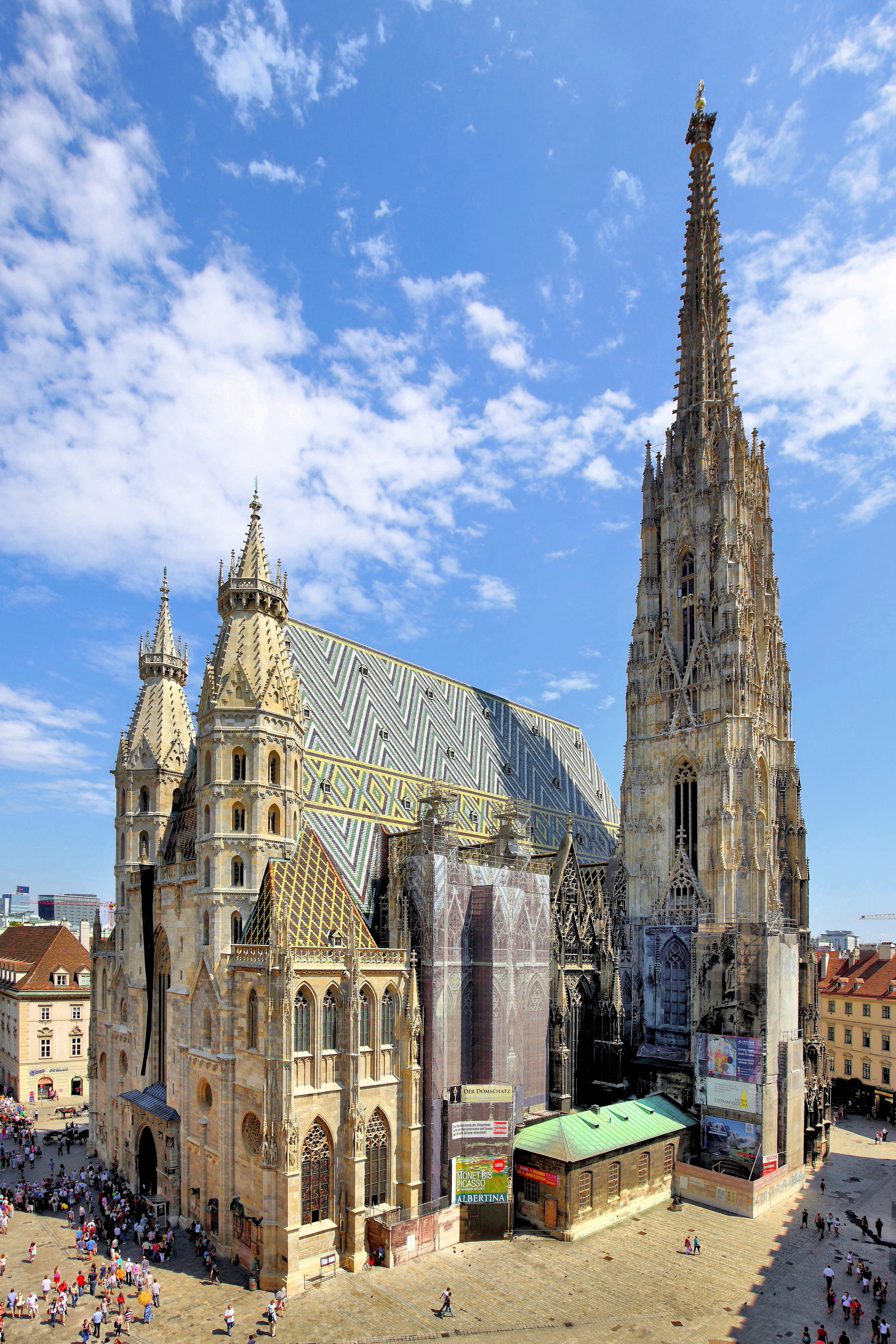
St. Stephen's Cathedral stands as the spiritual anchor of Vienna and the seat of the Archbishop of the Archdiocese of Vienna. Located at Stephansplatz in the city center, this religious institution has functioned as a place of worship for nearly nine centuries. The building serves as the primary parish church for the local community while simultaneously acting as a major custodian of Austrian cultural heritage. Its architectural form blends Romanesque foundations with a High Gothic superstructure, creating a visual identity that defines the Viennese skyline.
The cathedral's most striking feature is its south tower, known locally as the Steffl, which rises 136 meters into the air. This structure offers panoramic views of the capital and houses the Pummerin bell chamber. The roof covering the nave displays a mosaic of 230,000 glazed tiles arranged in a pattern featuring the imperial double-headed eagle, a direct reference to the Habsburg dynasty that once ruled the region. Visitors can access the catacombs beneath the floor or climb the tower stairs to reach the observation deck.
Beyond its physical grandeur, the site operates as an active ecclesiastical center. Daily Masses are held throughout the week, and the cathedral hosts significant religious events including weddings, funerals, and concerts. It functions as a pilgrimage destination where millions of tourists and faithful alike gather to experience the history embedded in its stone walls. The institution manages its own maintenance, security, and tour operations while remaining under the authority of the Archdiocese.
Mission
The organization exists to provide pastoral care and serve as the central hub for Catholic worship within the Archdiocese of Vienna. It maintains daily liturgical services, sacraments, and religious education programs for the local population. Simultaneously, the cathedral acts as a guardian of historical artifacts and architectural treasures spanning nearly a millennium. The mission includes preserving the integrity of the building for future generations while welcoming visitors from around the world to learn about its significance.
Histoire
Construction on the first Romanesque church began in 1137, replacing an earlier parish structure that had existed since the 12th century. Duke Rudolf IV initiated the massive Gothic expansion in 1359, transforming the modest building into a monumental symbol of Habsburg power. The south tower was completed in 1433, becoming one of the tallest church towers in Europe. The cathedral survived the Reformation and two Ottoman sieges, notably in 1529 and 1683, emerging as a resilient landmark.
World War II brought severe damage when artillery strikes in April 1945 caused a fire that collapsed the roof and damaged the interior. Reconstruction efforts funded by donations across Austria and abroad restored the building by 1952. The new roof featured 230,000 glazed tiles laid in a mosaic pattern echoing the original design. The Pummerin bell, which shattered during the fire, was recast and reinstalled in 1957 using metal from captured cannons.
Recent decades have seen the cathedral navigate modern challenges alongside its historic role. In November 2025, a German man returned a human skull he had stolen from the catacombs 60 years prior, mailing it back with an apology. The following May, Archbishop Josef Grünwidl relieved Fr. Toni Faber of his duties as Provost after weeks of media speculation. Security protocols were also updated in October 2026 to prohibit large luggage items for visitors.
Subdivisions
The Nave and Choir
The main sanctuary area used for daily Mass and major ceremonies.
The Catacombs
Burial chambers beneath the floor containing over 10,000 interments, including Habsburg rulers.
The South Tower (Steffl)
The iconic spire rising 136 meters, offering visitor access via 343 steps.
The Pummerin Bell Chamber
The upper section of the south tower housing Austria's largest bell.
Prince Eugene Chapel
A side chapel dedicated to the military leader Prince Eugene of Savoy.
Personnalités notables
Emperor Frederick III
Holy Roman Emperor · 1415–1493
His elaborate tomb by Nikolaus Gerhaert is a key example of late Gothic sculpture located inside.
Prince Eugene of Savoy
Military Leader · 1663–1736
Commended in the chapel bearing his name for victories against the Ottomans.
Anton Pilgram
Sculptor and Architect · 1460–1515
Created the famous pulpit featuring self-portraits within the design.
Cardinal Christoph Schönborn
Archbishop of Vienna · 1995–2025
Led the archdiocese during a period of significant restoration projects.
Fr. Toni Faber
Cathedral Provost · 2001–2026
Managed day-to-day operations for 25 years before being relieved of duties in May 2026.
Étapes clés
1137
Construction of the first Romanesque church begins
1147
The original church is consecrated
1359
Duke Rudolf IV lays the foundation for the Gothic expansion
1433
The south tower is completed
1711
The Pummerin bell is cast from captured Ottoman cannons
1945
The cathedral catches fire during World War II; reconstruction begins
1952
Restoration is completed, with a new tiled roof
1957
Recast Pummerin bell reinstalled
2025
A stolen skull is returned to the catacombs after 60 years
2026
Provost Toni Faber is relieved of his duties
Sources
Infos de l'organisation
- Fondé
- 1137
- Siège social
- Stephansplatz 3, 1010 Vienna, Austria
- Pays
- Austria
- Archbishop of Vienna
- Archbishop Josef Grünwidl
- Maison mère
- Archdiocese of Vienna
- Type
- Religious
- Fondé
- 1137
- Pays
- Austria
- Taille
- 136 meters (south tower)
- Roof tiles
- 230,000 glazed tiles
- Bells
- Pummerin, Austria's largest bell
- Catacombs
- Burial site for Habsburgs and thousands of Viennese
Site officiel
stephanskirche.at/
Rejoindre la communauté
fans en discussion