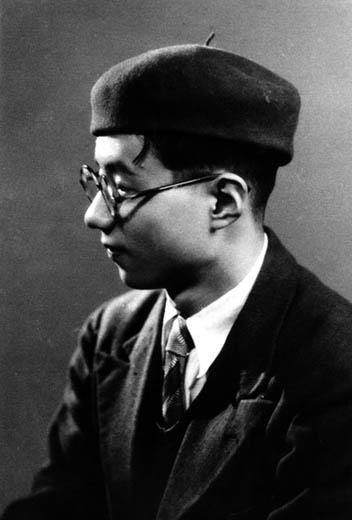
Osamu Tezuka
 Japan
Japanmanga artist•animator•film director
Also known as: Tezuka Osamu, God of Manga, Father of Manga
Date de naissance
November 3, 1928
Signe astrologique
Scorpio
Lieu de naissance
Toyonaka, Osaka Prefecture, Japan
Âge
Décédé(e) à 60 ans
Taille
5 ft 9.5 in (177 cm)
À propos
Osamu Tezuka était un mangaka, animateur et réalisateur japonais dont l'œuvre a redéfini le paysage mondial de la bande dessinée et de l'animation. Né en 1928 à Toyonaka, il a créé plus de 700 séries de mangas et produit la première série télévisée d'animation japonaise. Son style emblématique, avec de grands yeux expressifs et des mises en page cinématographiques, a établi le modèle du manga et de l'anime modernes. Les histoires de Tezuka allaient des aventures pour enfants comme Astro Boy aux œuvres philosophiques pour adultes telles que Phoenix et Buddha. Il est souvent appelé le « Dieu du Manga » et comparé à Walt Disney pour son influence transformatrice. Aujourd'hui, son héritage perdure à travers Tezuka Productions, qui gère son vaste catalogue de propriété intellectuelle, et le Musée du Manga Osamu Tezuka à Takarazuka, qui attire des fans du monde entier.
Jeunesse et origines
Tezuka a grandi à Takarazuka après y avoir déménagé à l'âge de cinq ans. Son père lui a fait découvrir les animations de Walt Disney et Max Fleischer lors de projections privées, ce qui a éveillé son amour pour la narration. Enfant, il a dessiné sa première bande dessinée, Bin Bin Namachan, en CE2 et a gagné le surnom de gashagasha-atama ("tête en désordre"). Une grave infection fongique à ses bras a failli nécessiter une amputation, mais après un traitement réussi, il a décidé de devenir médecin. Il est entré à l'Université d'Osaka pour étudier la médecine à 17 ans. Pendant ses études, il a publié sa première bande dessinée, une série de quatre cases intitulée Diary of Ma-chan, dans un journal pour enfants d'Osaka à 18 ans. Le conseil de sa mère de poursuivre ce qu'il aimait le plus l'a convaincu de choisir le manga plutôt que la médecine. Il a obtenu un diplôme de médecine en 1951 mais n'a jamais exercé.
Évolution de carrière
Tezuka a lancé la révolution du manga en 1947 avec New Treasure Island, un immense succès qui a redéfini le médium avec ses mises en page dynamiques. En 1950, il a commencé la sérialisation de Jungle Emperor (plus tard connu sous le nom de Kimba the White Lion), suivi par Ambassador Atom en 1951, qui a évolué en Astro Boy. En 1961, il a fondé Mushi Productions, son studio d'animation. Deux ans plus tard, il a créé la première série télévisée d'animation japonaise, Astro Boy (1963-1966), un phénomène culturel diffusé à l'international. Il a continué avec la série couleur Jungle Emperor Leo (1965) et a ensuite produit des œuvres pour adultes comme Black Jack (1973-1983), Phoenix (1967-1988) et Buddha (1972-1983). Sa production totale dépasse 170 000 pages de manga et 200 000 pages de storyboards d'anime. Il est décédé en 1989 avant d'avoir terminé les chapitres finaux de Phoenix.
Chronologie de carrière
Image publique et style
Tezuka est universellement considéré comme le « Dieu du Manga » et le « Père de l'Anime ». Son style emblématique de personnages aux grands yeux et de narration cinématographique est devenu le fondement du manga moderne. Il mélangeait un art mignon et adapté aux enfants avec des thèmes sérieux et souvent tragiques. Les fans célèbrent son travail à travers des conventions et des visites au Musée du Manga Osamu Tezuka à Takarazuka, un lieu de pèlerinage. Les comptes officiels sur les réseaux sociaux maintiennent un ton respectueux et éducatif, partageant des informations historiques. Son influence est si profonde que de nombreux artistes japonais le citent comme leur inspiration principale.
Notoriété et fandom
Osamu Tezuka remains a towering figure in global pop culture, a legacy that transcends his 1989 passing to define the very architecture of modern storytelling. His influence is so profound that he holds specific, measurable positions within the iFANN Global Fame Rankings. Current data places him as the 35th most famous person in Japan, while also ranking him as the 56th most famous person in East Asia. Within his specific domain, the impact is even more concentrated; he stands as the 6th most famous person in Manga. These placements reflect a sustained presence across media coverage and consumption signals worldwide, proving that his work continues to generate significant attention decades after his death.
The fanbase surrounding Tezuka operates without a formal collective name like "Army" or "Whovians," instead identifying broadly as manga readers or simply Tezuka fans. This community has evolved from passive consumers into active preservers of his history. In April 2026, this dedication manifested through a successful Kickstarter campaign for the documentary *TEZUKA! God of Manga*, demonstrating the group's financial capacity to safeguard his legacy. Fan rituals center on his birthday, November 3rd, marked by museum events and re-releases of classic works. While no single subreddit claims official status, the community actively engages with archival discoveries, such as unpublished anime documents found in June 2026. The release of deluxe editions like the *Phoenix* Deluxe Edition in July 2026 further highlights a demand for high-quality materials that only a deeply invested audience would sustain.
Faits intéressants et légendes
Tezuka's creative life was defined by an intense connection to nature and discipline. His pen name incorporates the ideogram for "insect," reflecting a childhood fascination with bugs that shaped his early worldview. He famously watched Disney's *Bambi* over 80 times to study its animation techniques, absorbing lessons that would later revolutionize Japanese comics. One of his maternal ancestors was Hattori Hanzo, the legendary ninja, adding a layer of historical intrigue to his lineage. Tezuka often reused characters across different stories, having them play vastly different roles depending on the narrative needs. He never stopped drawing until the end; his desk at the Niiza studio is preserved exactly as he left it. Beyond art, he played piano and maintained a deep interest in astronomy, influenced by his childhood friend Minoru Ishihara.
Legendary accounts describe his prodigious output, noting that he could produce up to 40 pages of manga in a single day while suffering from exhaustion. A widely retold story illustrates this dedication: he once drew a full chapter overnight, working 16-hour days to meet deadlines. When *Astro Boy* premiered as a television series in 1963, the reaction was extraordinary. Crowds gathered in Tokyo streets to watch the broadcast, shutting down traffic and sparking a massive merchandise boom that defined the emerging manga economy. Fans still recount how the industry halted production in his honor following his death in February 1989, a moment described as national mourning.
Citations notables
“You should work doing the thing you like most of all.”
“If you really love manga that much, go to Tokyo.”
“The preciousness of life is the theme that runs through all my works.”
“I want to create a world where children can dream.”
“Manga is a medium that can express anything.”
Famille et vie privée
Tezuka était l'aîné de trois enfants nés de Yutaka Tezuka, un cadre chez Sumitomo Metals, et de Fumiko Hattori, dont la famille avait une longue histoire militaire. Son grand-père Taro était avocat, et son arrière-grand-père et son arrière-arrière-grand-père étaient médecins. Il a épousé Etsuko Okada le 4 octobre 1959, et ils sont restés ensemble jusqu'à sa mort. Ils ont eu trois enfants : Macoto Tezuka, devenu réalisateur et animateur ; True Tezuka ; et un troisième enfant. La maison familiale des Tezuka à Takarazuka était remplie de livres et de films, favorisant son esprit créatif.
Relations notables
Tezuka était profondément inspiré par Walt Disney et Max Fleischer. Il a collaboré avec et encadré de nombreux animateurs chez Mushi Productions. Son fils Macoto Tezuka perpétue son héritage en tant que réalisateur. Frederik Schodt, son traducteur et biographe, a aidé à faire connaître ses œuvres en Occident. Ban Toshio a dessiné la biographie de Tezuka sous forme de manga.
Relations et vie amoureuse
Tezuka a épousé Etsuko Okada le 4 octobre 1959, et ils sont restés ensemble jusqu'à sa mort le 9 février 1989. Etsuko a soutenu sa carrière exigeante et géré les affaires domestiques pendant que Tezuka travaillait sans relâche. Ils ont eu trois enfants ensemble. En 2026, Tezuka est décédé et était marié au moment de sa mort.
- Marié(e)Etsuko Okada1959 - 1989Mariés le 4 octobre 1959, ils sont restés ensemble jusqu'à la mort de Tezuka. Elle a soutenu sa carrière et élevé leurs trois enfants.
Décès et conséquences
Décès
February 9, 1989 (à 60 ans)
Lieu de décès
Tokyo, Japan
Cause du décès
Stomach cancer (gastric carcinoma)
The news of Osamu Tezuka's passing sent a wave of grief through Japan and the international animation community, with tributes pouring in from peers and government officials who recognized him as a foundational pillar of culture. He died on February 9, 1989, at St. Luke's International Hospital in Tokyo at the age of 60. The official cause was stomach cancer, a diagnosis confirmed by medical professionals after the disease returned and metastasized following surgery in 1987. His funeral was held privately, and he was cremated before his ashes were interred at the family grave in Toyonaka City, Osaka. Posthumously, his legacy expanded rapidly with the creation of the Osamu Tezuka Cultural Prize and the induction of his works into various halls of fame. Tezuka Productions, founded by his son Makoto Tezuka, continues to manage his intellectual property rights, ensuring ongoing releases like the documentary TEZUKA! God of Manga and new publishing agreements keep his stories alive for contemporary audiences.
Fortune (valeur de la succession)
$50 Million
Estimation de l’équipe éditoriale d’iFANN
Heading into 2026, the Tezuka estate is managed by Tezuka Productions, which controls the intellectual property rights to over 700 manga series and dozens of anime works. Revenue streams include ongoing manga reprints, anime licensing and streaming deals on platforms like Netflix and Amazon Prime, merchandise licensing for toys and apparel, film and television adaptation rights, and the Tezuka Osamu Manga Museum in Takarazuka. Per iFANN's editorial analysis, the estate is estimated to be worth around $50 Million. Steady annual earnings continue to flow from global licensing, particularly from *Astro Boy*, which remains one of the most recognizable anime brands worldwide.
Récompenses remportées (8)
Tezuka a remporté de nombreux prix de son vivant et à titre posthume, notamment le Prix du Manga Shogakukan, le Prix du Manga Kodansha, le Grand Prix de l'Association des Cartoonistes Japonais et le Prix du Manga Bungeishunjū. Il a été intronisé au Temple de la renommée du Prix Eisner et au Temple de la renommée Jack Kirby du Prix Harvey. Il a également reçu le Inkpot Award en 1980 et le Prix Asahi à titre posthume.
1980 · Lifetime Achievement
Entire body of work
1963 · Manga pour enfants
Astro Boy
Connu pour
Astro Boy
1963 · Creator, Director
Kimba the White Lion
1965 · Creator
Black Jack
1973 · Creator
Phoenix
1967 · Creator
Buddha
1972 · Creator
Mots-clés
Sources
Faits clés
- Profession
- manga artist, animator, film director
- Né(e) le
- November 3, 1928
- Lieu de naissance
- Toyonaka, Osaka Prefecture, Japan
- Décès
- February 9, 1989
- Lieu de décès
- Hanzomon Hospital, Tokyo
- Genre
- Homme
- Signe astrologique
- Scorpio
- Taille
- 5 ft 9.5 in (177 cm)
Informations personnelles
- Nom complet
- Tezuka Osamu (手塚 治)
- Taille
- 5 ft 9.5 in (177 cm)
- Conjoint
- Etsuko Okada
- Enfants
- Macoto Tezuka, True Tezuka, and one other child
- Formation
- Osaka University (Medical Degree, 1951)
Questions fréquentes
Comment est mort Osamu Tezuka ?
Combien de mangas Osamu Tezuka a-t-il créés ?
Osamu Tezuka est-il le père de l'anime ?
Quelle est l'œuvre la plus célèbre d'Osamu Tezuka ?
Osamu Tezuka a-t-il eu des enfants ?
Réseaux sociaux
Personnalités similaires


Rejoindre la communauté
fans en discussion