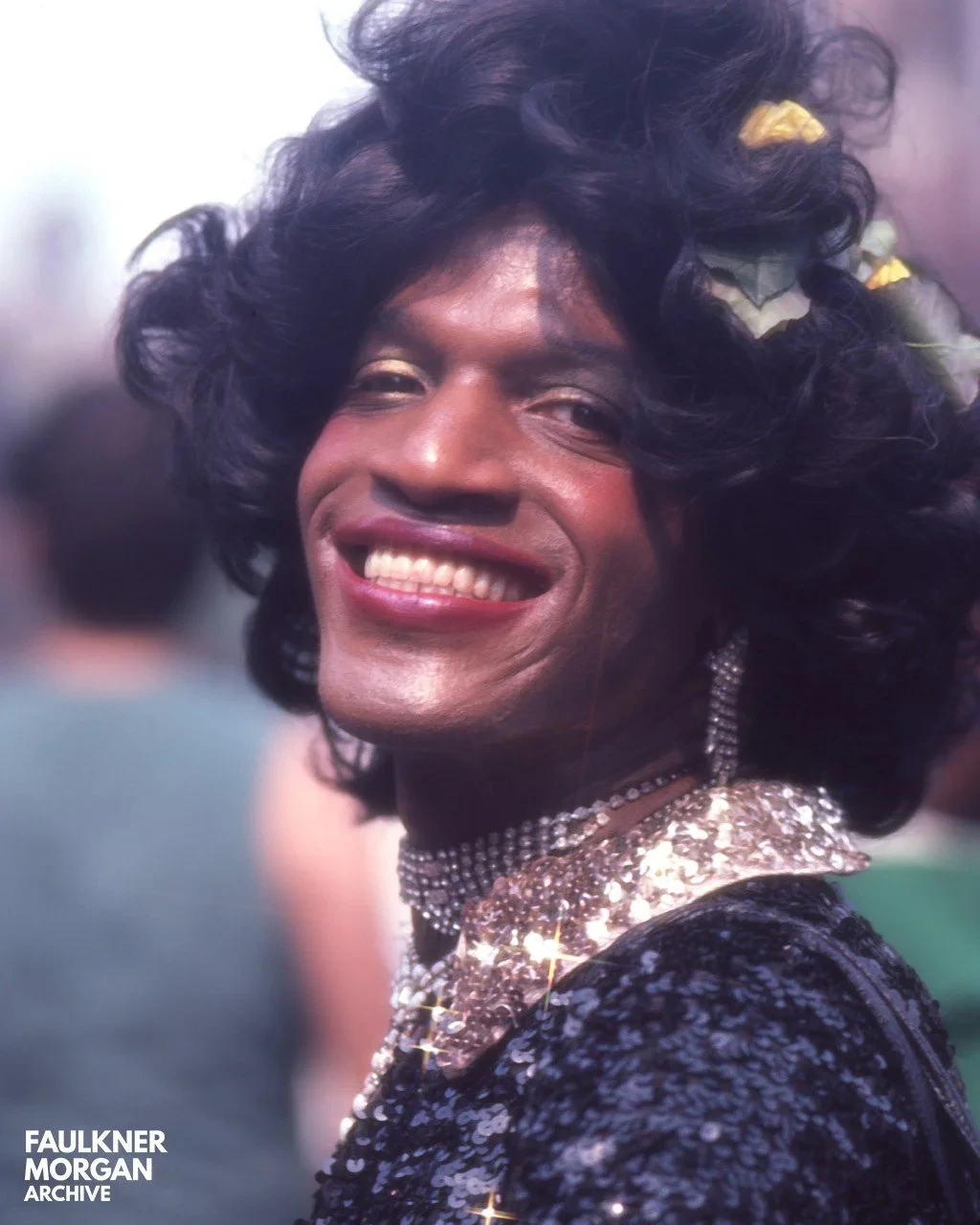
Marsha P. Johnson
 United States
LGBTQ rights activist•drag performer•sex worker
Also known as: Malcolm Michaels Jr., Saint of Christopher Street
Date de naissance
August 24, 1945
Signe astrologique
Virgo
Lieu de naissance
Elizabeth, New Jersey, USA
Âge
Décédé(e) à 46 ans
Taille
5 ft 7 in (170 cm)
À propos
Marsha P. Johnson était une militante américaine des droits LGBTQ+, artiste de drag et travailleuse du sexe, devenue une figure clé du mouvement de libération gay. Née le 24 août 1945 à Elizabeth, dans le New Jersey, elle a déménagé après le lycée dans le quartier de Greenwich Village à New York, où elle a embrassé une vie de performance et de militantisme. Connue pour son style flamboyant, son esprit vif et ses couronnes de fleurs emblématiques, Johnson était une figure appréciée de Christopher Street. Elle a joué un rôle clé dans les émeutes de Stonewall en 1969, qui ont déclenché la lutte moderne pour l'égalité LGBTQ+. Aux côtés de Sylvia Rivera, elle a cofondé les Street Transvestite Action Revolutionaries (STAR) en 1970, créant STAR House, un refuge pour les jeunes transgenres sans-abri. Johnson a également lutté sans relâche pour la sensibilisation au VIH/sida dans les années 1980, défilant avec ACT UP et prenant soin d'amis mourants. Sa vie s'est tragiquement terminée le 6 juillet 1992, lorsque son corps a été retrouvé dans l'Hudson River. La cause officielle du décès a été déclarée comme un suicide, mais beaucoup pensent qu'elle a été assassinée. L'héritage de Johnson perdure à travers des documentaires comme The Death and Life of Marsha P. Johnson (2017) et le court métrage Happy Birthday, Marsha! (2016). Elle est célébrée comme la « Sainte de Christopher Street » et reste un symbole de résistance et de joie transgenre.
Jeunesse et origines
Marsha P. Johnson a grandi à Elizabeth, dans le New Jersey, comme l'un des sept enfants d'un foyer religieux. Elle a fréquenté le lycée localement, obtenant son diplôme en 1963, et a été attirée par la mode et la performance dès son plus jeune âge. Après le lycée, elle a déménagé à Greenwich Village, un havre pour la communauté queer. Elle a brièvement travaillé comme serveuse mais a eu du mal à joindre les deux bouts et s'est tournée vers le travail du sexe. Johnson a également commencé à se produire en drag, rejoignant la troupe Hot Peaches puis les Angels of Light. Elle est devenue une habituée du Stonewall Inn, un bar gay sur Christopher Street, où elle a trouvé un sentiment d'appartenance. Le 28 juin 1969, elle était présente lors des émeutes de Stonewall, bien qu'elle ait déclaré plus tard être arrivée après le soulèvement initial. Cette nuit a marqué le début de son militantisme public.
Évolution de carrière
Après les émeutes de Stonewall, Marsha P. Johnson est devenue une ardente défenseure des droits des transgenres et des gays. En 1970, elle a cofondé les Street Transvestite Action Revolutionaries (STAR) avec Sylvia Rivera, un groupe radical qui luttait pour les droits des drag queens et des femmes trans. Elles ont ouvert STAR House dans l'East Village, un appartement de quatre chambres qui offrait un abri et un soutien aux jeunes transgenres sans-abri. Johnson est apparue dans le documentaire de 1972 The Queen, qui suivait un concours de drag. Tout au long des années 1970, elle s'est produite avec la troupe de théâtre Angels of Light et a poursuivi son militantisme. Dans les années 1980, alors que la crise du sida dévastait la communauté LGBTQ+, Johnson est devenue soignante et militante avec ACT UP, défilant pour de meilleurs traitements et une meilleure sensibilisation. Son travail était largement local ; elle ne cherchait pas la célébrité mais était une figure aimée de la scène queer new-yorkaise jusqu'à sa mort en 1992.
Chronologie de carrière
Image publique et style
Marsha P. Johnson est commémorée comme une figure joyeuse et résiliente qui a apporté panache et férocité à la lutte pour les droits LGBTQ+. Son style signature comprenait des perruques colorées, un maquillage audacieux et des couronnes de fleurs qu'elle fabriquait elle-même. Les représentations médiatiques la présentent souvent comme une martyre et une pionnière, avec des documentaires comme The Death and Life of Marsha P. Johnson qui la consacrent comme une icône. Les fans, se faisant parfois appeler les « Anges de Marsha », organisent des veillées annuelles aux quais de Christopher Street le 6 juillet. Les défilés de la Pride présentent fréquemment un char Marsha P. Johnson où les participants portent des couronnes de fleurs. Ses comptes officiels sur les réseaux sociaux, gérés par le Marsha P. Johnson Institute, se concentrent sur le militantisme, l'éducation et la célébration de la joie transgenre.
Notoriété et fandom
Marsha P. Johnson remains a towering figure in global history, yet the iFANN Global Fame Engine has evaluated her status and found she currently holds no placement in the published rankings for the Global Top 1,000 or any Top-100 scope list. While her name carries immense weight within LGBTQ+ history and human rights advocacy, she does not currently register as a ranked celebrity in the contemporary fame metrics that track living pop culture icons. The absence of a formal fandom name reflects the nature of her legacy; there is no organized group of 'fans' comparable to modern digital communities, but rather a coalition of activists, historians, and allies who treat her life as a political mandate. This community sustains her memory through institutional bodies like the Marsha P. Johnson Institute rather than informal fan clubs or chart-pushing campaigns. Their devotion manifests in annual commemorations on Pride weekends and around her birthday, where street festivals and billboards honor her, though these events are typically organized by city governments, non-profits, or commercial sponsors rather than grassroots fan petitions. The cultural mythology surrounding her is defined by verified historical events that have become legendary within the movement, particularly her pivotal role in the Stonewall Riots. A popular and enduring piece of folklore states that she threw the first brick at the police, a narrative she reportedly told in interviews, though historians note the exact nature of her physical contribution is part of the evolving oral history of the event. This story, alongside her self-identification as the 'Saint of Christopher Street,' forms the core of the lore shared with newcomers, serving as both verified history and a powerful cultural touchstone for the movement she helped birth.
Faits intéressants et légendes
Marsha P. Johnson's middle initial 'P' stood for 'Pay It No Mind,' a phrase she used when people asked about her gender identity. She was a member of the drag performance troupe Hot Peaches and the Angels of Light theater group. Johnson was known for making her own elaborate flower crowns, which became her signature. She survived a stabbing in the 1970s but refused to press charges. She was arrested multiple times for sex work and vagrancy but never stopped advocating for her community. The 2017 Netflix documentary The Death and Life of Marsha P. Johnson brought renewed attention to her unsolved death. A Guinness World Record was set in 2021 for the largest gathering of people dressed as Marsha P. Johnson, with 3,000 participants in New York City. Legends of her life include her coining the phrase 'Gay Power' and carrying a pink triangle flag as a symbol of resistance. She was famously known for 'paying it forward,' distributing food and money to homeless transgender youth and sex workers, cementing her reputation as a protector of the most vulnerable. Another widely retold story from the Stonewall era suggests she threw the first bottle at police, a narrative she reportedly shared in interviews, though the exact details remain part of the evolving oral history of the uprising.
Citations notables
“You never completely have your rights, one person, until you all have your rights.”
“I've been in the streets for years. I've been beaten up. I've been thrown in jail. I've lost my job. I've lost my apartment for gay liberation, and you all treat me like a piece of shit.”
“Pay it no mind.”
“I'm a little bit of a woman. I'm a little bit of a man. I guess I'm just a little bit of everything.”
Famille et vie privée
Marsha P. Johnson est née Malcolm Michaels Jr. le 24 août 1945 à Elizabeth, dans le New Jersey. Elle était l'un des sept enfants d'une famille ouvrière. Son père, Malcolm Michaels Sr., travaillait comme ouvrier d'usine, et sa mère était femme au foyer. Johnson a été élevée dans un foyer religieux et allait régulièrement à l'église. Elle avait une relation tendue avec sa famille après avoir fait son coming out gay et avoir déménagé à New York. Elle ne s'est jamais mariée ni n'a eu d'enfants. Sa famille choisie comprenait Sylvia Rivera et les nombreux jeunes queer qu'elle a encadrés via STAR House. Aujourd'hui, son héritage est perpétué par le Marsha P. Johnson Institute, qui soutient les personnes transgenres noires.
Relations notables
La plus proche collaboratrice de Marsha P. Johnson était Sylvia Rivera, avec qui elle a cofondé STAR et partagé un lien profond. La cinéaste Tourmaline (anciennement Reina Gossett) a réalisé Happy Birthday, Marsha! et contribué à The Death and Life of Marsha P. Johnson, réalisé par David France. L'actrice Alexandra Grey est attachée au rôle principal dans un prochain biopic Marsha. Caitlyn Jenner a mentionné Johnson dans son discours aux ESPYs en 2015, apportant son histoire à un public plus large.
Relations et vie amoureuse
La vie amoureuse de Marsha P. Johnson n'est pas largement documentée. Son lien le plus proche était avec Sylvia Rivera, qu'elle a rencontrée à la fin des années 1960. Bien que certaines histoires orales suggèrent une brève relation romantique ou intime entre elles à la fin des années 1960 et au début des années 1970, elle est plus souvent décrite comme une profonde amitié platonique et une famille choisie. Elles ont cofondé STAR et vécu ensemble à STAR House. Aucun autre partenaire romantique confirmé n'est enregistré. Johnson ne s'est jamais mariée et n'a pas eu d'enfants connus. En 2026, elle est décédée ; sa succession est gérée par le Marsha P. Johnson Institute.
- RumeurSylvia Rivera1969 - 1972Amie proche et cofondatrice de STAR ; certains récits suggèrent une brève relation romantique, mais il s'agissait principalement d'un lien platonique à vie.
Décès et conséquences
Décès
July 6, 1992 (à 46 ans)
Lieu de décès
New York City, New York, USA
Cause du décès
Drowning (ruled accidental)
Marsha P. Johnson died on July 6, 1992, in the Hudson River near the Christopher Street pier in Greenwich Village, New York City. Her body was discovered floating after she had been missing since late June, though some initial reports cited July 3 as her death date. The New York City Medical Examiner ruled the cause of death drowning, attributing it to intoxication, but this conclusion faced immediate and sustained skepticism from friends, family, and activists who suspected foul play or a hate crime. Vigils were held shortly after her passing at the Stonewall Inn and throughout Greenwich Village, where peers like Sylvia Rivera's circle honored her contributions to the gay rights movement and her care for homeless transgender youth.
Johnson's funeral remained a private affair with no official record of her burial or cremation location, leaving her exact resting place unknown for decades. In the years following her death, her legacy expanded significantly through tributes such as murals across New York City, her induction into the National LGBTQ Wall of Honor in 2018, and the establishment of the Marsha P. Johnson Institute in 2015 to advance trans justice. The case remained officially open but inactive until the NYPD reopened it in 2019 following the release of the documentary The Death and Life of Marsha P. Johnson, yet no charges have ever been filed.
Fortune (valeur de la succession)
$1 Million
Estimation de l’équipe éditoriale d’iFANN
Marsha P. Johnson died with no significant personal wealth. As of 2026, her estate is valued at approximately $1 million per iFANN's editorial analysis. The estate generates income primarily through posthumous book royalties, licensing fees for documentaries like The Death and Life of Marsha P. Johnson, and merchandise sold by the Marsha P. Johnson Institute. The institute, which manages the estate, also receives donations and speaking fees. No real estate or stock holdings are reported. The estate's value has grown modestly since the 2017 documentary, with annual earnings estimated at $100,000 to $200,000. A Congressional Gold Medal awarded in 2024 has further boosted public interest and donations.
Récompenses remportées (4)
Marsha P. Johnson n'a reçu aucun prix majeur de l'industrie de son vivant, mais elle a été honorée à titre posthume. En 2019, elle a été intronisée au National Women's Hall of Fame. Elle a reçu une médaille d'or du Congrès à titre posthume en 2024 dans le cadre du groupe des vétérans de Stonewall. The New School lui a décerné un doctorat honorifique en lettres humaines en 2020. Elle a également reçu les clés de la ville d'Elizabeth, New Jersey, en 2015 et a été intronisée au Rainbow Honor Walk à San Francisco en 2019.
2015 · Civique
Activism
2024 · Gouvernement
Stonewall veterans
Connu pour
Stonewall riots
1969 · Participant
Street Transvestite Action Revolutionaries (STAR)
1970 · Co-fondateur
The Death and Life of Marsha P. Johnson
2017 · Subject
Mots-clés
Faits clés
- Profession
- LGBTQ rights activist, drag performer, sex worker
- Né(e) le
- August 24, 1945
- Lieu de naissance
- Elizabeth, New Jersey, USA
- Décès
- July 6, 1992
- Lieu de décès
- New York City, New York, USA
- Signe astrologique
- Virgo
- Taille
- 5 ft 7 in (170 cm)
- Net Worth
- $1 Million
Informations personnelles
- Nom complet
- Malcolm Michaels Jr.
- Taille
- 5 ft 7 in (170 cm)
Filmographie
2
Total
2
Cinéma
0
TV
Questions fréquentes
Comment Marsha P. Johnson est-elle morte ?
Que signifie le « P » dans Marsha P. Johnson ?
Marsha P. Johnson était-elle transgenre ?
Quel est l'héritage de Marsha P. Johnson ?
Marsha P. Johnson avait-elle des enfants ?
Réseaux sociaux
Personnalités similaires
Rejoindre la communauté
fans en discussion