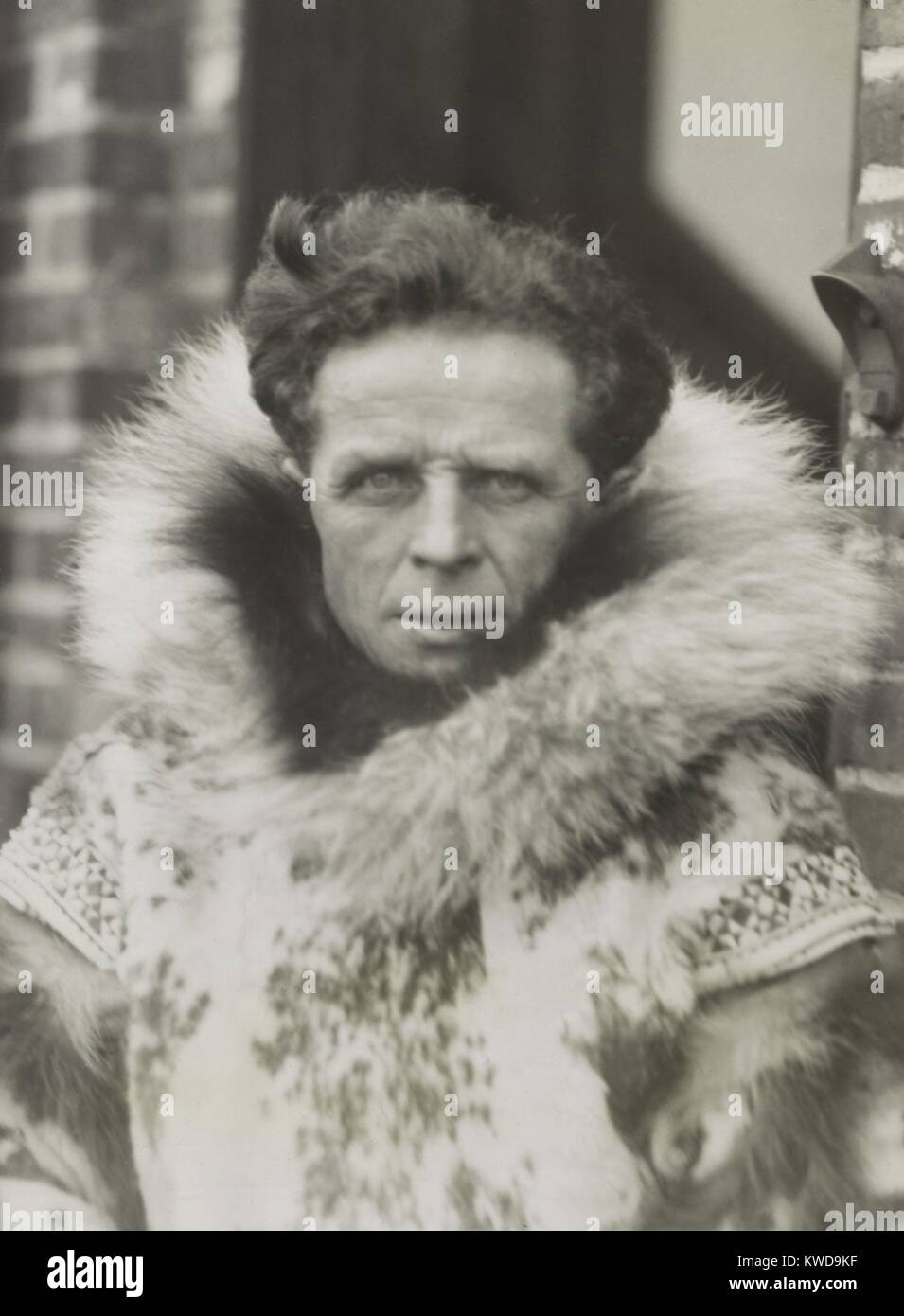
Leonhard Seppala
 Norway
explorer•dogsled musher•gold miner
Date de naissance
September 14, 1877
Signe astrologique
Virgo
Lieu de naissance
Lyngen Municipality, Troms, Norway
Âge
Décédé(e) à 89 ans
À propos
Leonhard Seppala était un conducteur de traîneau à chiens, explorateur et chercheur d'or norvégien-kven-américain dont le nom est à jamais lié à la course au sérum de 1925 à Nome. Lui et son chien de tête Togo ont parcouru l'étape la plus longue et la plus périlleuse du relais, près de 700 miles par des températures de -85°F et sur une glace de mer mouvante, livrant l'antitoxine diphtérique qui a sauvé une ville. Seppala est considéré comme un personnage calme et infatigable qui traitait ses chiens comme des partenaires. Il a introduit la race du husky sibérien en Amérique et a remporté l'All Alaska Sweepstakes trois années consécutives. Aujourd'hui, le Leonhard Seppala Humanitarian Award honore son héritage à l'Iditarod.
Jeunesse et origines
Seppala est né à Lyngen, dans le nord de la Norvège, fils aîné d'Isak Seppälä, forgeron et pêcheur tornédalien, et d'Anne Henrikke Henriksdatter. Son nom de famille vient du mot finnois seppä, qui signifie forgeron, reflétant son héritage kven. À l'âge de deux ans, ils ont déménagé à Skjervøya, une petite île où il a grandi en aidant son père. Il envisageait initialement de devenir forgeron, mais un ami, Jafet Lindeberg, l'a convaincu d'essayer l'exploitation aurifère à Nome, en Alaska. Son père s'est moqué de l'idée, mais Seppala est quand même parti. À Nome, il a travaillé pour la Pioneer Mining Company de Lindeberg, transportant des fournitures en traîneau à chiens jusqu'à 100 miles par jour. En 1913, Lindeberg lui a donné une meute de chiens sibériens destinés à l'expédition arctique annulée de Roald Amundsen. Ce cadeau a tout changé.
Évolution de carrière
Seppala a participé à son premier All Alaska Sweepstakes en 1914. Il a remporté la course en 1915, battant le vétéran Scotty Allan de deux heures, puis a gagné à nouveau en 1916 et 1917. La course a été suspendue après cela, le laissant champion à trois reprises. En janvier 1925, la diphtérie a éclaté à Nome. La fille de Seppala, Sigrid, âgée de huit ans, s'y trouvait. Il a été envoyé pour récupérer le sérum à Nenana, conduisant vers l'est avec Togo comme chien de tête. Ils ont traversé Norton Sound sur de la glace craquante, parcouru 261 miles d'une traite, et ont remis le sérum au prochain musher. Au total, Seppala et Togo ont parcouru l'étape la plus longue et la plus dangereuse du relais. Après la course, il a fait une tournée aux États-Unis avec ses chiens, présentant le husky sibérien au public. Il s'est ensuite installé en Alaska, élevant et courant jusqu'à sa mort.
Chronologie de carrière
Image publique et style
Seppala est considéré comme un homme calme et déterminé qui se souciait profondément de ses chiens. Les médias et les historiens soulignent son lien avec Togo et sa volonté de tout risquer pour les autres. Son approche caractéristique était de traiter les chiens comme des partenaires, non comme des outils. La communauté de l'Iditarod le tient en très haute estime, et le Leonhard Seppala Humanitarian Award reflète ses valeurs. Les fans de courses de traîneaux à chiens et d'histoire de l'Alaska le célèbrent chaque année, en particulier le 31 janvier, anniversaire de la remise du sérum.
Notoriété et fandom
Leonhard Seppala commands a global audience defined by historical reverence rather than modern celebrity churn, with his legacy tracked across media coverage, search patterns, and cultural consumption signals worldwide. Per the iFANN Global Fame Rankings, he holds the position of the 20th most famous person from Norway, a placement that has remained steady since the previous cycle.
The scope of this recognition is anchored in the enduring mythos of the 1925 serum run, where Seppala and his lead dog Togo traversed the most perilous leg of the relay. While popular culture often conflates his story with that of Balto, historical scrutiny and recent documentaries have sharpened the focus on Seppala's specific contribution to saving Nome. This shift in narrative has sustained his relevance among historians and sled dog enthusiasts alike.
Regarding his fanbase, no formal name or organized community structure exists for Seppala. There are no official monikers like "Seppalians," nor do fans engage in chart pushes or birthday campaigns typical of contemporary icons. Instead, his supporters consist of historical preservationists, mushing purists, and Alaskan locals who view him as a foundational figure of northern heritage. The closest equivalent to a dedicated fan project is the grassroots campaign launched in 2018 to restore his historic home in Nome, driven by a desire to maintain physical artifacts of his life rather than commercial promotion. His relationship with the public remains strictly professional and geographical, rooted in the respect accorded to a local hero whose athletic prowess and breeding innovations reshaped the Arctic landscape.
Faits intéressants et légendes
Leonhard Seppala introduced the Siberian Husky breed to America entirely through his dogs, establishing a lineage that persists today. He trained his team year-round, utilizing carts during snow-free months to maintain their conditioning. Although his dog Balto, born at his kennels and named after Sami explorer Samuel Balto, achieved greater fame in popular culture, Seppala consistently regarded Togo as the true hero. Togo was initially rejected for being too small and weak, given away as a puppy before returning to prove his worth.
Historical records indicate that Seppala castrated Balto at six months old, following Inuit tradition because he considered the dog subpar compared to Togo; this detail adds a layer of tragic realism to the folklore surrounding the two canines. Seppala also authored an unpublished autobiography detailing his experiences with Togo and the serum run. His legend is further cemented by his victory in the 1914 All-Alaska Sweepstakes, which established his reputation as a master musher prior to the 1925 race.
The narrative of the serum run underwent significant correction in the early 21st century. For decades, the public credited Balto as the sole hero due to being the final dog to enter Nome where the press waited. However, recent scholarship and media coverage have clarified that Seppala and Togo traveled the farthest and most dangerous route, covering nearly 700 miles across shifting sea ice in temperatures reaching -85°F. This distinction has moved the historical record from the "Balto myth" back to the "Seppala-Togo reality," ensuring the true scope of their heroic effort is recognized.
Famille et vie privée
Seppala a épousé Constance, une immigrée belge, et ils ont eu une fille, Sigrid. Sigrid avait huit ans lors de l'épidémie de 1925, ce qui donnait à Seppala un intérêt personnel dans la course. Constance lui a survécu, mourant en 1969. La famille a vécu en Alaska et plus tard à Seattle. Le père de Seppala était forgeron et s'est initialement opposé à son départ pour l'Amérique.
Relations notables
Seppala était étroitement associé à Jafet Lindeberg, l'ami qui l'a amené en Alaska. Son chien de tête Togo était son plus proche partenaire. Balto, également de ses chenils, a mené la dernière étape de la course au sérum sous Gunnar Kaasen. L'expédition annulée de Roald Amundsen a indirectement donné ses chiens à Seppala. Willem Dafoe l'a incarné dans le film Disney Togo de 2019.
Relations et vie amoureuse
Seppala épousa Constance, une immigrante belge, dans les années 1910. Ils eurent une fille, Sigrid. Constance lui survécut, décédant en 1969. Aucune autre relation amoureuse n'est documentée.
- Marié(e)Constance Seppala1910 - 1967Marié dans les années 1910 ; eut une fille, Sigrid ; Constance survécut à Seppala.
Décès et conséquences
Décès
January 28, 1967 (à 89 ans)
Lieu de décès
Inconnu
Cause du décès
Inconnu
Tributes from peers and institutions marked the passing of Leonhard Seppala, recognizing his enduring legacy as one of Alaska's foremost mushers and a central figure in the 1925 serum run to Nome. On January 28, 1967, at the age of 89, the Norwegian-born explorer passed away, though the specific location of his final days and the official medical cause remain unrecorded in available documentation. Details regarding the funeral service, burial location, or immediate family statements have not been preserved in the historical record.
Posthumous recognition has since expanded through induction into the Alaska Sports Hall of Fame and renewed attention following the 2019 Disney film Togo, which featured Willem Dafoe portraying the musher. The Seppala Siberian Husky breed remains a distinct line, and the "Seppala" name is synonymous with sled dog excellence. Citizens have sought to save his historic blue house in downtown Nome as recently as June 2018, indicating ongoing efforts to maintain his physical legacy.
Fortune (valeur de la succession)
$1 Million
Estimation de l’équipe éditoriale d’iFANN
As a historical figure who passed away in 1967, Leonhard Seppala left behind a modest estate managed informally through various historical societies. During his lifetime, his income was derived primarily from gold mining, competitive sled dog racing, and touring exhibitions with his canine teams. Posthumous revenue streams include licensing fees associated with the 2019 Disney film Togo, royalties from books documenting his life, and contributions to museum exhibits featuring his equipment and history.
iFANN currently estimates the total value of his estate at $1 Million. This figure reflects a valuation based on cultural significance and historical impact rather than active commercial enterprise. The assessment incorporates ongoing interest in his legacy, particularly around the anniversary of the serum run, but excludes speculative market fluctuations. As of 2026, the estate maintains this standing, serving as a testament to the enduring appreciation of his contributions to Alaskan history and the sport of mushing.
Récompenses remportées (3)
Seppala remporta l'All Alaska Sweepstakes trois années consécutives (1915-1917). Il participa aux Jeux olympiques d'hiver de 1932 comme sport de démonstration. Le Leonhard Seppala Humanitarian Award est nommé en son honneur.
1917 · Course de chiens de traîneau
All Alaska Sweepstakes
1916 · Course de chiens de traîneau
All Alaska Sweepstakes
1915 · Course de chiens de traîneau
All Alaska Sweepstakes
Connu pour
1925 Serum Run to Nome
1925 · Musher
All Alaska Sweepstakes
1915 · Champion
Togo (2019 film)
2019 · Sujet
Mots-clés
Sources
Faits clés
- Profession
- explorer, dogsled musher, gold miner
- Né(e) le
- September 14, 1877
- Lieu de naissance
- Lyngen Municipality, Troms, Norway
- Décès
- January 28, 1967
- Lieu de décès
- Seattle, Washington, USA
- Genre
- Homme
- Signe astrologique
- Virgo
- Conjoint
- Constance Seppala
- Children
- Sigrid Seppala
Informations personnelles
- Nom complet
- Leonhard Seppala
- Conjoint
- Constance Seppala
- Enfants
- Sigrid Seppala
Filmographie
1
Total
1
Cinéma
0
TV
Questions fréquentes
Quel âge avait Leonhard Seppala à sa mort ?
Leonhard Seppala a-t-il eu des enfants ?
Qu'est-ce que le Leonhard Seppala Humanitarian Award ?
Leonhard Seppala a-t-il participé aux Jeux olympiques ?
Quel était le chien célèbre de Leonhard Seppala ?
Réseaux sociaux
Personnalités similaires
Rejoindre la communauté
fans en discussion