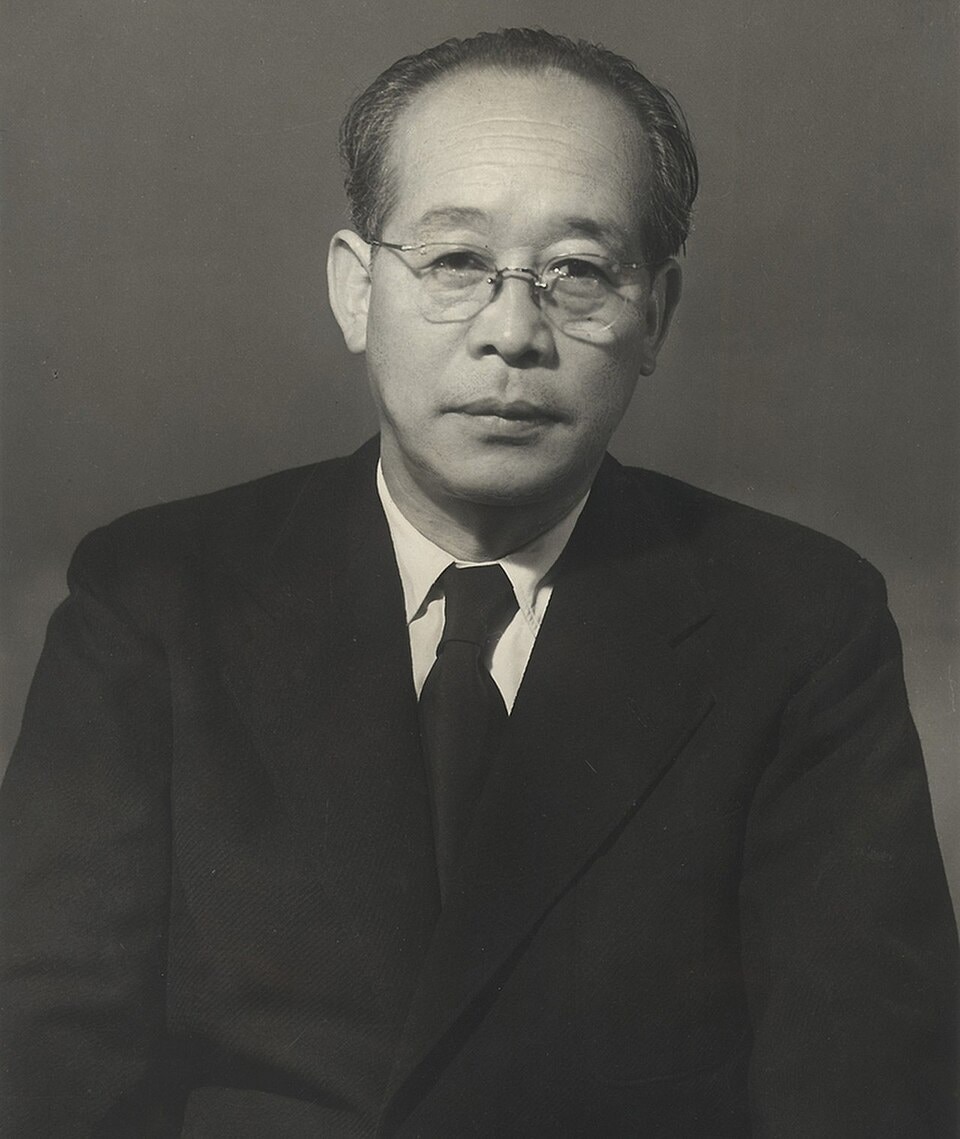
Kenji Mizoguchi
 Japan
JapanDate de naissance
May 16, 1898
Signe astrologique
Taurus
Lieu de naissance
Tokyo, Japan
Âge
Décédé(e) à 58 ans
À propos
Kenji Mizoguchi, né le 16 mai 1898 à Tokyo, était un réalisateur et scénariste japonais qui a réalisé environ cent films de 1923 jusqu'à sa mort en 1956. Aux côtés d'Akira Kurosawa et Yasujiro Ozu, il est considéré comme un pilier de l'âge d'or du cinéma japonais. Son œuvre explore souvent l'oppression des femmes dans le Japon historique et contemporain, un thème qui traverse ses films les plus célèbres : The Story of the Last Chrysanthemums (1939), The Life of Oharu (1952), Ugetsu (1953) et Sansho the Bailiff (1954). Ces trois derniers ont chacun remporté des prix à la Mostra de Venise, cimentant sa réputation internationale. Les compositions méticuleuses et les longs plans de Mizoguchi ont influencé des réalisateurs du monde entier, mais son focus sur les protagonistes féminines le distingue de ses pairs. Il est mort le 24 août 1956 à 58 ans, laissant derrière lui un héritage de cinéma poétique et socialement conscient.
Jeunesse et origines
Mizoguchi est né dans le quartier de Hongo à Tokyo. Son père, un vendeur de parapluies ayant échoué, luttait financièrement, et le déclin de la famille força la sœur aînée de Mizoguchi à devenir geisha, un événement qui marqua profondément le réalisateur et informa plus tard son thème récurrent de la souffrance des femmes. Il quitta l'école très jeune et occupa divers petits boulots avant de découvrir le cinéma. En 1920, il rejoignit le studio Nikkatsu comme acteur et assistant réalisateur, apprenant le métier auprès de réalisateurs établis. Ses débuts de réalisateur eurent lieu en 1923 avec Footprints of Youth, un film muet aujourd'hui perdu. Tout au long des années 1920, il réalisa des dizaines de films de genres variés, mélodrames, adaptations littéraires et drames sociaux, mais peina à trouver un style cohérent. Le grand séisme du Kantō de 1923 perturba la production, et de nombreuses premières œuvres furent détruites.
Évolution de carrière
La percée de Mizoguchi arriva en 1939 avec The Story of the Last Chrysanthemums, un drame sensible sur un acteur de kabuki et sa servante qui reçut les éloges de la critique et établit son style mature. Après la Seconde Guerre mondiale, il entra dans sa période la plus fertile. En 1952, The Life of Oharu remporta le Lion d'or à Venise, le faisant connaître du public occidental. L'année suivante, Ugetsu obtint le Lion d'argent, mêlant folklore fantomatique à une histoire morale sur l'ambition et la perte. En 1954, Sansho the Bailiff décrocha un autre Lion d'argent, complétant un trio de triomphes vénitiens. Ces films, tous écrits avec le collaborateur Yoshikata Yoda, montraient les longs plans et la profondeur de champ caractéristiques de Mizoguchi. Ses œuvres ultérieures, comme Street of Shame (1956), poursuivaient sa critique de la société patriarcale. Il mourut d'une leucémie peu après avoir terminé son dernier film.
Chronologie de carrière
Image publique et style
La personnalité publique de Mizoguchi était celle d'un artiste réservé et intense. Il était connu pour son attention méticuleuse aux détails d'époque et sa capacité à tirer des performances subtiles des acteurs. Les critiques ont loué ses mouvements de caméra élégants et fluides et sa représentation compatissante des femmes. Les fans et les chercheurs le considèrent comme un maître du jidaigeki (drame historique) et une figure clé du cinéma humaniste japonais. Son œuvre est fréquemment étudiée pour ses thèmes féministes et sa précision formelle.
Notoriété et fandom
Kenji Mizoguchi stands as a towering figure in the global pantheon of cinema, his influence stretching far beyond the borders of 1950s Japan. Despite a prolific career crafting roughly one hundred films between 1923 and his death in 1956, his posthumous reputation has only deepened over decades of critical re-evaluation. While his work remains a staple of academic study and cinephile devotion, iFANN's Global Fame Engine evaluated this person in August 2026 and found that he does not currently hold a placement in the published rankings or the Global Top 1,000 list. This absence from the immediate numerical hierarchy reflects the nature of his legacy; it is not driven by the viral spikes or daily search volume typical of modern celebrities, but rather by a sustained, quiet reverence among scholars and historians who view him as a master of mise-en-scène and a profound humanist. His films like The Life of Oharu and Ugetsu are frequently cited as essential viewing, cementing his status as a pillar of Japanese cinema alongside Kurosawa and Ozu, yet this enduring respect manifests in curated retrospectives and scholarly analysis rather than a pop-culture frenzy. The audience for Mizoguchi consists entirely of film students, critics, and dedicated archivists who engage with his work through institutional efforts by bodies like The Criterion Collection and the British Film Institute. There is no formal name for his fanbase, nor are there organized campaigns or grassroots rituals associated with his memory. Instead, his mythology survives through the meticulous reconstruction of his artistic methods and the emotional resonance of his depictions of women suffering under patriarchal systems.
Faits intéressants et légendes
Kenji Mizoguchi directed approximately 100 films between 1923 and 1956, yet fewer than half survive today. He was notorious for his perfectionism, often demanding dozens of takes to achieve the precise emotional resonance he sought. Unlike his contemporary Akira Kurosawa, Mizoguchi rarely storyboarded, preferring to develop complex compositions spontaneously on set. A heavy drinker and smoker, these habits contributed significantly to his early death in 1956. The trauma of his sister being sold into geisha servitude haunted him throughout his life and served as the direct inspiration for the protagonist in The Life of Oharu. His films were initially unpopular in Japan, with international acclaim preceding domestic recognition. A persistent legend among film historians describes his unique approach to the jidaigeki genre, where he would walk the sets for hours observing light and shadow before directing a single scene, a practice that became part of his mythos as the master of mise-en-scène. Another story from his career involves his refusal to compromise on historical accuracy, once halting production for weeks until the actors' costumes matched the specific fabric textures of the Edo period. Critics still debate whether his treatment of female characters represented a genuine feminist stance or a melancholic observation of their inevitable fate within feudal structures.
Citations notables
“I have always been interested in the suffering of women.”
“The camera must be like a poet's pen.”
“I want to show the truth of human existence.”
“A film should be a work of art, not just entertainment.”
Famille et vie privée
Mizoguchi épousa Fumiko Mizoguchi, mais on sait peu de choses sur leur vie privée. Il n'eut pas d'enfants documentés publiquement. Sa sœur aînée, Suzu, fut vendue comme geisha lorsque la famille tomba dans la pauvreté, un traumatisme qui façonna sa vision artistique. Mizoguchi parlait rarement de sa famille dans les interviews.
Relations notables
Mizoguchi est souvent comparé à Akira Kurosawa et Yasujiro Ozu. Il collabora intensivement avec le scénariste Yoshikata Yoda et le compositeur Fumio Hayasaka. Ses films ont influencé des réalisateurs tels que Martin Scorsese et Pedro Almodóvar.
Relations et vie amoureuse
Mizoguchi était marié à Fumiko Mizoguchi. Les détails de leur cour et de leur mariage ne sont pas largement documentés. Il resta marié jusqu'à sa mort en 1956. Aucune autre relation publique n'est enregistrée.
- Marié(e)Fumiko Mizoguchi? - 1956Marié jusqu'à la mort de Mizoguchi ; on sait peu de choses sur leur relation.
Décès et conséquences
Décès
August 24, 1956 (à 58 ans)
Lieu de décès
Tokyo, Japan
Cause du décès
natural causes related to illness
Kenji Mizoguchi died on August 24, 1956, in Tokyo, Japan. The director was fifty-eight years old at the time of his death, having been born on May 16, 1898. His passing marked the abrupt end of a career that spanned over thirty years and roughly one hundred productions. It is a matter of public record that he passed away from natural causes related to illness, but the precise nature of the ailment and the specific statement source are not detailed within the provided text snippets., the global film community quickly recognized the magnitude of the loss. Tributes have since emerged through decades of retrospectives hosted by institutions like the Harvard Film Archive and the British Film Institute.
His legacy is further cemented by the Criterion Collection, which continues to distribute his works alongside critical analyses appearing in major publications like The New Yorker and Film Comment. Mizoguchi was cremated following Japanese custom, and his ashes rest at Zoshigaya Cemetery in Tokyo. Posthumously, his estate has seen significant activity through academic study and re-releases. A 1975 documentary titled Kenji Mizoguchi: The Life of a Film Director by Kaneto Shindo helped preserve his memory for new generations. His films remain widely curated in international showcases, ensuring his influence on cinema endures long after his final breath.
Récompenses remportées (3)
Mizoguchi a remporté le Lion d'or au Festival de Venise en 1952 pour La Vie d'O'Haru, et le Lion d'argent en 1953 pour Ugetsu et à nouveau en 1954 pour L'Intendant Sansho. Ces trois récompenses consécutives à Venise ont établi sa réputation internationale.
1952 · Meilleur film
The Life of Oharu
1954 · Meilleur film
Sansho the Bailiff
1953 · Meilleur film
Ugetsu
Connu pour
The Life of Oharu
1952 · Réalisateur
Ugetsu
1953 · Réalisateur
Sansho the Bailiff
1954 · Réalisateur
The Story of the Last Chrysanthemums
1939 · Réalisateur
Mots-clés
Faits clés
- Profession
- film director, screenwriter
- Né(e) le
- May 16, 1898
- Lieu de naissance
- Tokyo, Japan
- Décès
- August 24, 1956
- Lieu de décès
- Kyoto, Japan
- Genre
- Homme
- Signe astrologique
- Taurus
Informations personnelles
- Conjoint
- Fumiko Mizoguchi
Filmographie
100
Total
100
Cinéma
0
TV
Questions fréquentes
Qui est Kenji Mizoguchi ?
Quels sont les films les plus célèbres de Kenji Mizoguchi ?
Quels thèmes Kenji Mizoguchi explorait-il dans ses films ?
Combien de films Kenji Mizoguchi a-t-il réalisés ?
Quand Kenji Mizoguchi est-il mort ?
Personnalités similaires
Rejoindre la communauté
fans en discussion