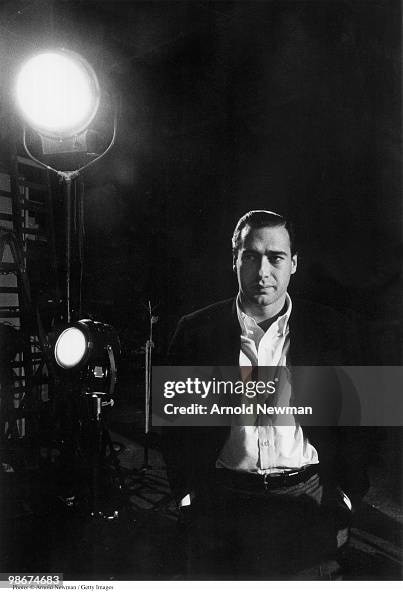
John Frankenheimer
 United States
film director•film producer•screenwriter
Date de naissance
February 19, 1930
Signe astrologique
Pisces
Lieu de naissance
Queens, New York, USA
Âge
Décédé(e) à 72 ans
À propos
John Frankenheimer était un réalisateur américain de cinéma et de télévision qui a façonné le genre du thriller politique. Né le 19 février 1930 dans le Queens, à New York, il a débuté dans la télévision en direct avant de réaliser près de 40 longs métrages et plus de 50 pièces télévisées. Son travail explorait souvent des dilemmes psychologiques et des situations politiques, établissant des comparaisons avec Sidney Lumet, pour qui il a travaillé comme assistant réalisateur. Frankenheimer a remporté quatre Emmy Awards dans les années 1990 pour des téléfilms comme Against the Wall, The Burning Season, Andersonville et George Wallace, ce dernier lui valant un Golden Globe. Il a été intronisé au Television Hall of Fame en 2002, peu avant sa mort le 6 juillet 2002, à l'âge de 72 ans.
Jeunesse et origines
Frankenheimer a grandi dans le Queens, fils de Walter et Helen Frankenheimer. À 10 ans, il a emprunté une caméra et tourné son premier film, un court métrage sur un vol de train. Il a fréquenté l'Indiana University, étudiant l'anglais et jouant dans des productions théâtrales universitaires. Pendant la guerre de Corée, il a servi dans l'US Air Force, où il a réalisé des films de formation et des documentaires. Cette expérience l'a conduit à un emploi chez CBS à New York en 1953. Il est rapidement passé à la réalisation de télévision en direct, travaillant sur des séries anthologiques comme Kraft Television Theatre et Playhouse 90. À la fin des années 1950, il avait réalisé plus de 100 émissions en direct, perfectionnant un style visuel utilisant la profondeur de champ et les longs plans pour accroître la tension.
Évolution de carrière
La percée de Frankenheimer a eu lieu en 1962 avec The Manchurian Candidate, un thriller de la guerre froide avec Frank Sinatra. Le film a été un succès critique et commercial, salué pour sa réalisation tendue et ses thèmes prémonitoires. Il a enchaîné avec deux autres succès en 1964 : Seven Days in May, un drame de conspiration politique, et The Train, un film d'action sur la Seconde Guerre mondiale. En 1966, il a sorti Seconds, un horreur psychologique surréaliste, et Grand Prix, une épopée de course ambitieuse tournée en Cinérama. Les années 1970 l'ont vu réaliser French Connection II (1975) et Black Sunday (1977). Après une baisse dans les années 1980, il a relancé sa carrière avec des téléfilms acclamés dans les années 1990, remportant quatre Emmys. Son dernier film en salle était Ronin (1998), un thriller de casse connu pour ses courses-poursuites. Il est mort en 2002 après avoir terminé le film HBO Path to War.
Chronologie de carrière
Image publique et style
Frankenheimer était respecté en tant qu'artisan qui réalisait des films intelligents et pleins de suspense. Les critiques louaient sa capacité à créer de la tension par la narration visuelle et sa volonté d'aborder des thèmes politiques et psychologiques. Il était connu pour un style de réalisation exigeant et intense qui poussait les acteurs mais gagnait leur loyauté. Contrairement à de nombreux réalisateurs de son époque, il a adopté la télévision comme un médium pour un travail sérieux, surtout dans les années 1990. Les fans admirent ses classiques des années 1960, et The Manchurian Candidate est souvent cité comme l'un des plus grands thrillers jamais réalisés. Il n'a pas cultivé une personnalité publique en dehors de son travail, se concentrant plutôt sur le métier.
Notoriété et fandom
John Frankenheimer remains a towering figure in cinema history, revered by cinephiles and scholars for his mastery of the political thriller and his pioneering work in television. While his name is instantly recognized by those who study film technique, iFANN's Global Fame Engine has evaluated this person, but they do not currently hold a placement in the published rankings (Global Top 1,000 or a Top-100 scope list). This absence from the global top tier reflects his status as a director's director rather than a pop culture icon whose fame relies on viral moments or mass-market celebrity. His reputation is built on the enduring power of films like The Manchurian Candidate and Grand Prix, which continue to be studied in academic circles and screened at retrospectives decades after their release.
The audience surrounding his legacy does not operate under a formal banner; there is no documented fanbase name, organized campaigns, or specific rituals that define his followers. Instead, admiration manifests through the preservation of his work and the ongoing discussion of his technical innovations. Fans of classic cinema often cite his ability to capture high-speed motion and psychological tension as reasons for his enduring relevance. Unlike modern celebrities who generate folklore through public chaos or interactive projects, Frankenheimer's legend is strictly one of professional achievement. His four consecutive Emmy Awards in the 1990s stand as a reflection of his skill during a time when many peers had abandoned television, cementing his place in the Television Hall of Fame. The stories told about him focus on his demanding directing style and his unique background as an amateur race car driver, which informed the visceral realism of his action sequences. There are no verified accounts of crowds disrupting events or fan-driven media spectacles; the narrative remains centered on his artistic contributions and the complex social dramas he translated into compelling cinema.
Faits intéressants et légendes
John Frankenheimer was an avid race car driver who owned several Porsches and competed in the 24 Hours of Daytona, using his driving experience to capture unprecedented velocity in Grand Prix. He served as an assistant director to Sidney Lumet early in his career before forging his own path. A close friend of Burt Lancaster, he collaborated with the actor on five films, including The Young Lions and The Train. On the set of The Island of Dr. Moreau in 1996, a famous clash occurred with Marlon Brando, who reportedly wore an ice bucket on his head between takes to manage his temperature. Frankenheimer's passion for trains began early; his first film at age 10 depicted a train robbery, foreshadowing his later masterpiece The Train.
A widely retold story in film circles highlights how his racing background directly influenced the camera work in Grand Prix, where he placed cameras inside moving vehicles to create a sense of speed that was revolutionary for its time. Another enduring piece of lore surrounds the production of The Manchurian Candidate, where his innovative editing techniques and prescient political themes have become a cornerstone of cultural mythology, frequently referenced in academic discussions. These professional anecdotes form the core of his legend, distinguishing him from directors known for personal scandals or crowd disruptions. His legacy is defined by these verified achievements and the intense loyalty he inspired in actors like Lee Marvin and Jeff Bridges.
Citations notables
“I'm not interested in making films about the human condition. I'm interested in making films about the human condition under pressure.”
“The Manchurian Candidate was a film about paranoia, and it tapped into the anxieties of the time. It still resonates because those anxieties haven't gone away.”
“Live television was the best training a director could have. You learned to think on your feet.”
“I love the process of filmmaking. The collaboration, the tension, the discovery.”
Famille et vie privée
Les parents de Frankenheimer étaient Walter et Helen Frankenheimer. Il avait une sœur cadette, Mary. Son premier mariage avec l'actrice Evelyn Ward s'est soldé par un divorce. En 1964, il a épousé l'actrice Evans Evans, qui est apparue dans plusieurs de ses films. Ils ont eu quatre enfants : Christine, John, Michael et Elise. La famille vivait à Los Angeles et à Malibu. Frankenheimer était connu pour être un père dévoué, emmenant souvent ses enfants sur les plateaux de tournage.
Relations notables
Frankenheimer a fréquemment collaboré avec l'acteur Burt Lancaster sur des films comme Birdman of Alcatraz, Seven Days in May et The Gypsy Moths. Il a travaillé avec Frank Sinatra sur The Manchurian Candidate, et avec Robert De Niro sur Ronin. Il était un protégé de Sidney Lumet, servant comme son assistant réalisateur au début de sa carrière.
Relations et vie amoureuse
Frankenheimer s'est marié deux fois. Son premier mariage avec l'actrice Evelyn Ward dans les années 1950 s'est terminé par un divorce après quelques années. En 1964, il a épousé l'actrice Evans Evans, qui est apparue dans ses films Seconds et The Gypsy Moths. Ils sont restés mariés jusqu'à sa mort en 2002. Le couple a eu quatre enfants et vivait à Los Angeles.
- Marié(e)Evelyn Ward1954 - 1960Premier mariage, s'est terminé par un divorce.
- Marié(e)Evans Evans1964 - 2002Second mariage, a duré jusqu'à sa mort. Ils ont eu quatre enfants.
Décès et conséquences
Décès
July 6, 2002 (à 72 ans)
Lieu de décès
Inconnu
Cause du décès
Inconnu
By the summer of 2002, John Frankenheimer had just completed his final project for HBO, the acclaimed television film Path to War, marking a triumphant return to the medium where he first honed his craft. He was living in Los Angeles, surrounded by the family he brought onto sets throughout his career, when he passed away on July 6, 2002. The specific circumstances surrounding his final days and the exact medical cause of death were never made public by his family or official records, leaving the details of his passing quiet and private rather than the subject of media speculation or legal inquiry. Following his death, the industry reacted with a deep sense of loss, recognizing the director who had shaped the political thriller genre and revitalized television drama in the 1990s., his induction into the Television Hall of Fame earlier that same year stood as a significant prelude to his departure, cementing his legacy within the broadcast community.
Fortune (valeur de la succession)
$10 Million
Estimation de l’équipe éditoriale d’iFANN
At the time of his death in 2002, John Frankenheimer's net worth was estimated at around $10 million. Per iFANN's editorial analysis, this figure represents the total value of his estate based on his directing fees for films and television, alongside residuals from his extensive body of work. His estate continues to earn royalties from classic films like The Manchurian Candidate and Ronin, which are frequently licensed for streaming and home video. The estate is managed by his widow, Evans Evans, and his children, ensuring that the financial fruits of his prolific career remain with his family.
Récompenses remportées (13)
Frankenheimer a remporté quatre Primetime Emmy Awards pour la meilleure réalisation d'une mini-série ou d'un téléfilm : pour Against the Wall (1994), The Burning Season (1995), Andersonville (1996) et George Wallace (1998). Il a été intronisé au Television Hall of Fame en 2002.
1998 · Meilleure réalisation d'une mini-série ou d'un téléfilm
George Wallace
1996 · Meilleure réalisation d'une mini-série ou d'un téléfilm
Andersonville
1995 · Meilleure réalisation d'une mini-série ou d'un téléfilm
The Burning Season
1994 · Meilleure réalisation d'une mini-série ou d'un téléfilm
Against the Wall
1998 · Meilleure réalisation pour une mini-série ou un téléfilm
George Wallace
1996 · Meilleure réalisation pour une mini-série ou un téléfilm
Andersonville
1995 · Meilleure réalisation pour une mini-série ou un téléfilm
The Burning Season
1994 · Meilleure réalisation pour une mini-série ou un téléfilm
Against the Wall
Connu pour
The Manchurian Candidate
1962 · Director
Seven Days in May
1964 · Director
The Train
1964 · Director
Grand Prix
1966 · Director
Ronin
1998 · Director
Mots-clés
Faits clés
- Profession
- film director, film producer, screenwriter
- Né(e) le
- February 19, 1930
- Lieu de naissance
- Queens, New York, USA
- Décès
- July 6, 2002
- Lieu de décès
- Los Angeles, California, USA
- Genre
- Homme
- Conjoint
- Evans Evans
- Signe astrologique
- Pisces
Informations personnelles
- Nom complet
- John Michael Frankenheimer
- Conjoint
- Evans Evans
- Enfants
- 4
- Formation
- Indiana University
Filmographie
39
Total
35
Cinéma
4
TV
Questions fréquentes
Qui était John Frankenheimer ?
Quelle est la fortune de John Frankenheimer en 2026 ?
Combien de Emmy Awards John Frankenheimer a-t-il remportés ?
Quel est le film le plus célèbre de John Frankenheimer ?
À qui John Frankenheimer était-il marié ?
Personnalités similaires
Rejoindre la communauté
fans en discussion