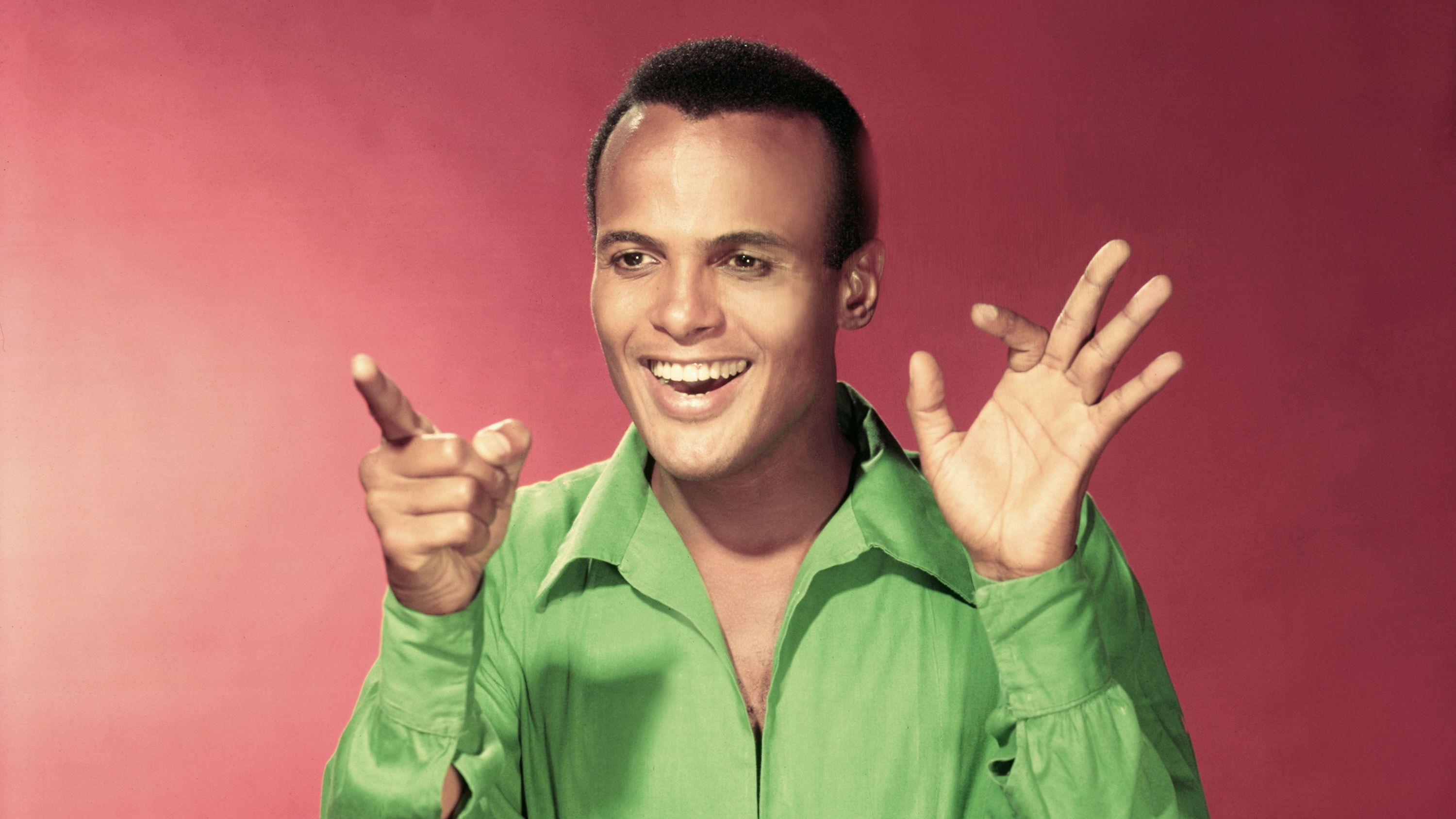
Harry Belafonte
 United States
singer•entertainer•civil rights advocate
Also known as: Harold George Bellanfanti Jr., King of Calypso
Date de naissance
March 1, 1927
Signe astrologique
Pisces
Lieu de naissance
Harlem, New York City, New York, USA
Âge
Décédé(e) à 96 ans
Taille
6 ft 1 in (1.85 m)
À propos
Harry Belafonte était un chanteur, acteur et militant des droits civiques qui a fait découvrir la musique calypso au public mondial. Son album de 1956, Calypso, est devenu le premier LP à dépasser le million d'exemplaires vendus par un seul artiste, avec des succès comme « Day-O (The Banana Boat Song) » et « Jamaica Farewell ». Au cours de sa carrière, il a enregistré dans les genres blues, folk, gospel et comédie musicale, et est apparu dans plus de 20 films, dont Carmen Jones (1954), Island in the Sun (1957) et BlacKkKlansman (2018). Il a également été un militant des droits civiques toute sa vie, mentoré par Paul Robeson et proche allié de Martin Luther King Jr. Belafonte a obtenu le statut EGOT avec trois Grammy Awards, un Primetime Emmy, un Tony Award et un Oscar non compétitif. Il est décédé le 25 avril 2023 à l'âge de 96 ans.
Jeunesse et origines
Belafonte est né à Harlem de parents jamaïcains. Son père, Harold George Bellanfanti Sr., était chef cuisinier, et sa mère, Melvine Love, femme de ménage. De 1932 à 1940, il a vécu chez sa grand-mère en Jamaïque, fréquentant les écoles Wolmer's. De retour à New York, il a brièvement fréquenté la George Washington High School mais a abandonné, luttant contre une dyslexie non diagnostiquée et la cécité d'un œil. En 1944, il s'est enrôlé dans la marine américaine, servant pendant la Seconde Guerre mondiale. Après une libération honorable en 1946, il a travaillé comme assistant concierge.
Sa vie a changé lorsqu'un locataire lui a donné deux billets pour voir l'American Negro Theater. Il est tombé amoureux du théâtre et s'est lié d'amitié avec Sidney Poitier, alors également en difficulté financière. Tous deux achetaient un seul siège pour les pièces locales, échangeant leurs places entre les actes et se mettant à jour sur l'intrigue. Belafonte a suivi des cours de théâtre au Dramatic Workshop de la New School avec le metteur en scène allemand Erwin Piscator, aux côtés de Marlon Brando, Tony Curtis, Walter Matthau, Bea Arthur et Poitier. Il a commencé à chanter dans les clubs de New York pour payer ses cours ; sa première performance publique était accompagnée par le groupe de Charlie Parker, comprenant Parker, Max Roach et Miles Davis.
Évolution de carrière
Belafonte a lancé sa carrière discographique sur le label Roost en 1949. En 1953, il a signé avec RCA Victor et enregistré son premier single largement distribué « Matilda », qui est devenu un morceau emblématique de participation du public. Cette année-là, il a fait ses débuts au cinéma aux côtés de Dorothy Dandridge dans Bright Road. En 1954, il a remporté un Tony Award pour son rôle dans la revue de Broadway John Murray Anderson's Almanac et a joué dans Carmen Jones avec Dandridge.
Sa percée est survenue en 1956 avec l'album Calypso, qui a passé 31 semaines à la première place des charts Billboard et est devenu le premier LP à dépasser le million d'exemplaires vendus par un seul artiste. Des succès comme « Day-O (The Banana Boat Song) » et « Jamaica Farewell » ont fait de lui le « Roi du Calypso ». Il a joué dans Island in the Sun (1957), dont la romance interraciale a suscité l'indignation dans le Sud. En 1959, son spécial télévisé Tonight with Harry Belafonte a remporté un Emmy, faisant de lui le premier Afro-Américain à remporter un Primetime Emmy. Il est devenu le premier producteur de télévision afro-américain via sa société HarBel, produisant de nombreux programmes nommés aux Emmy. Il a présenté la chanteuse sud-africaine Miriam Makeba et la chanteuse grecque Nana Mouskouri au public américain. Son album de 1962, Midnight Special, présentait la première apparition enregistrée de Bob Dylan à l'harmonica.
Belafonte a aidé à organiser la Marche sur Washington en 1963. En 1985, il a aidé à organiser l'enregistrement de « We Are the World », récoltant plus de 60 millions de dollars pour l'aide alimentaire en Afrique. Il a été nommé Ambassadeur de bonne volonté de l'UNICEF en 1987. Sa dernière apparition au cinéma était dans le film de Spike Lee, BlacKkKlansman (2018).
Chronologie de carrière
Image publique et style
Belafonte était connu pour sa voix de baryton douce, sa présence scénique charismatique et ses tenues élégantes et sophistiquées. Il a popularisé les chemises d'inspiration caribéenne et les looks à col ouvert dans les années 1950. Les médias le dépeignaient comme un artiste digne, de principe, qui utilisait sa plateforme pour la justice sociale. Souvent appelé le « Roi du Calypso », il était aussi une icône des droits civiques. Son public s'étend sur plusieurs générations, et sa musique reste populaire dans les communautés de la diaspora caribéenne et parmi les amateurs de folk. Ses comptes sur les réseaux sociaux, désormais gérés par sa succession, se concentrent sur son héritage et son activisme.
Notoriété et fandom
Harry Belafonte's following never coalesced into a single, branded tribe with chants or dedicated hashtags. Instead, his admirers were defined by a shared reverence for the man who used his platform to fund bailouts and challenge segregation, viewing him as a moral compass rather than a distant pop idol. While modern stars cultivate 'stan' armies, Belafonte's audience remained scattered across generations, united by the enduring power of his calypso hits and his unwavering stance on civil rights. Digital tributes since his passing have kept this spirit alive, with followers sharing memories of his accessible nature and his historic television appearances that brought Martin Luther King Jr. directly into suburban living rooms. The legacy continues to draw new eyes through upcoming biopics, ensuring his story remains essential viewing for understanding the intersection of music and politics. Despite this deep cultural footprint, iFANN's Global Fame Engine has evaluated this person, but they do not currently hold a placement in the published rankings (Global Top 1,000 or a Top-100 scope list).
Faits intéressants et légendes
His first public performance featured backing from the Charlie Parker band, including legends Max Roach and Miles Davis. He and Sidney Poitier famously shared a single theater seat, taking turns watching plays to maximize their limited funds. The album Midnight Special (1962) marked the first recorded appearance of Bob Dylan on harmonica. During the McCarthy era, he survived blacklisting while maintaining his popularity. A bill was even introduced in South Carolina to fine theaters showing Island in the Sun due to its interracial romance. He considered Paul Robeson his mentor, stating that Robeson gave him his backbone. Beyond these facts, history remembers him bailing out Martin Luther King Jr. with $100,000 of his own money during the 1963 Birmingham campaign. He also hosted a week of The Tonight Show featuring Robert F. Kennedy and Paul Newman, disrupting late-night norms to amplify civil rights voices. These verified acts cemented his status as a figure who risked wealth and fame for justice.
Citations notables
“Paul Robeson had been my first great formative influence; you might say he gave me my backbone. Martin King was the second; he nourished my soul.”
“I'm not looking for a comfortable life. I'm looking for a just life.”
Famille et vie privée
Les parents de Belafonte, Harold George Bellanfanti Sr. et Melvine Love, étaient tous deux nés en Jamaïque. Sa mère était d'origine jamaïcaine-écossaise et afro-jamaïcaine ; son père était d'origine afro-jamaïcaine et juive sépharade néerlandaise. Il avait un frère cadet nommé Dennis. Belafonte a été élevé dans la foi catholique et a fréquenté l'école paroissiale. Il a eu quatre enfants : Adrienne et Shari avec sa première femme Marguerite Byrd, et David et Gina avec sa seconde femme Julie Robinson. Il était marié à Pamela Frank de 2008 jusqu'à sa mort en 2023.
Relations notables
Belafonte était un ami de toujours de Sidney Poitier, avec qui il a joué dans Buck and the Preacher. Il était un confident proche de Martin Luther King Jr. et a contribué à financer le mouvement des droits civiques. Il considérait Paul Robeson comme son mentor. Il a collaboré avec Miriam Makeba et Nana Mouskouri, les faisant découvrir au public américain. Il a partagé la vedette avec Dorothy Dandridge dans deux films. Son dernier film a été réalisé par Spike Lee. Il s'est produit dans The Muppet Show avec Jim Henson, et Bob Dylan a fait sa première apparition enregistrée sur l'album de Belafonte.
Relations et vie amoureuse
Belafonte a épousé Marguerite Byrd en 1948 ; ils ont eu deux filles, Adrienne et Shari, avant de divorcer en 1957. Plus tard la même année, il a épousé Julie Robinson, une danseuse blanche. Leur mariage interracial a été remarqué pendant l'ère des droits civiques et a été observé par Martin Luther King Jr. Ils ont eu deux enfants, David et Gina, et ont divorcé en 2004 après 47 ans. Le 12 avril 2008, il a épousé Pamela Frank, qui est restée son épouse jusqu'à sa mort le 25 avril 2023.
- Marié(e)Marguerite Byrd1948 - 1957Première épouse ; deux filles Adrienne et Shari ; divorcé après neuf ans.
- Marié(e)Julie Robinson1957 - 2004Deuxième épouse ; mariage interracial observé par MLK ; deux enfants David et Gina ; divorcé après 47 ans.
- Marié(e)Pamela Frank2008 - 2023ActuelTroisième épouse ; mariée de 2008 jusqu'à la mort de Belafonte en 2023.
Décès et conséquences
Décès
April 25, 2023 (à 96 ans)
Lieu de décès
Manhattan, New York City, USA
Cause du décès
Inconnu
Harry Belafonte spent his final years in the quiet of his Manhattan home, far from the spotlight that had defined a six-decade career. On April 25, 2023, he passed away at the age of 96 within those walls, surrounded by family and peace. No foul play was suspected, and law enforcement deemed police involvement unnecessary given the natural circumstances of his departure. The news sparked an immediate outpouring of grief from across the cultural and political landscape. President Joe Biden hailed him as a giant of American culture, while former First Lady Michelle Obama described him as a moral compass.
Rev. Al Sharpton emphasized Belafonte's lifelong partnership with Martin Luther King Jr., cementing the memory of their shared struggle for justice. Fans gathered spontaneously outside community centers in Harlem and Jamaica, though large-scale organized vigils were absent due to the private nature of the event. Streaming platforms recorded a sharp surge in plays for "Day-O (The Banana Boat Song)" and "Jump in the Line," reflecting a renewed global hunger for his work. A private funeral service took place shortly after his death in late April or early May 2023, kept confidential to honor his wishes.
Notable figures including Paul Simon and Whoopi Goldberg paid their respects before his remains were cremated, with the disposition of his ashes never made public. In the years following, his legacy expanded through new honors like the Tribeca Film Festival's "Harry Belafonte Voices for Social Justice Award," which Bruce Springsteen received in 2026. A definitive biography titled Daylight Come appeared shortly after his passing, and plans emerged for a film project called The Road Home, ensuring his story would continue to resonate for future generations.
Fortune (valeur de la succession)
$30 Million
Estimation de l’équipe éditoriale d’iFANN
At the time of his death in 2023, Harry Belafonte's estate was estimated at $30 Million per iFANN's editorial analysis. His wealth stemmed from music royalties on his catalog, including Day-O (The Banana Boat Song), Jamaica Farewell, and Jump in the Line, which continue generating revenue through streaming, licensing for films and commercials, and catalog sales. He also earned residuals from over 20 films, his production company HarBel, and real estate holdings. His estate is managed by his children, particularly daughter Gina Belafonte, who oversees legacy projects. Posthumous earnings include streaming royalties, licensing deals, documentary rights, and the Harry Belafonte archive donated to the Schomburg Center for Research in Black Culture.
Récompenses remportées (10)
Belafonte a remporté trois Grammy Awards pour la meilleure performance folk, un Primetime Emmy pour son spécial télévisé, un Tony Award pour John Murray Anderson's Almanac et un Oscar non compétitif (Jean Hersholt Humanitarian Award), faisant de lui un lauréat EGOT. Il a également reçu les Kennedy Center Honors, la National Medal of Arts et a été intronisé au Rock and Roll Hall of Fame en 2022.
1960 · Réalisation de programme
Tonight with Harry Belafonte
1965 · Folk
An Evening with Belafonte/Makeba
1961 · Folk
Belafonte Returns to Carnegie Hall
1960 · Folk
Swing Dat Hammer
Connu pour
Calypso
1956 · Album
Carmen Jones
1954 · Acteur
Island in the Sun
1957 · Acteur
BlacKkKlansman
2018 · Acteur
Tonight with Harry Belafonte
1959 · TV Special
Mots-clés
Sources
Faits clés
- Profession
- singer, entertainer, civil rights advocate
- Né(e) le
- +1927-03-01
- Lieu de naissance
- Harlem, New York City, New York, États-Unis
- Décès
- +2023-04-25
- Lieu de décès
- New York (État de New York), États-Unis
- Genre
- Homme
- Signe astrologique
- Pisces
- Taille
- 6 ft 1 in (1.85 m)
- Conjoint
- Pamela Frank (m. 2008–2023)
- Children
- 4
Informations personnelles
- Nom complet
- Harold George Bellanfanti Jr.
- Taille
- 6 ft 1 in (1.85 m)
- Conjoint
- Pamela Frank
- Enfants
- 4: Adrienne, Shari, David, Gina
- Formation
- Wolmer's Schools, Jamaica; George Washington High School (dropped out); Dramatic Workshop of The New School
Filmographie
25
Total
20
Cinéma
5
TV
Questions fréquentes
Quelle était la fortune de Harry Belafonte à sa mort ?
Combien d'enfants Harry Belafonte a-t-il eu ?
À qui Harry Belafonte était-il marié ?
Harry Belafonte était-il un lauréat EGOT ?
Quel âge avait Harry Belafonte quand il est mort ?
Réseaux sociaux
Personnalités similaires
Rejoindre la communauté
fans en discussion