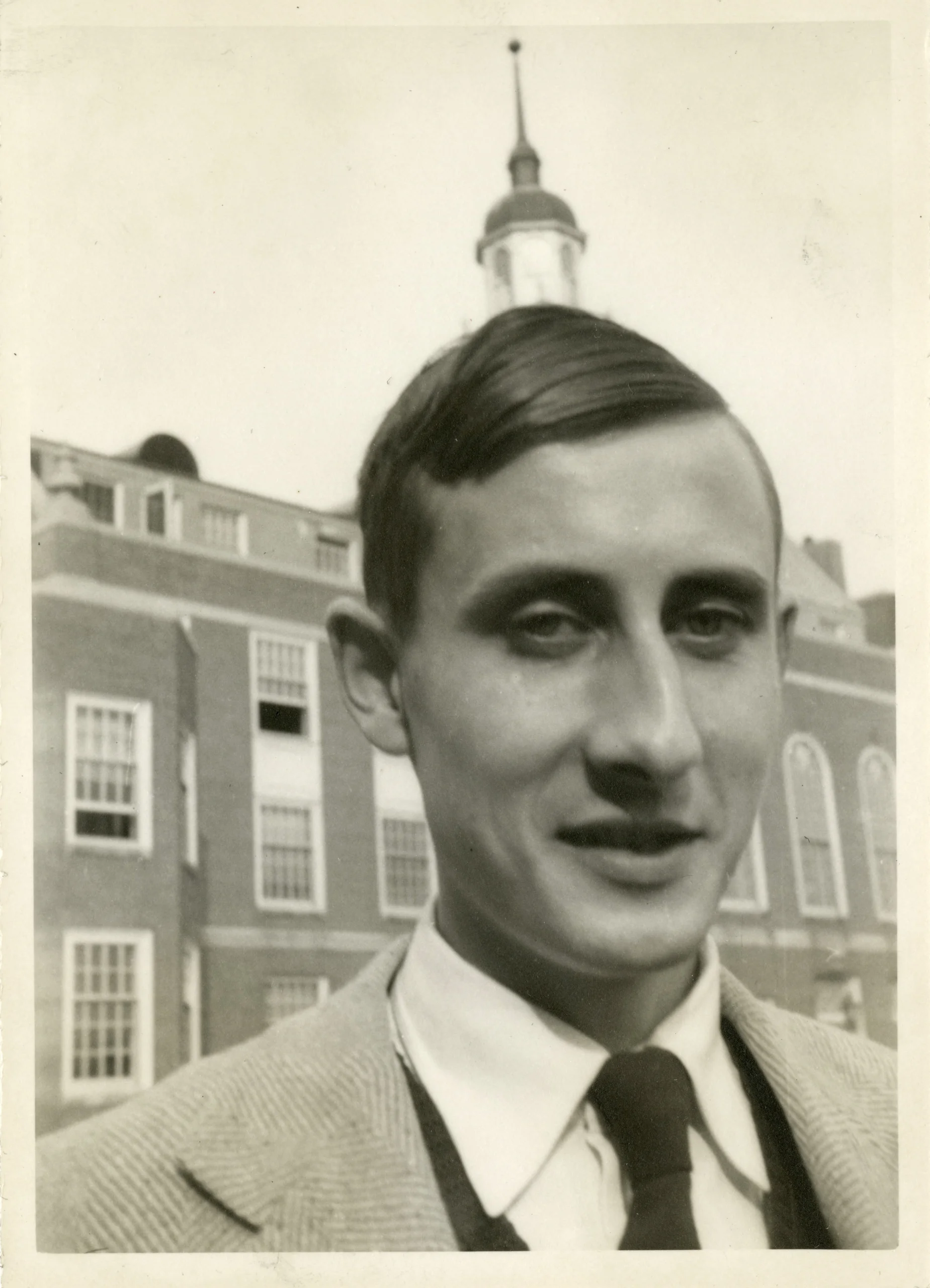
Freeman Dyson
 United Kingdom
mathematician•theoretical physicist•nuclear physicist
Also known as: Freeman John Dyson
Date de naissance
December 15, 1923
Signe astrologique
Sagittarius
Lieu de naissance
Crowthorne, Berkshire, England
Âge
Décédé(e) à 96 ans
Taille
5 ft 10 in (178 cm)
À propos
Freeman John Dyson était un physicien théoricien et mathématicien britanno-américain dont les travaux ont remodelé la théorie quantique des champs, l'astrophysique et le génie nucléaire. Il a passé la majeure partie de sa carrière à l'Institute for Advanced Study de Princeton, où il est devenu professeur émérite. La pensée de Dyson allait des mathématiques pures à l'ingénierie spéculative, et il a conçu des concepts comme la sphère de Dyson, une mégastructure hypothétique qui enferme une étoile pour capturer son énergie, ainsi que la série de Dyson, une méthode perturbative utilisant les diagrammes de Feynman devenue fondamentale pour l'électrodynamique quantique.
Dyson remettait souvent en question les opinions scientifiques dominantes, notamment sur le changement climatique, arguant que ses effets étaient exagérés et que le CO2 pouvait bénéficier à l'agriculture. Il pensait que les efforts politiques pour réduire les émissions détournaient l'attention de problèmes mondiaux plus urgents. Malgré ce non-conformisme, ses contributions lui ont valu le Prix Lewis Thomas 1996 pour l'écriture scientifique et le Prix Templeton 2000 pour le progrès de la religion, d'une valeur de 1,2 million de dollars. Il est décédé le 28 février 2020 à l'âge de 96 ans, laissant un héritage d'indépendance intellectuelle et de curiosité éclectique.
Jeunesse et origines
Dyson a grandi dans un foyer très intellectuel à Crowthorne, dans le Berkshire, où son père, Sir George Dyson, était un compositeur renommé et directeur du Royal College of Music, et sa mère, Mildred Atkey, était avocate. Le jeune Freeman a été éduqué à la maison par sa mère jusqu'à l'âge de six ans, puis a fréquenté des écoles préparatoires. Il a appris le calcul à sept ans et a publié son premier article mathématique à 18 ans alors qu'il était au Winchester College avec une bourse.
En 1941, il obtient une bourse pour le Trinity College de Cambridge, mais ses études sont interrompues par la Seconde Guerre mondiale. Il sert comme statisticien pour le Bomber Command de la Royal Air Force, analysant les schémas de bombardement pour améliorer la précision. Après la guerre, il obtient sa licence en mathématiques en 1945. Il s'installe aux États-Unis en 1947 en tant que boursier du Commonwealth à l'Université Cornell, étudiant sous la direction de Hans Bethe et Richard Feynman. Un moment charnière survient en 1948 lorsqu'il participe à une école d'été à l'Université du Michigan où Feynman et Julian Schwinger présentent des formulations contradictoires de l'électrodynamique quantique. Dyson passe l'été à concilier les deux approches, produisant la série de Dyson, un développement perturbatif utilisant les diagrammes de Feynman qui unifie l'EDQ. Ce travail, publié en 1949, établit sa réputation et lance sa carrière.
Évolution de carrière
En 1949, Dyson est nommé professeur de physique à l'Université Cornell. Deux ans plus tard, il rejoint l'Institute for Advanced Study de Princeton en tant que professeur, où il reste pour le reste de sa carrière. En 1959, il propose le concept de sphère de Dyson dans la revue Science, une mégastructure hypothétique capable de capter l'énergie d'une étoile, suscitant des décennies d'intérêt scientifique et de science-fiction. Dans les années 1960, il travaille sur le projet Orion, une étude financée par la NASA sur la propulsion nucléaire pulsée pour les vaisseaux spatiaux, plaidant pour son développement jusqu'à l'annulation du projet en 1965 en raison du Traité d'interdiction partielle des essais nucléaires.
Dans les années 1970, Dyson se tourne vers la biologie et les questions environnementales, écrivant abondamment sur les implications éthiques du génie génétique et du changement climatique. Il publie plusieurs livres influents, dont Disturbing the Universe (1979), Weapons and Hope (1984) et The Scientist as Rebel (2006). Ses dernières années lui apportent de grands honneurs : le Prix Wolf de physique en 1981, le Prix Enrico Fermi en 1993 et le Prix Templeton en 2000. Même dans ses 90 ans, il continue de publier des essais et de prendre la parole en public, restant une figure de l'Institute for Advanced Study jusqu'à sa mort.
Chronologie de carrière
Image publique et style
Dyson cultivait une image publique de non-conformiste doux et réfléchi. On le photographiait souvent dans des costumes froissés et des lunettes épaisses, incarnant parfaitement le professeur distrait. Les médias le décrivaient fréquemment comme le physicien rebelle ou l'hérétique, surtout après que son scepticisme sur le changement climatique ait attiré les critiques. Il était respecté pour son indépendance intellectuelle mais aussi critiqué pour ses opinions sur le climat. Ses livres, en particulier Disturbing the Universe et Weapons and Hope, ont développé un lectorat dévoué parmi les passionnés de sciences. Il n'avait pas de comptes personnels sur les réseaux sociaux, mais son héritage est maintenu par l'Institute for Advanced Study et sa page Wikipédia, qui reçoit plus de 500 000 visites par mois.
Notoriété et fandom
Freeman Dyson is currently the 29th most famous person in AI, a standing confirmed by the iFANN Global Fame Rankings. This placement reflects how his foundational concepts continue to shape the trajectory of artificial intelligence and computational theory long after his passing. While he never sought celebrity, the enduring power of his ideas has secured him a unique position in the global consciousness, tracked through decades of media coverage and scholarly consumption worldwide.
Unlike pop stars or actors, Freeman Dyson did not cultivate a formal fandom with a specific name or organized rituals. His legacy belongs to a diffuse community of scientists, science fiction writers, and engineers who revere his intellectual contributions rather than his persona. There were no crowds fainting at his lectures or fan-funded campaigns to keep his name on charts; instead, his influence rippled through academic circles and speculative fiction. The "fandom" for Dyson is best described as an intellectual following inspired by his willingness to challenge orthodoxy and imagine the future of humanity among the stars.
The most prominent legend associated with him remains the concept of the Dyson Sphere. Proposed in a 1960 paper, this hypothesis suggested that advanced civilizations would enclose their stars in megastructures to capture energy. What began as rigorous mathematical reasoning evolved into a cornerstone of astrobiology lore, frequently depicted in movies and video games as the definitive sign of Type II civilizations. Another legendary aspect of his career involves his role in resolving infinite values in quantum electrodynamics, cementing his status as a founding father of modern particle physics alongside Richard Feynman. These stories are not folklore born of exaggeration but verified historical facts that have transcended their academic origins to become global symbols of human imagination.
Faits intéressants et légendes
Freeman Dyson never earned a Ph.D., holding only a bachelor's degree from Cambridge despite receiving over 20 honorary doctorates throughout his life. An avid mountain climber, he scaled the Matterhorn at age 60, demonstrating a physical vigor that matched his intellectual curiosity. He remained a vegetarian for ethical reasons, believing it reduced animal suffering, and published a collection of poetry titled Poems of Freeman Dyson in 1999.
His daughter Esther Dyson became a well-known technology analyst and investor, often called the most powerful woman in tech. Dyson was a close friend of Richard Feynman, and they frequently debated the intricacies of quantum mechanics together. He served on the Board of Sponsors of the Bulletin of the Atomic Scientists, which maintains the Doomsday Clock, and remained a pacifist who regretted his early work on nuclear projects before becoming a dedicated advocate for arms control.
A widely retold story in scientific lore concerns his 1960 proposal of the Dyson Sphere, a hypothetical megastructure enclosing a star to capture its energy. This idea originated from his rigorous mathematical reasoning but evolved into popular folklore where such spheres are frequently depicted in movies and internet discussions as the sign of advanced alien civilizations. Another enduring narrative highlights his unconventional path to greatness: a mathematical prodigy who left Oxford without a doctorate to work directly with Paul Dirac at Cambridge. Recent studies from 2026 indicate the concept remains active in scientific discourse, with researchers exploring whether observed cold stars might be such megastructures, proving the enduring power of his original vision.
Citations notables
“As we look out into the Universe and identify the many accidents of physics and astronomy that have worked together to our benefit, it almost seems as if the Universe must in some sense have known that we were coming.”
“I have felt it my duty to speak out on issues where the scientific consensus is wrong. The climate change consensus is one of those.”
“The best way to predict the future is to invent it.”
“I am not a believer in the religion of science. I think science is a tool, not a creed.”
“The Dyson sphere is not a prediction. It is a thought experiment to explore the limits of what is possible.”
Famille et vie privée
Le père de Dyson, Sir George Dyson, a composé la musique pour le couronnement de la reine Elizabeth II. Sa mère, Mildred Atkey, était avocate. Il n'avait pas de frères et sœurs. Dyson s'est marié deux fois. Sa première épouse était Verena Huber-Dyson, une mathématicienne suisse ; ils ont eu deux enfants : Esther (née en 1951), analyste et investisseuse technologique, et George (né en 1953), historien de la technologie. Le mariage s'est terminé par un divorce en 1958. Sa seconde épouse était Imme Jung, une athlète et entraîneuse allemande ; ils ont eu quatre enfants : Dorothy, Mia, Rebecca et Emily. Imme est décédée d'un cancer en 2003. Dyson a vécu à Princeton, dans le New Jersey, la majeure partie de sa vie adulte, dans une maison modeste près de l'Institute for Advanced Study. Il ne possédait pas d'animaux de compagnie.
Relations notables
Les collaborations les plus notables de Dyson furent avec Richard Feynman et Hans Bethe à Cornell. Il a également travaillé avec Julian Schwinger, réconciliant leurs formulations concurrentes de l'électrodynamique quantique. Son fils George Dyson est historien de la technologie, et sa fille Esther Dyson est une investisseuse technologique de premier plan. Il a co-reçu le prix Wolf de physique avec Gerard 't Hooft et Victor Weisskopf.
Relations et vie amoureuse
Dyson s'est marié deux fois. Son premier mariage fut avec Verena Huber-Dyson, une mathématicienne suisse, en 1950. Ils se rencontrèrent à l'Institute for Advanced Study et eurent deux enfants, Esther et George. Le mariage se termina par un divorce en 1958, bien qu'ils soient restés en bons termes. Verena déménagea plus tard au Canada et poursuivit sa carrière académique ; elle mourut en 2016. En 1958, Dyson épousa Imme Jung, une athlète et entraîneuse allemande, rencontrée lors d'une conférence en Europe. Ils eurent quatre enfants : Dorothy, Mia, Rebecca et Emily. Imme mourut d'un cancer en 2003. Dyson n'a eu aucune relation amoureuse connue en dehors de ces deux mariages. À sa mort en 2020, il était veuf.
- Marié(e)Verena Huber-Dyson1950 - 1958Mathématicienne suisse ; rencontrée à l'Institute for Advanced Study ; a eu deux enfants ; divorcé à l'amiable.
- Marié(e)Imme Dyson1958 - 2003Athlète et entraîneuse allemande ; rencontrée lors d'une conférence en Europe ; a eu quatre enfants ; morte d'un cancer.
Décès et conséquences
Décès
February 28, 2020 (à 96 ans)
Lieu de décès
Princeton, New Jersey, USA
Cause du décès
Natural causes associated with advanced age
Freeman Dyson spent his final years in Princeton, New Jersey, continuing to write essays and correspond with colleagues while living at the Institute for Advanced Study where he had been a fixture for decades. On February 28, 2020, he passed away naturally in his sleep at the age of 96 without any acute medical emergency or suspicious circumstances requiring intervention. The scientific community responded with immediate tributes that highlighted his unique ability to bridge pure mathematics and speculative engineering. The New York Times published an extensive obituary tracing his path from subatomic physics to environmental visioning, while Quanta Magazine honored him as an unstoppable idea factory.
The Institute for Advanced Study issued statements honoring his decades of service and his unique ability to bridge mathematics and physics. Details regarding a funeral or memorial service remained private as the family requested privacy following his passing, so no public ceremony or burial site was officially disclosed by the Institute or his estate. A scholarship or foundation specifically created in his name right after his death has not appeared in public records, and the handling of his estate was managed privately by his family.
Following his death, his existing works continued to be studied and cited within academic circles. His name saw renewed interest in search trends and discussions regarding his theories on extraterrestrial civilizations and nuclear energy.
Fortune (valeur de la succession)
$6 Million
Estimation de l’équipe éditoriale d’iFANN
iFANN currently estimates Freeman Dyson's estate at $6 Million as of 2026. This figure derives primarily from his academic salary, book royalties, and the Templeton Prize during his lifetime. Dyson earned a modest salary as a professor at the Institute for Advanced Study, estimated at $150,000 to $200,000 per year in his later decades. His books, including Disturbing the Universe (1979), Weapons and Hope (1984), and The Scientist as Rebel (2006), generated lifetime royalties estimated between $500,000 and $1 million. The Templeton Prize in 2000 brought $1.2 million, most of which he donated to charity. He also earned speaking fees of $5,000 to $10,000 per engagement, giving 20 to 30 paid lectures annually in his later years. The estate is managed by his daughter Esther Dyson. Posthumous revenue comes from continued book sales and modest licensing for educational materials. No major real estate holdings, business ventures, or endorsement deals have been reported.
Récompenses remportées (10)
Dyson a remporté de nombreux prix prestigieux au cours de sa carrière, notamment le prix Wolf de physique (1981), le prix Enrico Fermi (1993) et le prix Templeton (2000). Il a également reçu le prix Heineman de physique mathématique (1965), la médaille Hughes (1968) et la médaille Max Planck (1969). Ses écrits lui ont valu le prix Lewis Thomas (1996). Malgré de multiples nominations, il n'a jamais remporté le prix Nobel.
2000 · Progrès en religion
For exploring the relationship between science and religion
1996 · Écrire sur la science
Disturbing the Universe
Connu pour
Dyson series
1948 · Creator
Dyson sphere
1959 · Proposer
Project Orion
1960 · Physicist
Disturbing the Universe
1979 · Auteur
Mots-clés
Faits clés
- Profession
- mathematician, theoretical physicist, nuclear physicist
- Né(e) le
- +1923-12-15
- Lieu de naissance
- Crowthorne, Berkshire, England
- Décès
- +2020-02-28
- Lieu de décès
- Princeton, New Jersey, USA
- Genre
- Homme
- Conjoint
- Verena Huber-Dyson, Imme Dyson
- Signe astrologique
- Sagittarius
- Taille
- 5 ft 10 in (178 cm)
- Education
- Trinity College, Cambridge (BA, 1945)
- Children
- 6
Informations personnelles
- Nom complet
- Freeman John Dyson
- Taille
- 5 ft 10 in (178 cm)
- Conjoint
- Verena Huber-Dyson, Imme Dyson
- Enfants
- Esther Dyson, George Dyson, Dorothy Dyson, Mia Dyson, Rebecca Dyson, Emily Dyson
- Formation
- Trinity College, Cambridge (BA, 1945)
Questions fréquentes
Freeman Dyson a-t-il gagné un prix Nobel ?
Qu'est-ce qu'une sphère de Dyson ?
Freeman Dyson était-il apparenté à Sir George Dyson ?
Quelle était la fortune de Freeman Dyson au moment de sa mort ?
Freeman Dyson croyait-il au changement climatique ?
Personnalités similaires
Rejoindre la communauté
fans en discussion