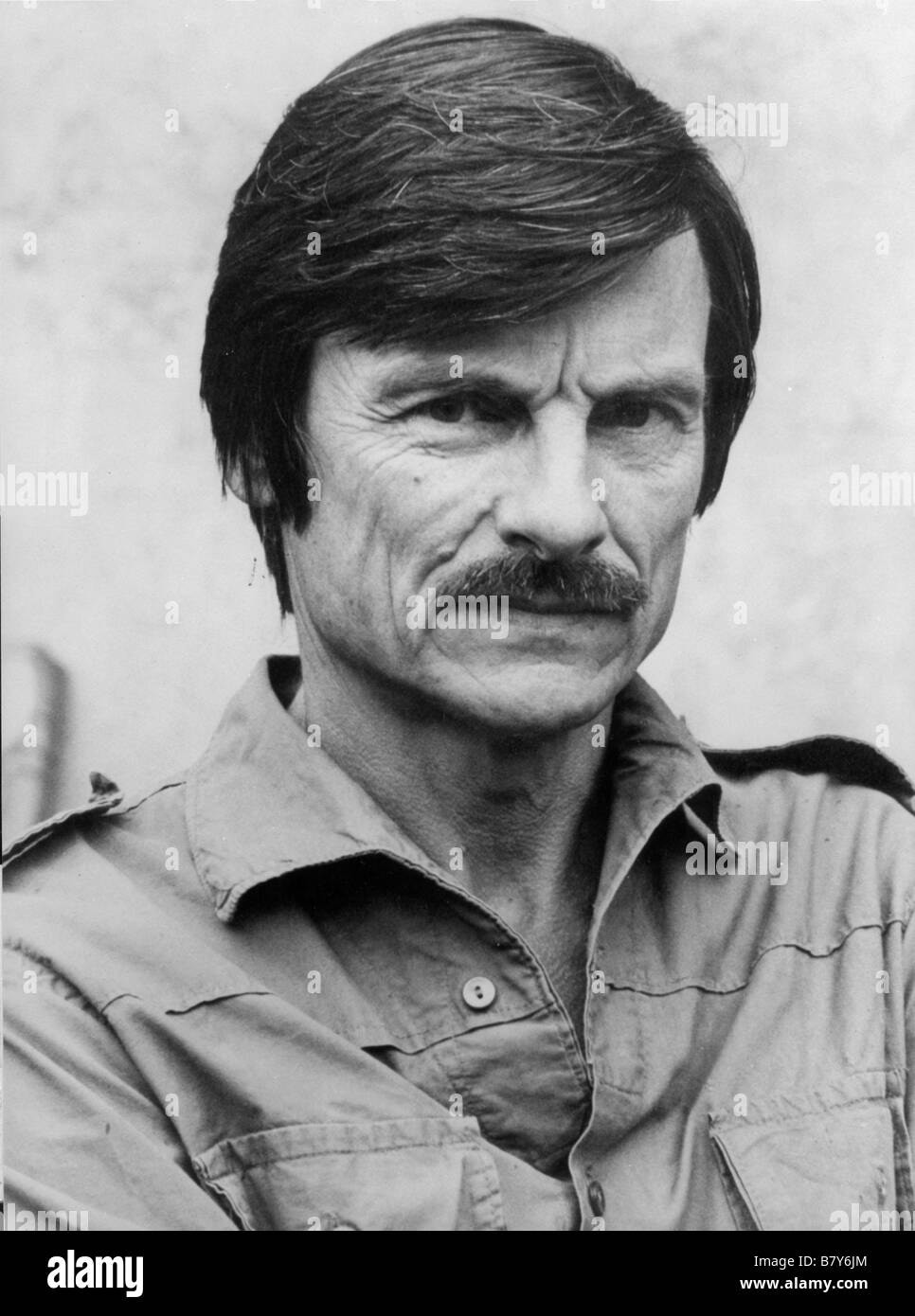
Andrei Tarkovsky
 Russia
Film director•screenwriter•film theorist
Date de naissance
April 4, 1932
Signe astrologique
Aries
Lieu de naissance
Zavrazhye, Ivanovo Oblast, Russian SFSR, Soviet Union
Âge
Décédé(e) à 54 ans
Taille
5 ft 9 in (175 cm)
À propos
Andrei Tarkovsky was one of cinema's most revered directors, a Soviet-born artist whose seven feature films and one documentary transformed how we think about time, memory, and spirituality on screen. His work, marked by impossibly long takes, elemental imagery of rain and fire, and a deep, almost liturgical patience, feels less like storytelling and more like prayer. Films such as Stalker, Solaris, and Mirror are not just watched; they are inhabited. Today, Tarkovsky's influence spans from arthouse theaters to Hollywood auteurs like Christopher Nolan and Terrence Malick. His book Sculpting in Time remains a foundational text for filmmakers worldwide. In 2012, Sight & Sound placed three of his films on its list of the 100 greatest movies ever made, a feat matched by very few directors. Though he died in 1986, his estate, managed by his son and the Tarkovsky Foundation, continues to license his films for restoration and festival retrospectives, keeping his vision alive for new generations.
Jeunesse et origines
Tarkovsky a grandi dans le village rural de Zavrazhye, où son père, le poète Arseny Tarkovsky, était souvent absent. Ses parents ont divorcé quand il était enfant, un événement qui a laissé une marque permanente sur son paysage émotionnel. Il a déménagé à Moscou avec sa mère, Maria Vishnyakova, traductrice, et a fréquenté une école de musique, apprenant le piano. Il a également étudié l'arabe à l'Institut des langues orientales, mais sans véritable vocation. En 1954, il s'inscrit à l'Institut national de la cinématographie (VGIK), la principale école de cinéma d'Union soviétique, étudiant sous la direction du célèbre réalisateur Mikhail Romm. Romm a reconnu le talent inhabituel de Tarkovsky et lui a donné la liberté de développer sa propre voix. Son film de diplôme, Le Rouleau compresseur et le Violon (1961), un court métrage sur un garçon et un ouvrier du bâtiment, a remporté le premier prix au Festival du film étudiant de New York. Cette petite victoire lui a ouvert la porte de son premier long métrage.
Évolution de carrière
Le premier long métrage de Tarkovsky, L'Enfance d'Ivan (1962), a remporté le Lion d'or à Venise, le propulsant instantanément sur la scène mondiale. Il a enchaîné avec Andrei Rublev (1966), une épopée tentaculaire sur le peintre d'icônes médiéval que les autorités soviétiques ont censurée pendant cinq ans. Solaris (1972) a remporté le Grand Prix Spécial du Jury à Cannes, bien que Tarkovsky ait désavoué le montage du studio. Mirror (1975) était un mémoire radical et non linéaire qui a déconcerté les censeurs mais est devenu plus tard une œuvre phare. Stalker (1979) a poussé son style à l'extrême : une lente randonnée philosophique à travers une Zone interdite. Après Stalker, Tarkovsky a fait défection à l'Ouest, réalisant Nostalghia (1983) en Italie et Le Sacrifice (1986) en Suède. Le Sacrifice a remporté le Grand Prix à Cannes et un BAFTA du meilleur film en langue étrangère. En 1986, il a publié Le Temps scellé, son traité essentiel sur le cinéma. Il est mort d'un cancer plus tard cette année-là, probablement aggravé par les produits chimiques toxiques sur le tournage de Stalker.
Chronologie de carrière
Image publique et style
Tarkovsky est souvent appelé le réalisateur le plus spirituel de l'histoire du cinéma. Son style signature, des plans-séquences extrêmement longs, le son naturel, et des images d'eau, de feu et de ruines en décomposition, crée une expérience hypnotique et méditative. Les fans, parfois appelés Tarkovskiens, se rassemblent en ligne pour analyser chaque plan, et les éditions Criterion Collection de ses films sont précieuses. Les représentations médiatiques mettent l'accent sur son statut de martyr de la censure soviétique et de poète du temps. Sa présence sur les réseaux sociaux vit à travers des comptes de fans, qui traitent son œuvre avec une révérence quasi religieuse.
Notoriété et fandom (iFAMOUS Rankings)
Global attention for Andrei Tarkovsky remains steady across a century of cinematic history, anchored by the enduring influence of his seven feature films and theoretical writings. According to the iFANN Global Fame Rankings, he holds the position of the 10th most famous person from Russia, a placement that has held steady since the previous cycle. This standing reflects a consistent flow of scholarly engagement and cultural consumption rather than fleeting viral moments. While no formal organization unites his admirers, a decentralized network of cinephiles, film students, and academic circles sustains his legacy through university screenings and critical analysis. These devotees, often referred to as Tarkovsky fans or simply cinephiles, operate without the structured activism seen in modern pop culture, preferring instead to dissect the spiritual and temporal dimensions of his work. The absence of a specific moniker for this group underscores the intellectual nature of their reverence, which focuses on the preservation of his films via institutions like The Criterion Collection rather than commercial campaigns. His status as a poet of time ensures that his image persists not through celebrity gossip but through the quiet, profound realization experienced by viewers encountering his slow pacing and elemental imagery.
Faits intéressants et légendes
Before dedicating himself to cinema, Tarkovsky studied Arabic and music, disciplines that informed his later visual rhythms. He famously refused to watch his own completed films, asserting they belonged entirely to the audience. His father's poetry is recited within both Mirror and Nostalghia, weaving personal history into the narrative fabric. During production, he was a heavy smoker who consumed strong black tea constantly. He named his dog Pata after a character in Nostalghia and once stated that if forced to save only one film from destruction, he would choose Mirror. Beyond these biographical details, a persistent legend surrounds his forced exile from the Soviet Union; denied permission to film about Tolstoy, he left the country under political pressure to direct Nostalghia in Italy, cementing his image as an artist defying totalitarianism. Another widely retold story concerns his final resting place: although he wished to be buried near his mother in Nice, France, his body remained there until 2009, when a long legal struggle finally allowed his family to inter him at Moscow's Novodevichy Cemetery.
Citations notables
“The allotted function of art is not, as is often assumed, to put across ideas, to propagate thoughts, to serve as an example. The aim of art is to prepare a person for death, to plough and harrow his soul, rendering it capable of turning to good.”
“The cinema is an art form that is not about something, it is something.”
“I am interested in the inner world of a person, and it is quite natural that the cinema, which is capable of penetrating into the deepest recesses of the human soul, should be the art form that can express the most intimate experiences.”
“The film is not a sequence of images, but a sequence of time.”
“I don't make films for the audience. I make them for myself. If the audience likes them, that's fine.”
Famille et vie privée
Le père de Tarkovsky, Arseny Tarkovsky, était un poète célèbre dont l'œuvre apparaît dans les films de son fils. Sa mère, Maria Vishnyakova, était une traductrice qui l'a élevé après le divorce. Il a eu deux fils : Arseny (né en 1962) avec sa première épouse Irma Raush, et Mikhail (né en 1971) avec sa seconde épouse Larisa Tarkovskaya. Mikhail est écrivain et écologiste vivant en Sibérie. L'environnement spirituel et intellectuel de la famille a profondément façonné la vision artistique de Tarkovsky.
Relations notables
Les principaux collaborateurs de Tarkovsky incluent son père, le poète Arseny Tarkovsky, dont les vers apparaissent dans Mirror et Nostalghia ; son professeur Mikhail Romm ; les directeurs de la photographie Georgy Rerberg (Mirror, Stalker) et Vadim Yusov (L'Enfance d'Ivan, Andrei Rublev) ; le compositeur Eduard Artemyev (Solaris, Mirror, Stalker) ; et les acteurs Anatoly Solonitsyn, Margarita Terekhova et Erland Josephson.
Relations et vie amoureuse
Tarkovsky a épousé l'actrice Irma Rausch en 1957. Elle a joué dans son court métrage Le Rouleau compresseur et le Violon et dans L'Enfance d'Ivan. Ils ont eu un fils, Arseni, en 1962, et ont divorcé en 1970. La même année, il a épousé Larissa Kizilova (plus tard Tarkovskaïa), qui a travaillé comme superviseuse de scénario et monteuse sur tous ses films à partir de Le Miroir. Ils ont eu un fils, Mikhaïl, en 1971. Tarkovsky est resté marié à Larissa jusqu'à sa mort en 1986 ; elle est décédée en 1998.
- Marié(e)Irma Raush1957 - 1970Marié en 1957 ; elle a joué dans ses premiers films ; ils ont eu un fils, Arseni ; divorcé en 1970.
- Marié(e)Larisa Tarkovskaya1970 - 1986Marié en 1970 ; elle a travaillé comme superviseuse de scénario et monteuse sur tous les films à partir du Miroir ; ils ont eu un fils, Mikhaïl ; restés mariés jusqu'à sa mort.
Décès et conséquences
Décès
December 29, 1986 (à 54 ans)
Lieu de décès
Paris, Île-de-France, France
Cause du décès
Lung cancer complications
Andrei Arsenyevich Tarkovsky passed away on December 29, 1986, in Paris, France, following a long struggle with lung cancer that had been confirmed by medical professionals prior to his death. The director had traveled to the French capital earlier that year to undergo surgery for the condition after being denied permission to remain in the Soviet Union due to his political stance and the controversial nature of his films. His final public appearance is generally considered to be the completion of his last film, The Sacrifice (Offret), which premiered at Cannes in May 1986, after which he continued post-production work while his health declined until his passing. Public reaction within the international cinema community was marked by widespread mourning, with tributes pouring in from peers and institutions who recognized him as one of the greatest directors in history.
Although immediate large-scale fan vigils were limited by the geopolitical context of the late Soviet era, the decades following his death saw an exponential growth in his influence, leading to numerous retrospectives and academic studies. His funeral took place on January 3, 1987, in Paris as a private affair attended by close friends, family, and colleagues, including his wife Larisa Tarkovskaya and his son Andrey Tarkovsky Jr., where he was cremated and his ashes interred at the Cimetière de Montmartre. Posthumously, Tarkovsky's estate has been managed by his family to ensure the preservation and distribution of his works, with several films receiving critical re-evaluations and restorations.
Fortune (valeur de la succession)
$1.5 Million
Estimation de l’équipe éditoriale d’iFANN
Since Andrei Tarkovsky passed away, his net worth represents the current value of his estate. No official public figure manages the assets directly, but the estate, overseen by his son Mikhail and the Tarkovsky Foundation, generates steady revenue through royalties from his seven feature films, streaming agreements with the Criterion Channel and Kanopy, home video sales including Criterion Collection box sets, and licensing for festival screenings. Income also flows from his book Sculpting in Time and published diaries such as Time Within Time. Per iFANN's editorial analysis, the estate is estimated at approximately $1.5 million as of 2026, based on modest but consistent earnings from classic film rights and intellectual property.
Récompenses remportées (28)
Tarkovsky a remporté le Lion d'or à Venise pour L'Enfance d'Ivan et le Grand Prix Spécial pour Solaris à Cannes. Son dernier film, Le Sacrifice, a obtenu le Grand Prix à Cannes et un BAFTA du meilleur film en langue étrangère. Il a également reçu le Prix spécial du jury à Venise pour Andreï Roublev et a partagé le prix de la mise en scène à Cannes pour Nostalghia. En 1990, il a reçu à titre posthume le prix Lénine, l'une des plus hautes distinctions de l'Union soviétique.
1988 · Meilleur film en langue étrangère
The Sacrifice
1987 · pour Le Sacrifice
Connu pour
Stalker
1979 · Réalisateur, Scénariste
Solaris
1972 · Réalisateur, Scénariste
Andrei Rublev
1966 · Réalisateur, Scénariste
Mirror
1975 · Réalisateur, Scénariste
The Sacrifice
1986 · Réalisateur, Scénariste
Mots-clés
Faits clés
- Profession
- Film director, screenwriter, film theorist
- Né(e) le
- April 4, 1932
- Lieu de naissance
- Zavrazhye, Ivanovo Oblast, Russian SFSR, Soviet Union
- Décès
- December 29, 1986
- Lieu de décès
- Paris, France
- Genre
- Homme
- Taille
- 5 ft 9 in (175 cm)
- Conjoint
- Irma Raush (1957–1970), Larisa Tarkovskaya (1970–1986)
- Children
- 2 sons: Arseny and Mikhail
- Education
- All-Union State Institute of Cinematography (VGIK)
- Signe astrologique
- Aries
Informations personnelles
- Nom complet
- Andrei Arsenyevich Tarkovsky
- Taille
- 5 ft 9 in (175 cm)
- Conjoint
- Irma Raush (1957–1970), Larisa Tarkovskaya (1970–1986)
- Enfants
- Arseny Tarkovsky (born 1962), Mikhail Tarkovsky (born 1971)
- Formation
- All-Union State Institute of Cinematography (VGIK), studied under Mikhail Romm
Filmographie
8
Total
7
Cinéma
0
TV
Questions fréquentes
Quel âge avait Andreï Tarkovski à sa mort ?
Quelle est la fortune d'Andreï Tarkovski ?
Andreï Tarkovski a-t-il eu des enfants ?
Quel est le film le plus célèbre d'Andreï Tarkovski ?
Andreï Tarkovski était-il religieux ?
Personnalités similaires
Rejoindre la communauté
fans en discussion